
Girly Cyberdecks Go Viral as Women Reclaim DIY Computing
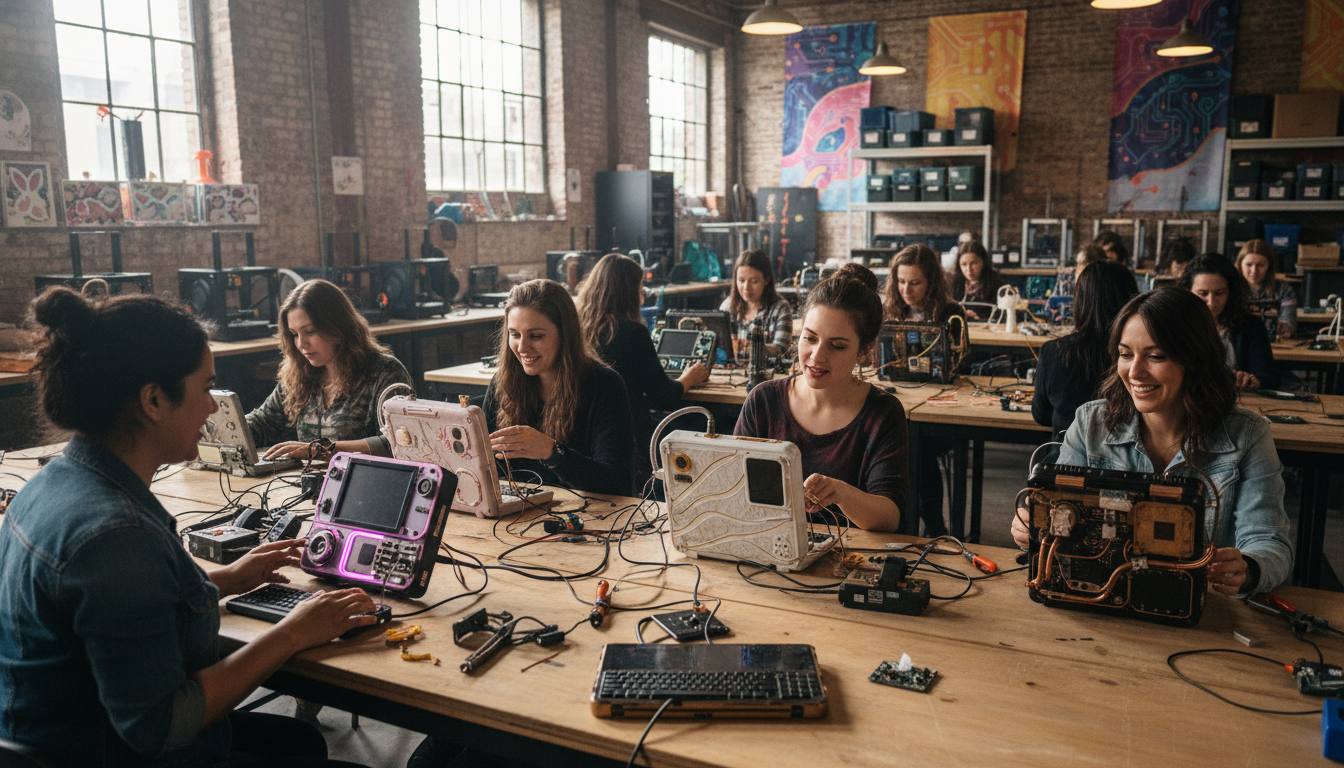
Women on social media are driving a surge in girly cyberdecks—handmade, often pink micro-computers that combine fashion and function in DIY builds.
The trend has grown from niche maker forums into a broad online movement where creators document building customized, ornamental computers that double as everyday objects. These girly cyberdecks range from seashell purses and dollhouse consoles to wearable Raspberry Pi corsets, and they are being shared widely on platforms such as TikTok and Instagram. Builders say the projects are about more than aesthetics: they aim to demystify hardware, resist homogenous tech design, and reclaim ownership of personal devices.
Social media sparks a surge in girly cyberdecks
Short videos and step-by-step posts have lowered the barrier to entry for newcomers, turning complex electronics into approachable craft projects. Creators without formal engineering backgrounds are posting tutorials, parts lists, and troubleshooting threads so other women can build their first cyberdeck in a bedroom or craft studio.
The accessible pace of social platforms has also created a feedback loop, where imaginative, highly visual designs attract attention and inspire imitators. As more builds appear, the community grows more experimental, incorporating thrifted finds, 3D prints, and reclaimed electronics into distinct, feminine aesthetics.
Creators blend craft, fashion and compute
Many builders deliberately fuse traditional craft techniques with modern components, producing objects that operate as both technology and wearable art. One maker described a clamshell-shaped purse that functions as an e-reader and networked vault, while another has adapted small boards into jewelry and corsets that run lightweight software.
This blending of disciplines emphasizes accessibility: creators teach assembly of basic circuits and software configuration alongside sewing and finishing techniques. The result is a visible, shareable demonstration that hardware is not restricted to labs or specialized shops.
Historic links between weaving and early computers
Several participants point to a longer history connecting textile work and computation, framing their projects as a modern continuation of that lineage. They reference mid-20th century memory systems that relied on threaded wiring and the role of women textile workers in building early spacecraft computers to underline a cultural throughline.
By naming techniques like “crocheting with computers” or “macrame motherboards,” makers restate craft as a technical skill rather than a hobbyist diversion. That historic framing also reframes contemporary hardware work as domestic knowledge given new public visibility.
Technical variety and DIY practices
Under the decorative shells, builds typically run on compact, credit-card sized boards and accessible single-board computers. Builders use Raspberry Pi-style boards, small batteries, microcontrollers, and off-the-shelf modules to enable simple tasks such as playing retro games, running local AI instances, or reading PDFs stored on a personal server.
Design choices tend to favor repairability and transparency: cases are intentionally openable and modular so users can learn how components connect. Many makers supplement videos with parts lists, wiring diagrams, and software tips to help followers replicate or adapt their designs.
Online criticism and community pushback
The movement has not been immune to skepticism and condescension from some corners of online forums. Creators report instances of dismissive comments about aesthetics, perceived waste of hardware, or doubts about technical competence based solely on appearance.
At the same time, those negative reactions often provoke solidarity: followers frequently defend builders, offer technical help, or even donate parts. Several creators say the response underscores an important community function—collective mentoring that counters gatekeeping in maker spaces.
Cultural critique behind deliberate impracticality
Many builders frame their work as a conscious rejection of polished, sealed consumer devices and the design homogeneity associated with major tech firms. By intentionally building objects that prioritize expression over efficiency, they stake a claim for personal control and tactile engagement.
That stance also reflects broader anxiety about surveillance and opaque corporate systems; makers emphasize local storage, offline capabilities, and devices that users can physically open and modify. For participants, crafting a whimsical, personalized computer is both a creative act and a small political statement.
The girly cyberdeck trend is reshaping perceptions of who builds hardware and what it should look like. By combining craft traditions with accessible electronics and an ethos of shared learning, women creators are expanding the boundaries of maker culture while challenging the default aesthetics of modern devices.
