
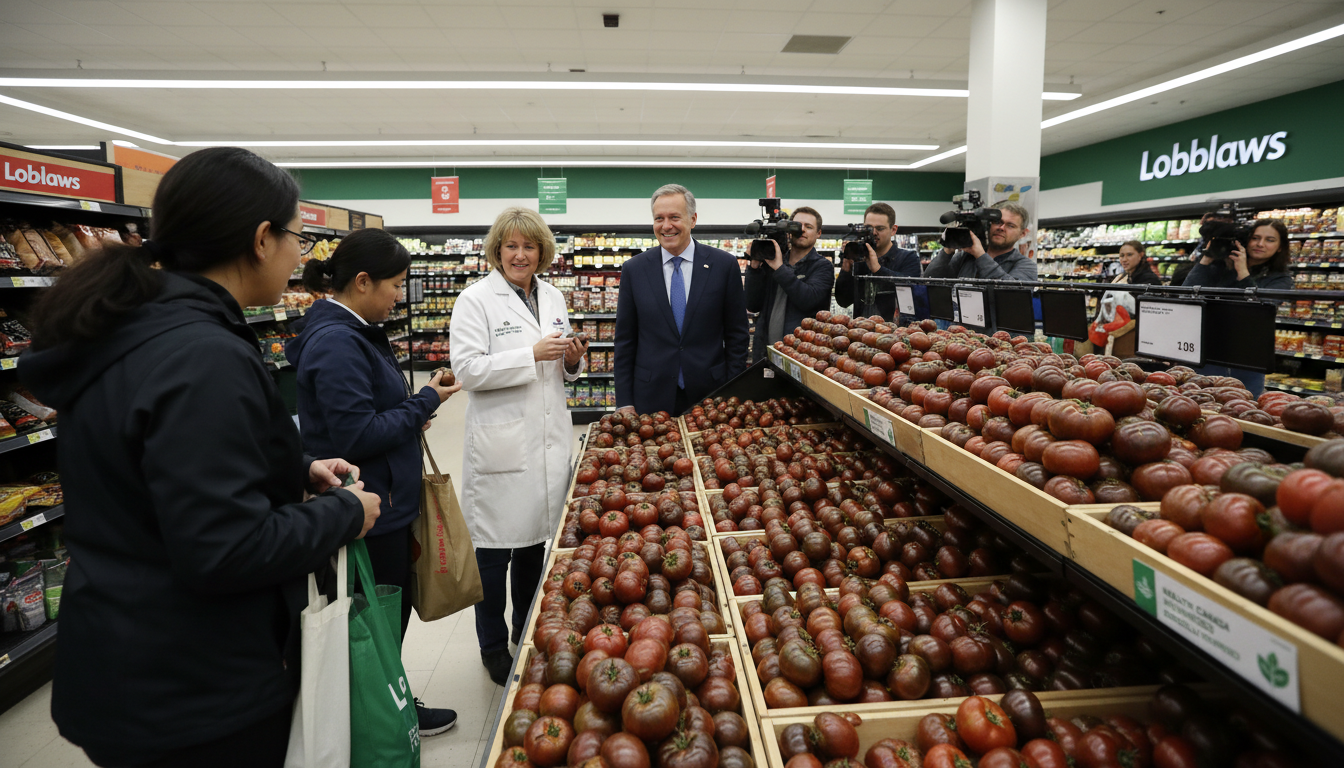
Purple tomato approved in Canada sparks debate over nutrition, labeling and seeds for sale
A new genetically modified purple tomato approved by Health Canada and the Canadian Food Inspection Agency is now being grown in Ontario and sold in stores, raising questions about nutrition claims, labeling and the sale of seeds to the public.
Regulatory approval and retail rollout
Health Canada and the Canadian Food Inspection Agency authorized the purple tomato for food use in August 2025, clearing the way for commercial cultivation and retail sales in Canada.
Since early 2026 the variety has been produced in Ontario greenhouses operated by Red Sun Farms and has appeared on store shelves through Loblaws, the company behind several national grocery banners.
Norfolk Healthy Produce, the U.S. biotech company that commercialized the fruit, holds the patent and has permission to sell the tomato in the United States, Canada and Australia, while New Zealand refused authorization.
The variety follows the earlier market introduction of Fresh Del Monte’s Pinkglow pineapple, another genetically altered fruit authorized in Canada in 2021, and marks one of the few GM fresh fruits available to Canadian consumers.
How the purple tomato was developed
The purple tomato’s distinctive color comes from increased levels of anthocyanin, a class of antioxidant pigments responsible for blue and purple hues in many fruits and vegetables.
Developers introduced two genes from snapdragon flowers into the tomato’s DNA, a form of transgenesis that transfers traits from one species to another rather than editing existing genes.
This approach differs from newer genome-editing techniques such as CRISPR, which alter native genes without inserting foreign sequences, a distinction that has informed scientific and regulatory debates about what constitutes an engineered organism.
Producers say the modification boosts anthocyanin to levels similar to those found in commonly eaten berries and other vegetables, while critics note many conventional crops already contain equal or higher amounts naturally.
Claims on nutrition and reduced food waste
Norfolk Healthy Produce and its partners emphasize two primary benefits: higher anthocyanin content and a longer shelf life.
Company executives say the purple tomato resists grey mold and ripens more slowly after harvest, doubling its post-harvest shelf life compared with ordinary red varieties and potentially reducing retail and consumer waste.
Supporters also argue the tomato offers an easy way to increase consumers’ intake of antioxidant compounds because North Americans generally consume far more tomatoes than other anthocyanin-rich fruits like blueberries.
Retailers promoting the product highlight convenience and appearance, while marketing materials stress the fruit’s antioxidant profile as a nutritional selling point.
Concerns from farmers and advocacy groups
Several growers’ organizations and food-policy advocates have voiced reservations about the purple tomato’s arrival on Canadian shelves.
Representatives of producer groups argue that adding anthocyanins to tomatoes is unnecessary given the wide availability of antioxidant-rich heritage varieties and other conventional foods that already contain high levels.
Consumer-advocacy organizations and some farmers call for clearer labeling, saying customers cannot currently tell at a glance whether fresh produce is genetically modified.
Because Canada does not require mandatory GMO labeling on fresh produce, critics say voluntary marks and English-only terms such as “bioengineered” on packaging may not provide transparent or accessible information for all shoppers.
Seed sales, patent control and contamination fears
A notable shift with this variety is that patented seeds are being offered to non-commercial buyers under licensing terms, making these GM seeds accessible to individual gardeners for the first time in Canada and the U.S.
That move has prompted concerns among some advocates about the potential for unauthorized planting and for maintaining clear separation between conventional and engineered crops.
Scientists contacted by growers’ groups say the biological risk of cross-pollination from these tomatoes is low.
Tomatoes tend to self-pollinate, greenhouse plants typically do not survive Canadian winters, and regulators concluded natural cross-pollination rates between tomato varieties are very low and do not pose an increased environmental risk compared with existing varieties.
Broader context of genetically modified crops in Canada
The purple tomato arrives against a backdrop in which most of Canada’s commodity oilseed and grain crops are already genetically modified for agronomic traits.
More than 90 percent of canola, soy and corn grown in Canada are GM varieties designed originally for traits such as herbicide or insect resistance, developments that critics say have prioritized economic benefits for large suppliers and contributed to pesticide reliance.
Historical controversies around herbicide-resistant crops and the companies that commercialized them continue to shape public perceptions and policy discussions.
Provincial and national debates over pesticide impacts and food-system resilience remain active as regulators, producers and consumer groups weigh the trade-offs of new engineered products entering the marketplace.
This purple tomato’s arrival has opened a broader conversation about consumer choice, transparency and the role of biotechnology in fresh produce, even as regulators maintain the product meets Canada’s safety standards and producers highlight convenience and waste reduction.
