
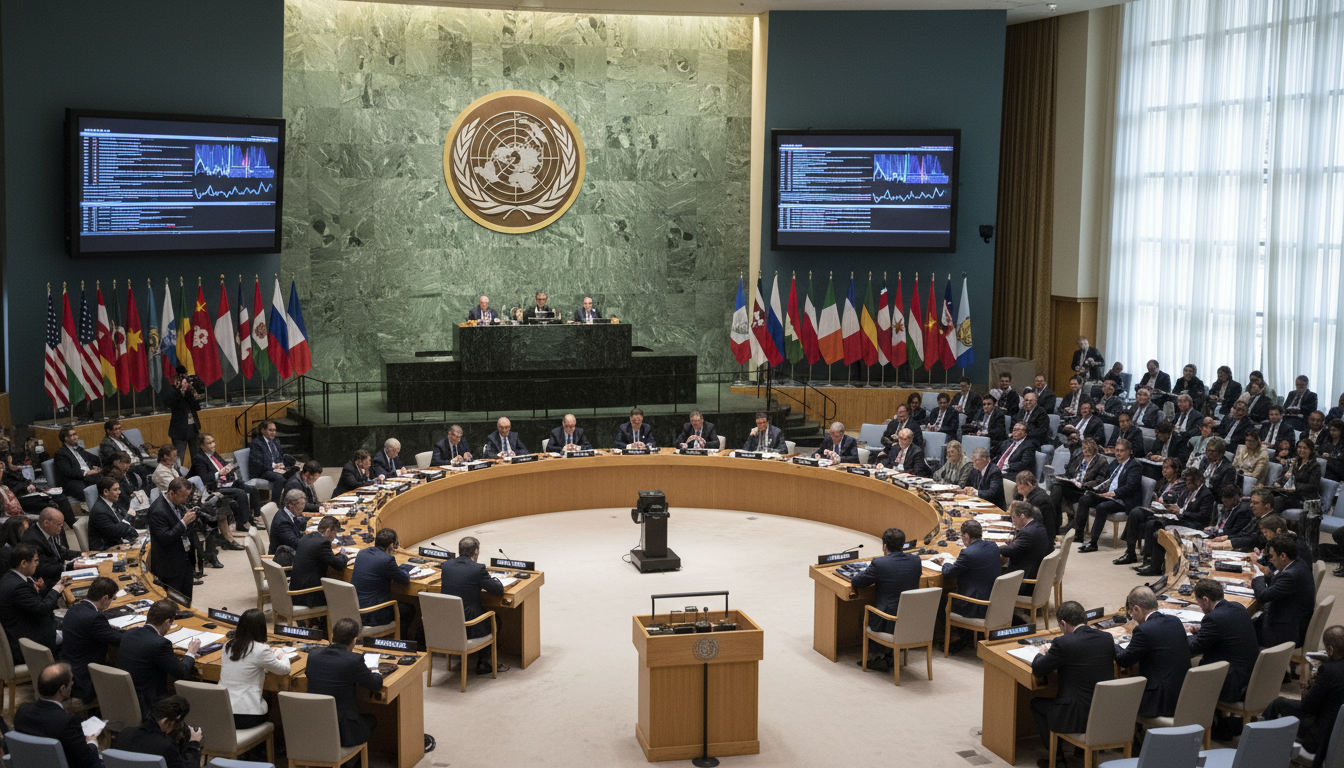
Nuclear Non-Proliferation Treaty review opens in New York as officials warn of rising arsenals
UN review of the Nuclear Non-Proliferation Treaty opens April 27, 2026 in New York as leaders warn of rising arsenals, erosion of arms control and AI risks.
The United Nations on April 27, 2026 opened a four-week review of the Nuclear Non-Proliferation Treaty (NPT) in New York, tasked with assessing global compliance and charting a path to strengthen the accord. Delegates from nearly all signatory states convened amid heightened tensions between major powers and growing concern that progress on disarmament is stalling.
UN Secretary-General António Guterres set a stark tone in his opening remarks, urging states to repair frayed trust and revive the treaty’s relevance for the coming decades. The conference president, Vietnam’s ambassador Do Hung Viet, warned that failure could accelerate a fresh arms race with global consequences.
High stakes at the opening session
The review conference began under a heavy spotlight because decisions will be reached by consensus and past meetings have stalled. Delegates face a packed agenda that includes disarmament commitments, verification measures and regional security issues.
Organizers set the conference to run until May 22, 2026, giving states four weeks to negotiate a political outcome that would shape non-proliferation policy for years. Observers say even modest language will be hard-won given the divisions among nuclear-armed and non-nuclear states.
Warnings from the United Nations leadership
Mr. Guterres warned delegates that the world is perilously close to strategic miscalculation and urged renewed commitments to avoid catastrophic risk. He called for concrete steps to restore the credibility of the NPT and to rebuild the international arms‑control architecture.
Other senior UN officials echoed that message, emphasizing that trust between states is fraying and that the treaty’s survival depends on demonstrable action, not rhetoric. The tone reflected the proximity of a range of security crises that complicate consensus-building.
Loss of bilateral safeguards after New START expiration
Delegates noted that the bilateral framework that once underpinned U.S.-Russia strategic stability has weakened since the New START treaty lapsed in February 2026. The absence of that verification mechanism removes a key pillar of transparency between the two largest nuclear arsenals.
Several delegations warned that without renewed bilateral controls, multilateral forums like the NPT review become the main arena to manage risk, even as trust erodes. Diplomats said rebuilding those lines of communication will be essential to prevent an arms escalation.
Global stockpiles and trends cited by experts
Citing assessments from independent monitors, delegates highlighted that the nine nuclear-armed states possessed more than 12,000 warheads as of January 2025, with the bulk held by the United States and Russia. UN disarmament officials reported signs of renewed quantitative increases in several arsenals.
Representatives from the G7 expressed concern over modernization programs in Russia and China, while others pointed to national policy shifts, including proposals to expand or update deterrent forces. These developments have intensified calls for clearer limits and verification measures under the NPT framework.
Regional flashpoints complicate consensus
Longstanding regional disputes remain a central obstacle to agreement, with Iran’s nuclear programme and North Korea’s weapons activities singled out as sources of acute concern. Some states argued that unresolved regional tensions continue to undermine the treaty’s universal goals.
Past review conferences have failed to adopt final political declarations because of linked regional disputes, including opposition to proposals for a Middle East nuclear‑weapon‑free zone and disagreements over references to specific incidents. Diplomats warned that similar fault lines could derail progress this year.
Artificial intelligence enters nuclear debate
For the first time in earnest at an NPT review, delegates debated how advances in artificial intelligence might affect nuclear command-and-control and early-warning systems. Campaigners and some states called for explicit commitments to maintain human oversight of launch decisions.
Advocacy groups cautioned that integrating AI into decision-support platforms could create new risks of error or escalation, even if an AI system never directly controls a weapon. The issue is expected to animate negotiations as states weigh the technological and ethical implications.
The conference presidency and UN disarmament officials said the coming weeks would test whether states can translate warnings into practical measures that reduce risk and rebuild confidence. The outcome of negotiations by May 22, 2026 will signal whether the Nuclear Non‑Proliferation Treaty can be renewed with the authority needed to deter a renewed arms race.
