
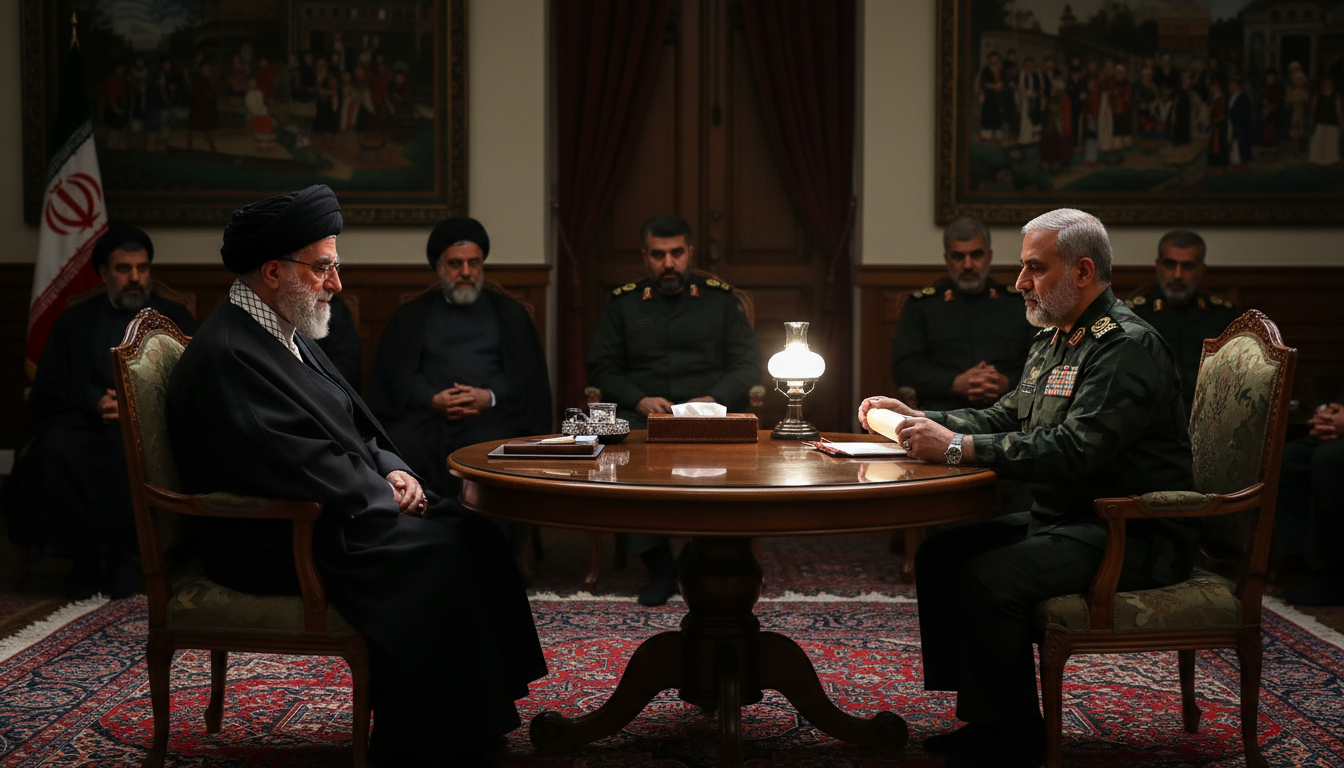
Iran’s leadership under scrutiny as new account raises questions about the supreme leader’s condition
A recent detailed account about Iran’s leadership and the supreme leader’s health has sparked debate over sourcing, historical context and implications for regional policy, raising fresh doubts ahead of potential negotiations.
Initial account and central claims
A long-form report circulated this week portrays Iran’s new supreme leader as injured and communicating through intermediaries, describing limited public appearances and an aversion to video. The piece relies heavily on interviews with current and former Iranian officials and individuals close to the leadership, presenting a portrait that many observers find striking and consequential. The report’s depiction of how decisions are being made in Tehran has immediately influenced how diplomats and analysts are parsing Iran’s options.
Questions about verification and sourcing
Independent corroboration for the central medical and operational claims is noticeably absent in the account, and no direct medical records or contemporaneous photographs were produced. Sources are described as unnamed insiders and former officials, which raises predictable concerns about incentives, access and the degree to which interviewees reflect competing factions. In environments where the state tightly controls access to reporters, the use of such sources requires careful caveats that some critics say were not made explicit.
Historical continuity between clerics and the IRGC
The new narrative that emphasises a decisive shift from clerical authority to military hardliners is challenged by a lengthy record of joint clerical–military projects. Over decades the clerical leadership and the Islamic Revolutionary Guard Corps pursued coordinated strategies: advancing missile and drone programs, expanding proxy networks across the region, and backing paramilitary campaigns that affected U.S. forces and regional partners. Many analysts note that the IRGC frequently acted as the operational arm for policies grounded in clerical strategy, suggesting partnership rather than clear institutional separation.
How framing reshapes perceptions of radicalisation
Framing the current moment as a rupture from clerical moderation toward an entirely military-driven state can distort both history and present incentives inside Iran. When media narratives emphasise a sudden radicalisation, they risk missing the continuity that has defined Tehran’s strategic posture for decades. That framing can also serve the regime by validating an internally coherent message: that leadership remains intact and purposeful even amid visible changes to personnel or style.
Policy implications for Washington and regional capitals
Perceptions about who is in charge in Tehran shape how governments choose to respond — whether through military pressure, diplomatic outreach, or a combination of both. Some commentators have argued that intense external pressure, including recent strikes, has reduced Tehran’s room for manoeuvre and therefore increased the attractiveness of negotiation for pragmatic reasons. Others caution that bargaining from a position of force can strengthen hardline rhetoric and complicate efforts to reach durable arrangements on nuclear, missile and proxy questions.
Analysts’ advice on interpreting the evidence
Experts advising policymakers urge skepticism about any account that rests primarily on interested insiders and lacks material verification. They recommend triangulating claims with satellite imagery, communications intercepts and corroborating statements from multiple, independently verifiable sources before drawing major conclusions. At the same time, seasoned diplomats acknowledge that even constrained or biased reporting can offer useful clues when set against known institutional patterns and historical behaviour.
Domestic and regional reaction dynamics
Within the region, perceptions of leadership stability and competence in Tehran will shape the calculations of Israel, Gulf states and Iraqi and Lebanese actors with direct ties to Iran’s networks. Public narratives inside Iran also matter: portraying the supreme leader as functioning, even if injured, may be intended to preserve regime legitimacy and deter rivals. For foreign capitals, responding to Iran’s moves requires balancing credible deterrence with an openness to diplomatic channels that might reduce escalation.
The debate over the recent account of Iran’s leadership underscores the challenge facing journalists, analysts and policymakers: distinguishing between verifiable developments and narratives that serve particular interests. Careful, evidence-based reporting and cautious policymaking will both be essential as regional tensions and diplomatic opportunities evolve.
