
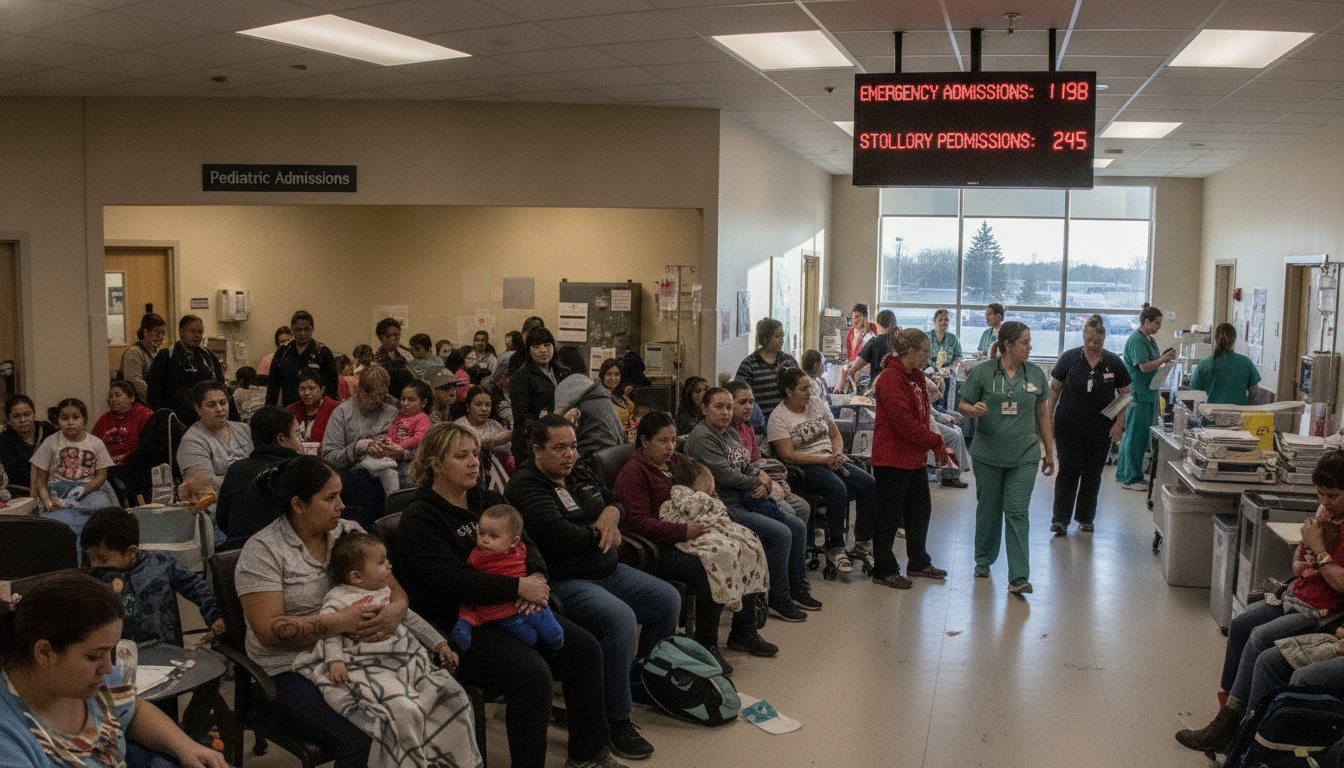
Edmonton emergency admissions rise sharply as pediatric cases surge at Stollery
Alberta Health Services data show Edmonton emergency admissions climbed to 1,198 in Apr 1, 2025–Feb 28, 2026, with Stollery pediatric admissions rising to 136 reported.
Edmonton emergency admissions rose sharply in the most recent fiscal period, according to Alberta Health Services data covering April 1, 2025, to Feb. 28, 2026. The report shows 1,198 people were admitted from emergency departments and urgent care centres across Edmonton, up from 813 in the prior year. That increase included a pronounced rise in children admitted to the Stollery Children’s Hospital, which recorded 136 admissions compared with 61 the year before. The numbers point to growing pressure on emergency and urgent-care capacity in the city.
ED visits spike in 2025-26 fiscal year
AHS recorded an additional 385 admissions in Edmonton emergency departments and urgent care centres in the period measured, a rise of roughly 47.4 percent compared with the previous fiscal year. The dataset aggregates admissions from multiple acute care and urgent-care sites in the Edmonton area, highlighting a notable shift in demand. The jump in ED visits comes despite the reporting window ending on Feb. 28, 2026, and does not include any admissions that may have occurred in March 2026. Health planners will likely treat the year-to-date increase as an indicator of changing service needs.
Pediatric admissions at Stollery more than doubled
Admissions to Stollery Children’s Hospital rose from 61 in 2024–25 to 136 in the latest reporting period, an increase of 75 patients or about 123 percent. That more-than-doubling of pediatric admissions represents the most striking subset of the overall rise in Edmonton emergency admissions. Pediatric case increases can have outsized operational effects because children often require different triage, staffing and bed configurations than adults. The Stollery is the region’s primary pediatric centre, and higher admission rates there can reverberate across the broader pediatric care network.
Alberta Health Services data and fiscal timeframe
The figures cited come from Alberta Health Services and cover the fiscal interval beginning April 1, 2025, and ending Feb. 28, 2026. AHS’s reporting distinguishes between admissions originating in emergency departments and those from urgent care centres, and the numbers quoted are for Edmonton-specific sites. Using fiscal-year reporting allows comparison with the previous April-to-March cycle, but the cutoff of Feb. 28 means year-end totals may shift slightly once complete annual data are compiled. The AHS dataset provides the core factual basis for the increases reported in both adult and pediatric categories.
Operational strains on emergency and urgent care capacity
Rising admissions translate into higher occupancy rates, increased demand for nursing and physician coverage, and potentially longer waits in emergency departments and urgent-care settings. Hospitals facing sudden or sustained admission increases must manage bed allocation, expedite discharges where safe, and coordinate transfers to specialty units as needed. For pediatric services, the requirement for child-size equipment, family-centred care spaces and pediatric-trained clinical staff adds complexity to surge management. Health system resilience depends on matching these operational needs with available resources.
Implications for families and community health services
An uptick in Edmonton emergency admissions has practical consequences for families seeking timely care, particularly for parents of young children who may face longer waits or the need to travel between facilities. Increased reliance on emergency and urgent-care settings can signal gaps in access to primary care, community clinics or after-hours services that might otherwise treat non-life-threatening conditions. Strengthening family health resources, expanding same-day primary-care options and bolstering public-health outreach are commonly discussed responses when ED usage climbs, though each requires coordinated planning and funding.
Next steps for hospitals and health planners
Hospital administrators and regional planners typically review such AHS admissions data to calibrate staffing, allocate beds and adjust elective schedules if necessary. Short-term responses may include targeted redeployment of staff, extending hours at urgent-care centres, or reinforcing pediatric inpatient capacity. Mid- and long-term strategies could involve investments in community-based care, enhanced primary-care access, and targeted public-health campaigns to reduce preventable emergency visits. Agencies responsible for health system planning will be watching subsequent monthly and annual reports to determine whether the increase represents a transient spike or a sustained trend.
The Alberta Health Services figures for April 1, 2025, to Feb. 28, 2026 signal a clear rise in Edmonton emergency admissions and a pronounced jump in pediatric hospitalizations at the Stollery, and they will inform operational decisions and planning discussions as health authorities work to align resources with changing demand.
