
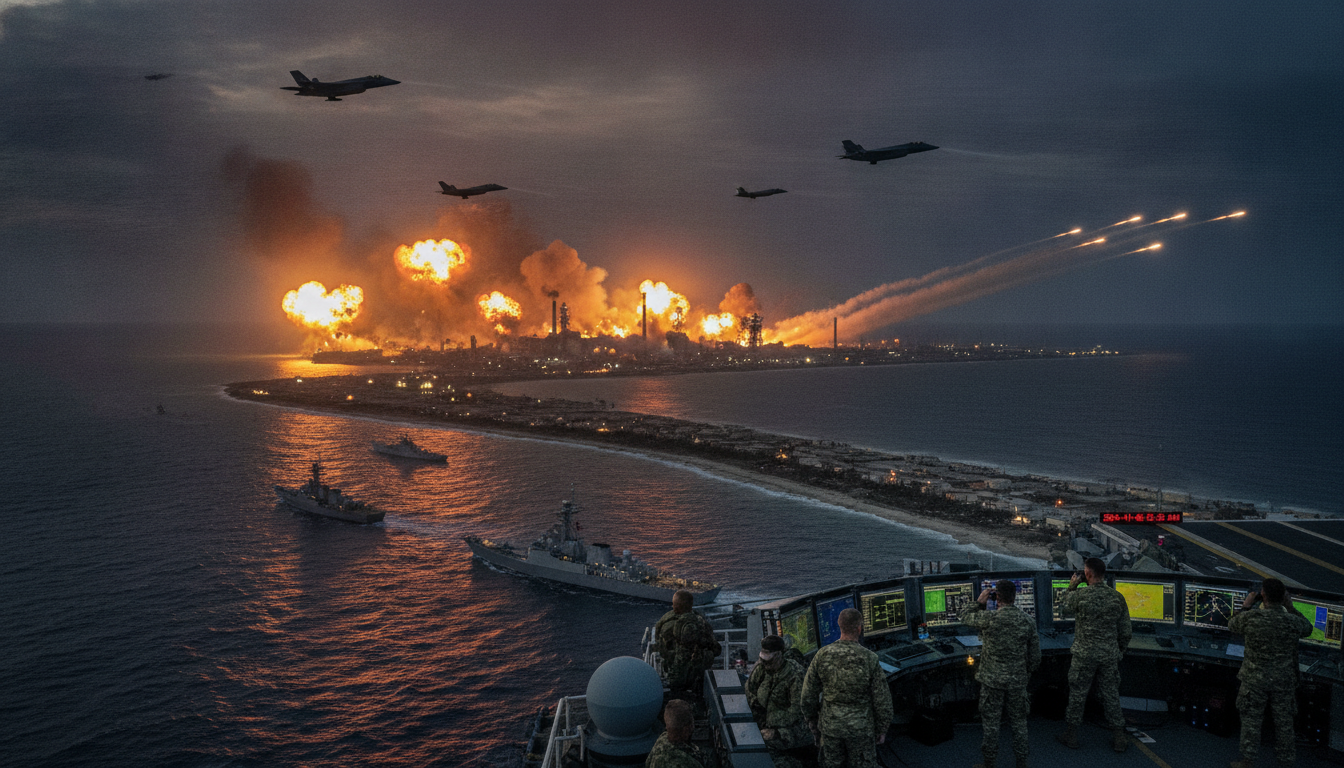
US strikes on Iran: CENTCOM says third round hit about 140 military sites
US strikes on Iran: CENTCOM says a third round struck roughly 140 military sites after an IRGC attack disabled the Cyprus-flagged M/V GFS Galaxy, killing one crew member missing.
Opening summary
US Central Command said on July 12, 2026, that it carried out a third round of strikes against Iran, targeting about 140 military sites across the country in response to an attack attributed to the Islamic Revolutionary Guard Corps. The strikes, described by CENTCOM as focused on missile and drone infrastructure, followed an IRGC assault on the Cyprus-flagged M/V GFS Galaxy in the Strait of Hormuz that left the vessel disabled by fire and one crew member missing. The announcement marks a significant escalation in a series of tit-for-tat military actions that have intensified tensions in the Gulf.
US Central Command Reports Third Wave of Strikes
CENTCOM officials said the most recent operations were a continuation of strikes conducted earlier in the week and targeted what they characterized as operational and logistical facilities used by Iranian forces. The command described the action as limited and calibrated, aimed at degrading Iran’s capability to mount further attacks on commercial shipping and allied forces. Officials emphasized the strikes were precise and timed to minimize civilian casualties while achieving military objectives.
Targets Included Missile and Drone Facilities
According to CENTCOM, the strikes hit a range of infrastructure, including missile storage sites, drone launch facilities and command-and-control nodes that support long-range strike capability. Military analysts note that degrading those nodes would reduce the speed and scope of Iran’s ability to coordinate attacks by unmanned systems and short-to-medium range missiles. The scale of the campaign — about 140 sites — suggests a broad effort to disrupt both the weapons themselves and the supply chains and personnel that sustain them.
Attack on Cyprus-flagged M/V GFS Galaxy Triggered Response
The strikes came after the Islamic Revolutionary Guard Corps was blamed for an attack on the Cyprus-flagged M/V GFS Galaxy in the Strait of Hormuz that set the ship on fire and rendered it disabled. Reports from July 12, 2026, indicate one crew member was reported missing following the incident, and the vessel suffered significant damage that halted its voyage through one of the world’s busiest maritime chokepoints. U.S. and allied officials framed the military response as aimed at preventing further assaults on commercial shipping and deterring future IRGC operations.
Casualty and Damage Assessments
Neither CENTCOM nor Iranian authorities provided detailed independent verifications of casualties or exact damage assessments following the strikes, and reporting from the region remains limited and contested. CENTCOM stated its targeting process sought to avoid noncombatant harm, while Iranian state media framed any damage as evidence of defensive preparedness against foreign aggression. Independent verification from third-party monitors and on-the-ground reporting will be needed in the coming days to confirm the scale of destruction and any loss of life.
Regional Military Posture and Shipping Lanes
The strikes are likely to prompt heightened military readiness among naval and air forces operating in the Gulf and adjacent waters, with a direct impact on commercial shipping insurance rates and transit patterns through the Strait of Hormuz. Maritime authorities and shipping companies have already altered routes and schedules in response to prior incidents in the area, and analysts warn prolonged instability could drive longer detours that increase costs and delivery times for global energy and goods shipments. Regional states, including Gulf Cooperation Council members and those with naval presences in the area, will be monitoring developments closely to calibrate their own responses.
International Reactions and Diplomatic Risks
Countries with interests in Gulf stability called for restraint while many governments reviewed their positions and security postures in the wake of the strikes and the ship attack. Diplomats stressed the need to avoid further escalation that could draw additional states into a broader conflict, even as some allies expressed support for measures to protect commercial shipping. The strikes also increase pressure on international fora to find mechanisms to de-escalate, though trust deficits and competing strategic priorities have so far limited progress toward a diplomatic resolution.
The latest military actions underscore the fragility of security in the Strait of Hormuz and the wider Middle East, as well as the potential for localized incidents to spark wider confrontations. With independent verification and diplomatic signals still emerging, the immediate days ahead are likely to determine whether the situation cools through back-channel negotiations or intensifies through additional military moves.
