
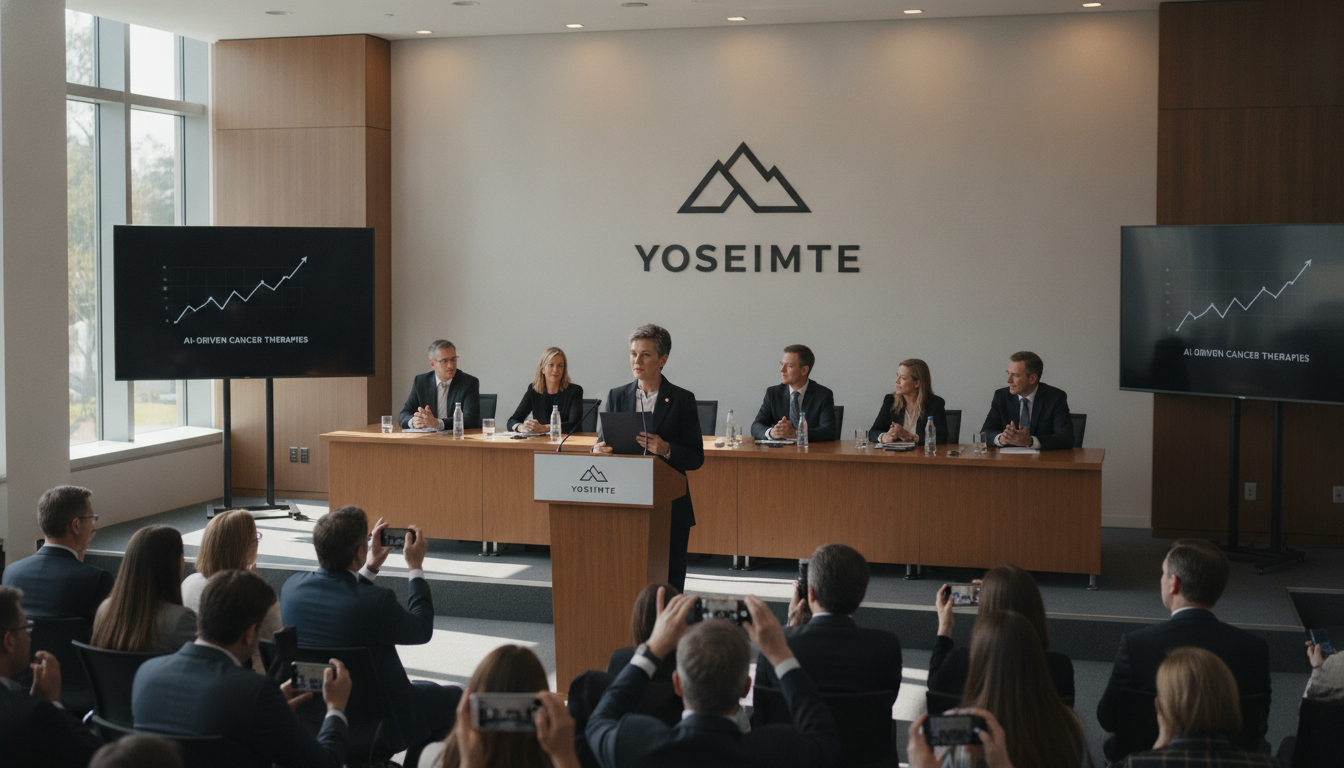
Yosemite venture firm eyes $350M fund as AI accelerates oncology company building
Yosemite venture firm led by Reed Jobs is moving to close a $350 million second fund, leveraging AI and academic spinouts to build oncology startups and compress drug timelines.
Yosemite fundraise and strategy
Yosemite has signaled strong momentum as it advances the first close of a second fund targeting $350 million and expands a team focused exclusively on cancer. The firm allocates roughly one-third of new capital to companies it incubates from academic research, while the remainder backs external founders and early-stage biotech teams.
The fund also embeds philanthropy into its model, setting aside about 2.5 percent of assets for a donor-advised grant pool and dedicating additional management fee dollars to no-strings funding. That blended approach is intended to de-risk nascent lab ideas and bridge early translational gaps that traditional venture capital often avoids.
Building companies from university research
Yosemite emphasizes company creation as a core competency, partnering with labs at institutions such as Yale, Berkeley, and Stanford to convert promising biology into startups. The firm says it will take early inventions forward through initial de-risking and operational setup rather than waiting for relicensing opportunities to emerge.
This in-house incubation has already produced portfolio companies that moved into the clinic, and Yosemite views the model as a way to shape platforms and modalities—small molecules, gene editing, radiopharmaceuticals, and device-based approaches—at a point when scientific direction can still be defined.
AI’s role in discovery and clinical trials
Reed Jobs and his team point to artificial intelligence as a material accelerant across both discovery and trial design, not merely as a tool for automation. In discovery, AI has expanded the range of “druggable” pockets on proteins that previously lacked obvious binding surfaces, enabling novel modalities to target historically intractable genes.
On the clinical side, Yosemite is exploring AI-enabled trial designs such as synthetic control arms and improved patient matching to reduce the number of participants required and shorten timelines. Those innovations aim to lower the steep cost of late-stage oncology trials, where single Phase 3 programs can run into the hundreds of millions of dollars.
Portfolio highlights and scientific bets
Yosemite’s first fund contains roughly two dozen companies spanning therapeutics and devices, with notable bets including an Azalea program that advanced from an academic grant into the clinic and Quarry, which pursues induced proximity approaches to degrade disease-driving proteins. The firm is also backing epigenetic editing programs and noninvasive device therapies targeting liver and pancreatic tumors.
A central scientific focus is on targets long considered undruggable, with multiple portfolio efforts aimed at the tumor suppressor p53 and other high-value oncology targets. Reed Jobs describes p53 as a universal vulnerability across cancers and says Yosemite supports several strategies to reactivate or exploit its altered forms.
Market dynamics and exit activity
The fundraising environment for biotech has shifted since Yosemite launched in 2023, driven in part by easing interest rate pressures and a wave of patent expirations that has prompted acquisition interest from large pharma. Recent multibillion-dollar deals and breakthrough approvals have brought fresh capital and exit pathways back into play for oncology startups.
Yosemite’s leaders view that acquisitive backdrop as a tailwind, citing recent high-profile transactions and scientific advances that have expanded pharma’s buying appetite. The firm also acknowledges the persistent policy risks around public research funding but notes broad legislative support for medical research in recent cycles.
Founder expectations and pitch advice
Yosemite says it evaluates opportunities primarily on scientific merit rather than pedigree, taking blind looks at CVs and focusing on whether an idea can materially affect patients. The firm encourages founders to think strategically about partnerships with large pharmaceutical companies, noting that an early pharma check can bring resources but may narrow future exit options.
The team emphasizes that strong storytelling by CEOs matters in biotech as it does in other sectors, because raising capital and building organizational momentum require clear communication of clinical and commercial paths. Yosemite maintains an open-door approach for academics and operators seeking grant support or early-stage investment.
Three years after launching, the firm reports nearly 25 portfolio companies and a small number of science-driven terminations, reflecting the high-risk, high-reward nature of early-stage oncology work. Yosemite’s leaders say they remain focused on creating novel areas of medicine rather than simply following established trends.
Yosemite venture firm intends to push further into frontier biology while using AI and philanthropic capital to accelerate translational work, positioning itself to capture opportunities as drug discovery and trial design evolve.
