
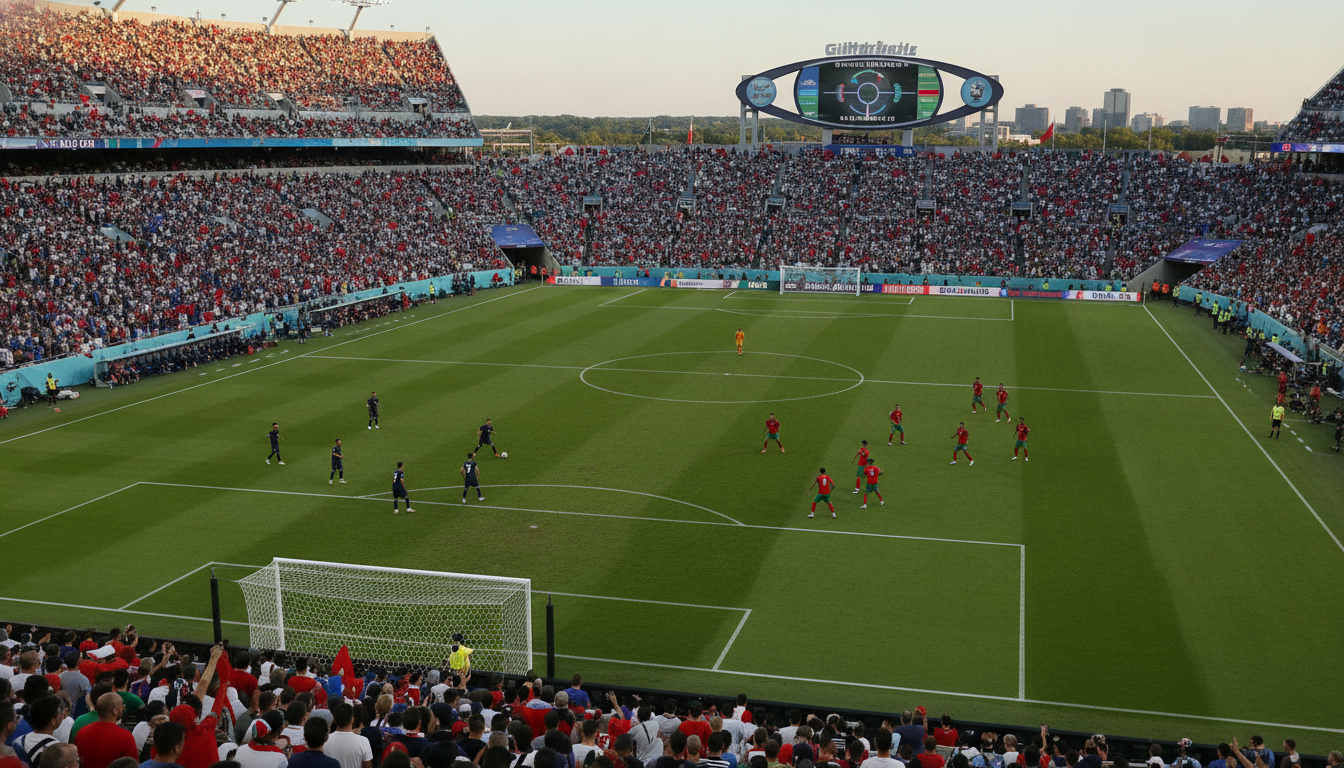
France vs Morocco: World Cup 2026 quarterfinal — Mbappé leads France, Saibari ruled out
Preview of France vs Morocco at the 2026 World Cup in Foxborough on July 9. Mbappé stars for France; Morocco cope without injured striker Ismael Saibari.
France vs Morocco in Foxborough on July 9 is the opening quarterfinal of the 2026 World Cup and pits tournament favourites against the continent’s latest breakthrough. France enter the match after a flawless run of five wins and a 14-2 goal record, while Morocco arrive as 2025 Africa Cup of Nations champions aiming to extend a remarkable unbeaten streak. The game at Boston Stadium carries heavyweight implications for both squads and is scheduled for 4pm local time (20:00 GMT).
France enter quarterfinals with perfect record
France have combined clinical finishing with defensive resilience to top Group I and navigate two knockout rounds without dropping a point. Kylian Mbappé has been the standout, scoring seven goals and leading the race for the Golden Boot, supported by Ousmane Dembélé, Michael Olise and Bradley Barcola. Didier Deschamps’s side has shown tactical flexibility, finding different ways to win whether by outscoring opponents or grinding out narrow wins.
Assistant coach Guy Stephan stressed the team’s maturity after a physical last-16 win over Paraguay, saying the match exposed France’s capacity to manage adversity. That blend of experience and youthful attacking verve underpins France’s bid for a third world title. The Les Bleus squad will also monitor fitness and disciplinary issues ahead of the encounter.
Morocco arrive as African champions but lose Saibari
Morocco have shed the “surprise” tag and now stand as genuine contenders after securing the 2025 AFCON title and compiling a 34-match unbeaten run heading into the quarterfinals. The Atlas Lions topped their knockout tests with a dramatic penalty shootout victory over the Netherlands followed by a 3-0 win against Canada, with Brahim Díaz and Soufiane Rahimi among the key contributors. Coach Mohamed Ouahbi, in charge for four months, has emphasised that Morocco now expect to compete deep into tournaments.
The squad suffered a significant setback when forward Ismael Saibari, who scored in each group match and netted the decisive penalty in the shootout against the Netherlands, was ruled out with a hamstring injury. Saibari’s absence deprives Morocco of one of their most potent scoring options and forces tactical adjustments up front. The likely inclusion of Rahimi would alter the team’s attacking makeup and place greater creative responsibility on Díaz.
Tactical battle and transition threat
The clash shapes up as a contrast between France’s explosive forward line and Morocco’s disciplined, transition-focused structure. France prefer to press high and create overloads down the flanks, relying on Mbappé’s pace and Olise’s cutting runs to unsettle defences. Morocco have been effective on the counter, quick to exploit open space and dangerous from wide areas where Díaz and Rahimi can pick out runners.
Guy Stephan described Morocco as a “well-organised, well-structured team” with individual quality on both flanks, warning that France must manage transitions carefully. Set pieces and turnovers could prove decisive in a match expected to be tightly contested, with both coaches likely to prioritise tactical discipline while seeking moments to break the deadlock.
Injuries, bookings and team selection
Availability issues will shape both managers’ plans, with France also facing uncertainty over midfielder Aurélien Tchouaméni after an adductor problem sustained before the round of 16. Three French players — Olise, Barcola and Manu Kone — picked up yellow cards in the last match and risk suspension if cautioned again. Those disciplinary factors could limit rotation or force more conservative choices.
Morocco’s squad will be without Saibari, pushing Mohamed Ouahbi to consider formations that maintain attacking thrust without his lead striker. Predicted lineups point to a 4-2-3-1 for both sides, with France expected to field Maignan in goal and a front line that features Mbappé supported by Dembélé and Olise. Morocco are likely to deploy Bounou in goal and line up Díaz, Ounahi and Rahimi behind a lone striker in an attempt to balance creativity and defensive cover.
Opta model favours France but match could go long
Statistical models give France the edge, with one Opta-based projection placing France’s probability of a regulation-time win at about 61.7 percent, Morocco’s at 16.2 percent, and a 22.1 percent chance of the game going to extra time. Those numbers reflect France’s scoring record and squad depth, yet models cannot account for the momentum and tactical discipline Morocco have shown.
Key inflection points will be first-half goals, substitutions and how each side handles high-pressure moments. If Morocco can neutralise France’s wide threats and force a scrappy, physical contest, they stand a realistic chance of taking the game beyond 90 minutes and into a scenario where the margins narrow.
Road to the semifinals and tournament implications
The winner of France vs Morocco will advance to face either Spain or Belgium in the semifinal at AT&T Stadium in Dallas on July 14, raising the stakes for both teams in Foxborough. For France, progression would sustain a march toward a third world crown and strengthen Mbappé’s claim to repeat as top scorer. For Morocco, a victory would mark consecutive World Cup semifinal appearances and further solidify their status as a leading force from Africa and the Arab world.
Beyond immediate advancement, the result will influence narrative threads about European dominance, the rise of African football, and the tournament’s balance of power. Tactical lessons and lineup decisions from this match are likely to reverberate through the remaining rounds.
France vs Morocco is not only a test of talent but of adaptability under pressure, and with both teams possessing clear strengths, the quarterfinal promises a compelling contest on July 9.
The winner will arrive in Dallas seven days later to prepare for the semifinal, carrying momentum, injuries and tactical questions that could decide who reaches the final.
