
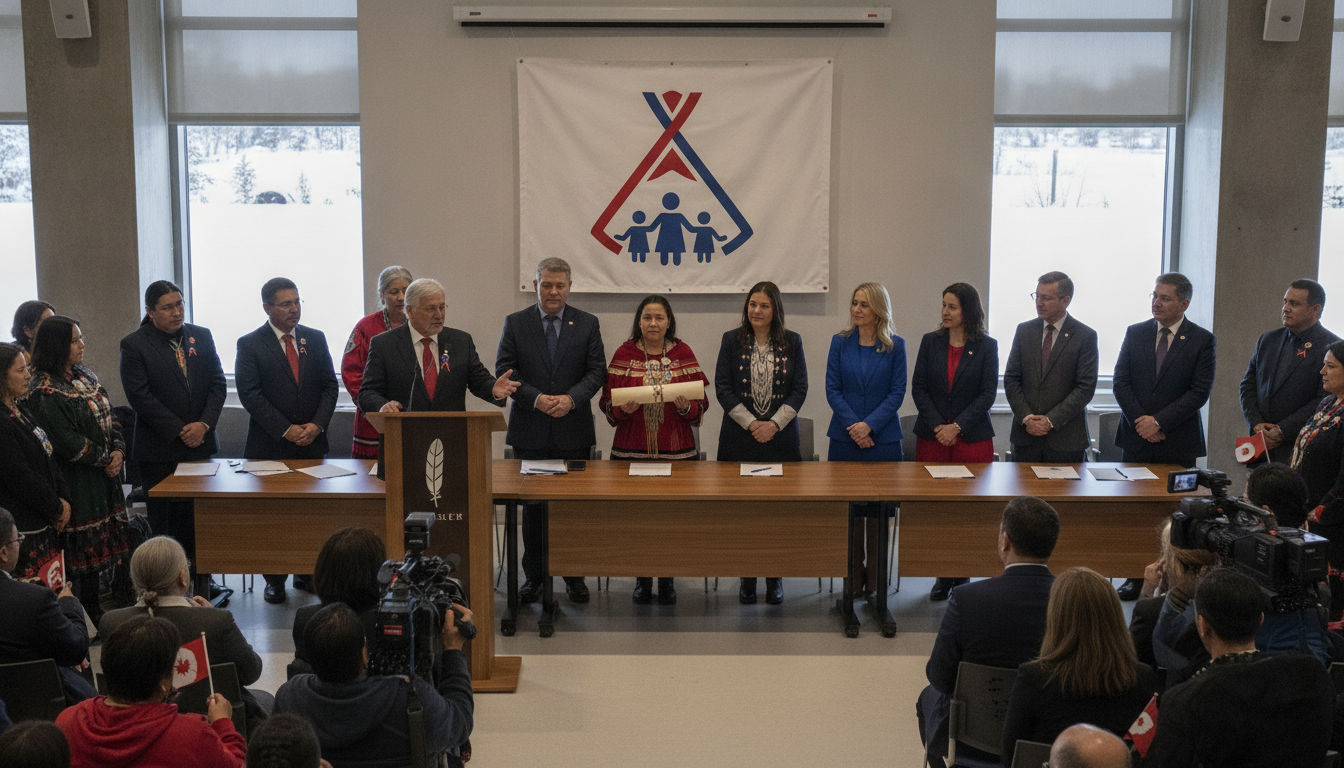
Mashteuiatsh youth protection law Uashteshkuau Tipelitamun adopted under federal framework
Mashteuiatsh youth protection law Uashteshkuau Tipelitamun adopted by the Innu community; tripartite sign-off with Ottawa and Québec and an 18–24 month rollout.
The Pekuakamiulnuatsh of Mashteuiatsh have adopted a new youth protection law called Uashteshkuau Tipelitamun under a federal regulation, a move the community says will better reflect Innu values and ways of life. The Mashteuiatsh youth protection law is the result of three years of work by a legislative commission and community leaders. A formal agreement with Québec and Ottawa remains required before the law can take effect and a negotiated implementation period of 18 to 24 months is expected.
Mashteuiatsh adopts Uashteshkuau Tipelitamun
The community voted to establish its own framework for child and family services under the federal provisions that allow First Nations to enact local laws in this area. The law, named Uashteshkuau Tipelitamun, was developed to provide a culturally grounded alternative to Quebec’s existing youth protection regime. Leaders say the measure aims to place responsibility for protecting children squarely with the community and its institutions.
Cultural foundations shape the new law
Community officials have emphasized that the law is designed around Innu values, traditions and customs rather than external policy models. Legislative drafters sought teachings from Elders and structured the law to prioritize cultural reconnection and community-based caregiving. Officials argue this culturally specific approach will improve outcomes by keeping children connected to family, language and identity.
Chief frames adoption as self-determination
Chief Jonathan Germain described the adoption as the start of a broader assertion of self-determination in matters of child welfare. He said the community intends to assume full responsibility for protecting its children and to manage services in ways that reflect local priorities. Germain called the step a first milestone, with further negotiation needed to formalize the law’s application.
Councillor leading the legislative work speaks to experience
Councillor Carina Dominique, who chaired the commission that drafted the law, said the work was informed by personal and collective experiences with the child protection system. Dominique has highlighted the commission’s consultations with Elders and the centrality of customary practices to the legislative text. She noted that reconnecting families to cultural roots played a major role in shaping provisions intended to prevent harm and support healing.
Tripartite agreement with Ottawa and Québec still required
For Uashteshkuau Tipelitamun to be enforceable, the community must negotiate and sign a tripartite agreement with provincial and federal governments. Officials expect negotiations to begin now and to take between 18 and 24 months to complete, covering operational details, funding and oversight mechanisms. Until that accord is finalized, the law exists as a community enactment adopted under federal regulation but not yet in force.
Similar arrangements already completed in other nations
Mashteuiatsh’s move follows a pattern of First Nations seeking jurisdiction over child and family services through negotiated agreements. Communities such as Uashat mak Mani-utenam on the Côte‑Nord reached a tripartite accord recently, and Opitciwan completed comparable steps in 2021. These precedents are being cited as roadmaps for Mashteuiatsh as it begins detailed negotiations with provincial and federal officials.
The community plans to produce an implementation plan in the coming months to guide staffing, training and service design ahead of the formal signing. Leaders say they will continue public consultations and prepare systems to ensure the Mashteuiatsh youth protection law operates with cultural competence and administrative clarity.
Officials stress that the negotiated agreement will address funding, accountability, and the division of responsibilities between governments and the community. The next 18 to 24 months are expected to focus on technical arrangements, capacity building and measures to ensure continuity of care for children and families during the transition.
The adoption of Uashteshkuau Tipelitamun marks a significant step for Mashteuiatsh as it moves to reclaim jurisdiction over child protection and align services with Innu culture and community priorities.
