
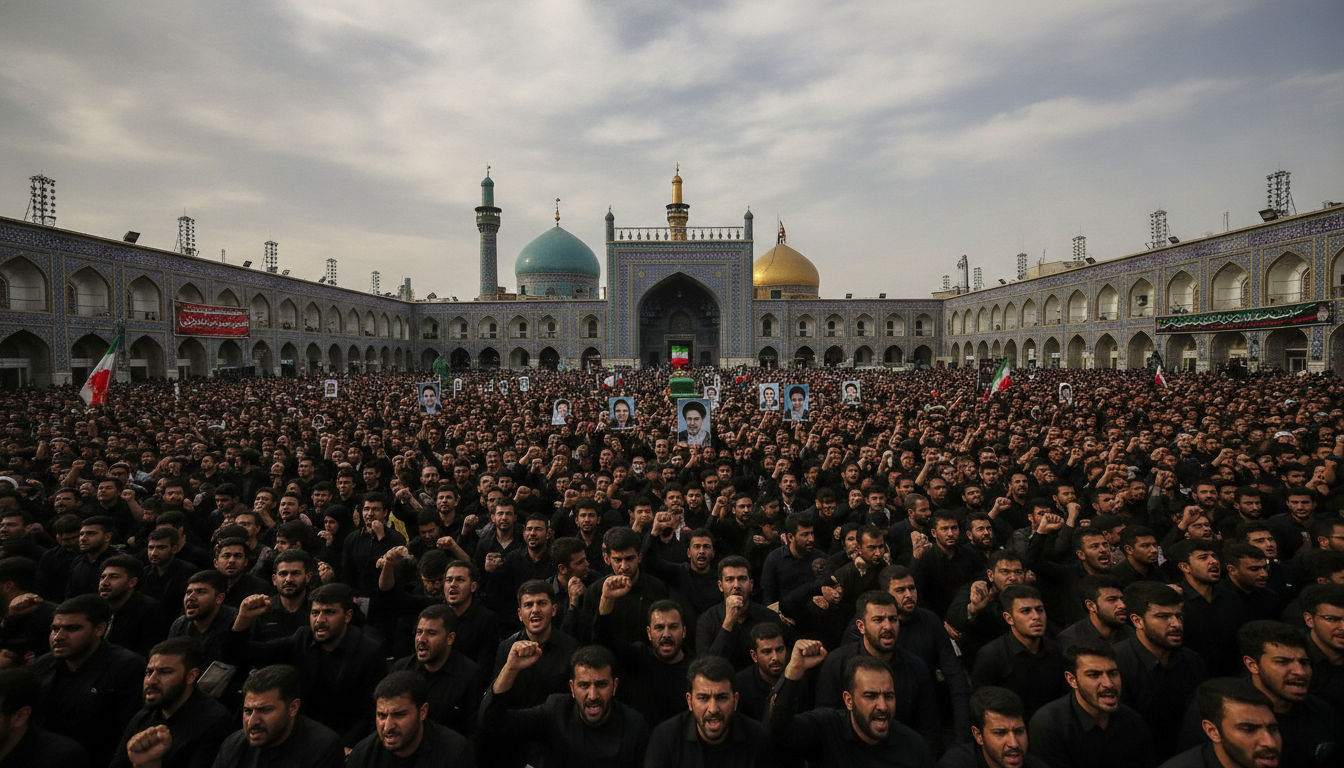
Mourners in Mashhad Condemn U.S. Strikes, Call for Revenge at State Funeral
Mashhad mourners condemned U.S. strikes and vowed retaliation after Washington said it struck back for attacks on commercial ships in the Strait of Hormuz, officials and witnesses reported.
State Funeral in Mashhad Draws Defiant Crowds
A tightly controlled state funeral in Mashhad, one of Iran’s most conservative cities, drew large numbers of mourners who openly condemned U.S. strikes that Washington described as retaliation. The gathering was organized under strict security measures and attended by officials and citizens who chanted slogans denouncing foreign intervention. Many attendees held portraits and banners that expressed solidarity with the country’s leadership and called for a robust response to the strikes.
Mourners Voice Calls for Revenge and Defiance
Speakers and participants at the funeral used the platform to denounce the U.S. strikes and to demand retaliation, framing the attacks as aggression against the nation and its symbols. The tone of the event was defiant, with repeated references to standing firm against external pressure and protecting national sovereignty. While the atmosphere was tightly managed by authorities, the rhetoric reflected deep public anger and a desire among some attendees for a strong government response.
Washington Frames Strikes as Retaliation for Maritime Attacks
U.S. officials characterized the strikes as a direct response to recent attacks on commercial ships in the Strait of Hormuz, saying the action was intended to deter further assaults on maritime traffic. Washington’s account emphasized protecting freedom of navigation and the safety of international shipping lanes that are vital to global trade. The U.S. description of events has been met with skepticism and condemnation at the funeral, where mourners rejected the justification and called for reciprocal measures.
Background: Attacks on Commercial Ships in the Strait of Hormuz
The strikes occurred amid rising tensions after a series of incidents involving commercial vessels in the strategic Strait of Hormuz, a chokepoint for global energy shipments. International shipping has faced heightened risks in the area, prompting responses from multiple countries concerned about security and uninterrupted trade. The incidents and the subsequent military action have underscored how quickly maritime skirmishes can escalate into broader diplomatic and military confrontations.
Iranian Leadership and Domestic Messaging
State-controlled events in Mashhad signaled an effort by Iranian authorities to channel public anger into a narrative of unity and resistance, portraying the strikes as an attack on the nation’s dignity. Officials used the funeral to rally support for the leadership and to emphasize a readiness to respond to external threats, while limiting visible dissent at the gathering. The messaging combined mourning for the dead with calls for steadfastness, reinforcing the government’s position in the face of international pressure.
Regional Security and Diplomatic Fallout
The exchange has heightened concerns among regional and international actors about the risk of wider conflict and disruptions to commercial shipping through the Persian Gulf and beyond. Diplomats and analysts warn that retaliatory dynamics can produce unpredictable consequences for trade and security, and could draw in other powers with interests in the region. The strikes and the public reaction in Mashhad are likely to complicate diplomatic efforts to de-escalate tensions and return to negotiated channels.
Public displays of anger at the Mashhad funeral offered a stark illustration of how domestic politics and international incidents intersect, with mourners using a state-sanctioned event to oppose actions they view as hostile. As governments weigh next steps, the situation in the Strait of Hormuz and the responses from both Tehran and Washington will be closely watched for signs of either escalation or restraint.
