
Iranian foreign minister visits Oman as U.S. presses for end to attacks in the Strait of Hormuz
Iran’s foreign minister lands in Oman amid U.S. pressure for a public end to attacks in the Strait of Hormuz; talks aim to restore safe navigation and avert wider Gulf war.
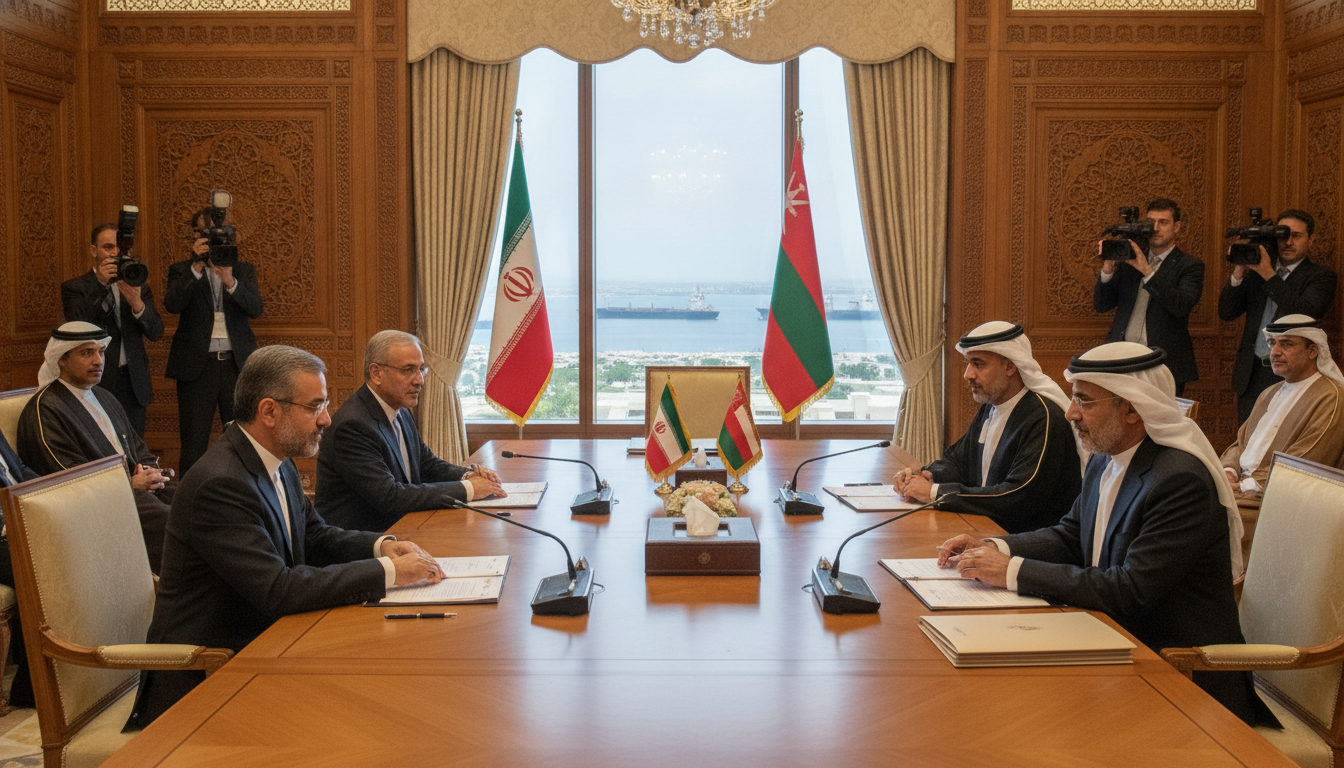
Iranian foreign minister Abbas Araghchi arrived in Oman on Saturday for talks focused on the Strait of Hormuz, as U.S. officials said they expect Iran to publicly halt attacks on commercial shipping. The visit follows a week of exchanges in the waterway that have seen Iranian forces fire on vessels and the U.S. military respond with strikes against Iranian military sites. Omani officials are taking a mediating role as regional and international attention concentrates on whether diplomatic steps can prevent further military escalation. The talks are being watched closely by commercial shippers, regional governments and Western capitals that rely on uninterrupted passage through the strait.
Iranian delegation meets Omani leadership
Abbas Araghchi’s itinerary in Muscat included a scheduled meeting with Omani Foreign Minister Badr Albusaidi, according to an Iranian foreign ministry spokesman, Esmaeil Baghaei. Iranian officials described the discussions as centering on measures to facilitate “safe navigation” through the Strait of Hormuz. Oman has long played a quiet diplomatic role in Gulf tensions and its capital is being used as the venue for these sensitive exchanges. The visit underscores Muscat’s effort to broker a pragmatic solution acceptable to multiple parties with interests in the waterway.
U.S. officials press for public declaration to end attacks
U.S. sources briefed on the matter said they expect Iran to issue a public statement acknowledging that all transit channels through the Strait of Hormuz are open and that its forces will cease firing at passing ships. Those officials, speaking on condition of anonymity, warned that failure to make and uphold such a declaration would lead to consequences for Iran. Washington has framed the demand as necessary to protect freedom of navigation and the safety of commercial shipping in one of the world’s busiest oil transit corridors. The U.S. position has added urgency to the Omani-brokered talks.
Recent clashes and military reprisals in the gulf
The latest round of hostilities began after Iran fired on three vessels transiting the strait, including ships linked to regional U.S. partners, U.S. officials said. American forces carried out retaliatory strikes over two days that they said targeted roughly 170 Iranian military positions, an operation that Iran’s health authorities reported caused dozens of casualties. Tehran responded by launching waves of ballistic missiles and armed drones toward targets in Kuwait, Bahrain and, for the first time since the truce began in June, Jordan. The exchanges have left the region in a tense, liminal state that falls short of all-out war while also defying a hoped-for return to stable arrangements.
Dispute over shipping routes and maritime control
A core source of the confrontations has been competing claims over acceptable shipping lanes through the Strait of Hormuz. Some vessels were reported to be transiting along a route close to Oman’s coast under U.S. guidance and protection; Iran has insisted that certain channels lie within its territorial waters and has sought to assert control over passage. That insistence has effectively sought to narrow the choices available to foreign ships and to place greater operational control in Tehran’s hands. The resulting friction has made commercial operators and insurers wary, increasing the diplomatic stakes of any resolution.
Oman proposes joint administration and fees on transits
Omani diplomats circulated a proposal to jointly administer the Strait of Hormuz with Iran, including the possibility of service fees levied on transiting ships, a plan that would significantly alter pre-conflict norms of largely free passage. The idea of shared management is aimed at creating a formal mechanism for oversight and security, but it would represent a major departure from customary maritime practice in the Gulf. The proposal is being evaluated in light of legal, commercial and security implications, and it faces skepticism from countries that see any imposition on free transit as unacceptable. Negotiators in Muscat will need to reconcile such ideas with international maritime law and the interests of global trading partners.
Broader diplomatic timeline and obstacles to a longer deal
The June cease-fire agreement between Tehran and Washington included a 60-day window for negotiating a broader settlement, a timetable that now appears increasingly unlikely to be met given the fresh hostilities. U.S. officials have publicly signalled impatience, with the American president declaring the prior truce “over” and warning of severe reprisals if threats against U.S. officials or interests are carried out. Iran and the United States remain locked in a fragile standoff in which neither side appears willing to accept unilateral concessions. The pathway from a temporary halt in shooting to a durable diplomatic arrangement remains complex and will depend on concessions, guarantees and third-party mediation.
Diplomats in the region say the immediate aim in Muscat is narrow and practical: secure an explicit commitment from Tehran to stop firing on commercial vessels and to allow all channels of the Strait of Hormuz to remain open. If such a declaration is issued and implemented, it could calm shipping markets and reduce the immediate risk of wider military escalation. If it is not forthcoming, officials in Washington have warned of further action, and regional governments are preparing for prolonged uncertainty over one of the globe’s most strategic maritime chokepoints.
