
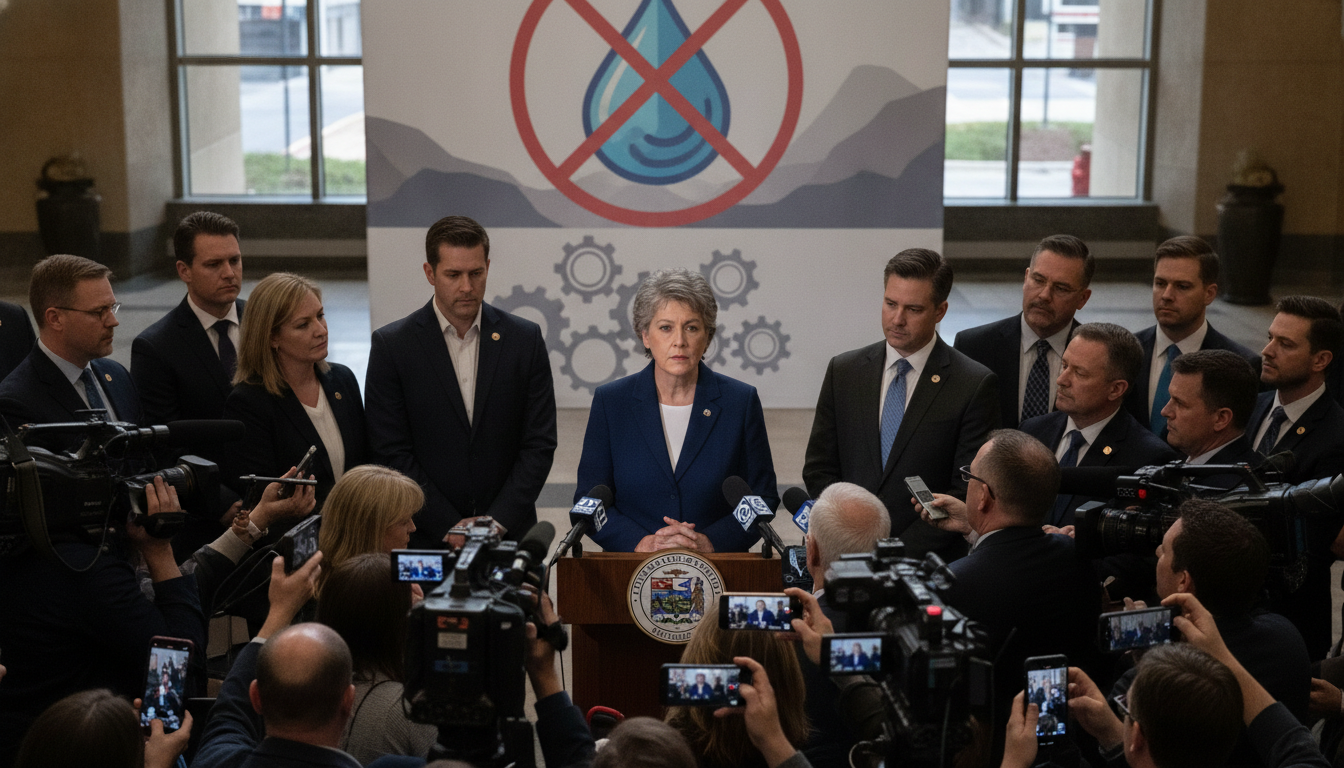
Alberta’s Water Not Coal petition rejected after verification, raising doubts over Elections Alberta’s readiness for October referendums
Elections Alberta’s rejection of the Water Not Coal petition raises concerns about signature verification and the agency’s readiness to handle October referendums.
The rejection of the Water Not Coal petition has left campaigners and political observers questioning whether Elections Alberta can reliably manage the province’s scheduled October referendums. Organizers say they gathered well above the required threshold, but a statistical verification process reduced the validated total below the level needed to force a legislative vote. The episode has intensified scrutiny of signature-checking procedures and the agency’s capacity to administer up to 10 referendum questions later this year.
Petition rejected after random sampling brought verified total below threshold
Elections Alberta reported an initial total of 196,192 valid signatures for the Water Not Coal petition, short of the 200,000 claimed by campaign volunteers but comfortably above the 177,732 threshold.
After applying a random statistical sampling method with a 95 per cent confidence level, the agency said the number of verified signatures fell to 172,088.
That reduction left the petition roughly 5,600 signatures shy of the requirement, effectively removing it from the list of active petitions and ending the immediate prospect of a legislature vote on a ban for new mines on the Eastern Slopes.
Statistical sampling and verification process under scrutiny
Elections Alberta has defended the use of random sampling as a statistically robust tool for validating large signature collections.
The agency said it applied the sampling method and followed established confidence-level protocols to estimate the number of verifiable signatories.
Critics argue the process is opaque and vulnerable to error, pointing to phone-based verification steps and the inherent margin of error that accompanies statistical estimates.
Campaigners report verification obstacles and privacy concerns
Organizers of the Water Not Coal petition said their volunteer collectors were trained to gather identification details and follow evolving rules, but many signers either lacked acceptable ID or refused to share information.
A number of verification calls went unanswered, campaigners say, noting Elections Alberta had previously warned citizens not to provide personal details to unknown callers.
Those dynamics—missing calls, reluctance to share information, and stricter ID requirements compared with past petitions—are cited by supporters as factors that may have driven the verified total down.
Political response and the package of October questions
Premier Danielle Smith said the Water Not Coal petition will not be added to the government’s list of referendum questions because it missed procedural deadlines, though she indicated officials would meet with petition representatives to discuss concerns.
The episode has unfolded alongside a contentious decision by the premier to include a question touching on separation among up to 10 items slated for an Oct. 19 ballot, a move intended to manage party divisions but which critics say has strained administrative capacity.
The presence of a separation question and other high-profile items has amplified public interest and partisan debate, raising the stakes for how Elections Alberta conducts the vote.
Operational scale and financial implications for Elections Alberta
Elections Alberta has estimated it will need to hire between 60,000 and 90,000 temporary workers to operate the referendum, depending on turnout, an organizational challenge of unprecedented scale for the agency.
Former chief electoral officers and analysts have suggested the cost of running the multi-question referendum could reach between $120 million and $130 million, compared with about $37 million for the 2023 provincial general election.
Officials now face a compressed timeline to shore up staffing, training, verification protocols and public communication before millions of ballots are expected to be cast.
The controversy over the Water Not Coal petition has deepened public debate about the transparency and reliability of signature verification and the broader referendum process. Campaigners say they may consider legal avenues to challenge the decision, while calls for an independent review of verification methods have grown louder. Whatever steps come next, the episode has underscored the urgency for Elections Alberta to clarify procedures, rebuild public confidence and demonstrate it can manage the logistical demands of a complex, high-profile ballot in October.
