
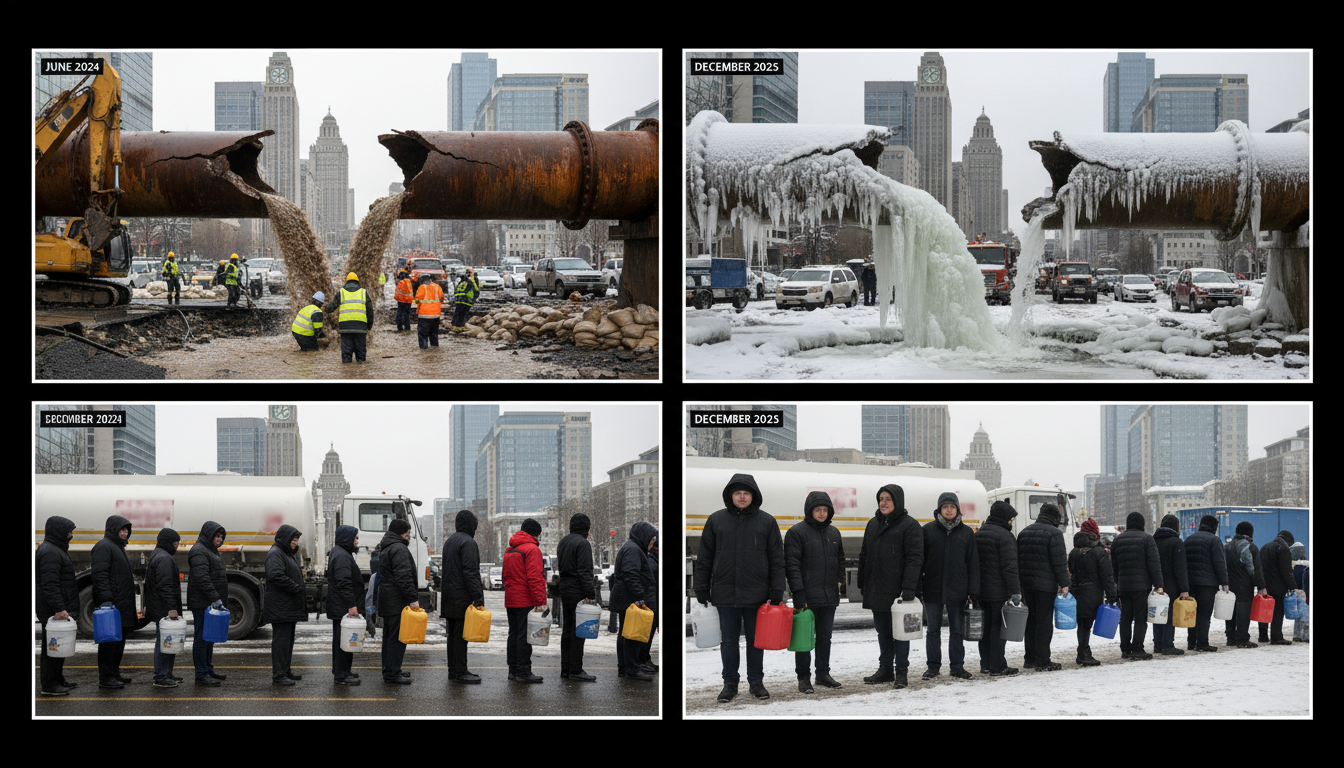
Feeder main burst in 2024 and 2025 forces extended water rationing, prompts major pipe strengthening
Two catastrophic feeder main bursts in June 2024 and December 2025 forced prolonged water rationing and prompted major strengthening of prestressed concrete pipe.
Catastrophic feeder main bursts in 2024 and 2025
The feeder main burst first in June 2024 and again in December 2025, each time along sections of a prestressed concrete cylindrical pipe that supply a broad service area. The repeated feeder main burst events led to immediate loss of capacity and exposed vulnerabilities in the aging pipeline network.
Initial emergency crews repaired the most urgent breaks, but both incidents required longer-term interventions to restore reliable service. Authorities said the combination of the two failures created months of constrained supply and a phased recovery plan.
Immediate response and emergency repairs
Following the June 2024 rupture, utility operators isolated the affected sections and began temporary bypasses to maintain service to critical customers. Emergency repair teams worked round the clock to patch the breaks and re-establish flows, prioritizing hospitals, elder-care facilities and firefighting reserves.
The December 2025 failure occurred at a different location along the same feeder main and again forced immediate shutoffs and localized boil-water advisories in some areas. Temporary measures restored partial supply, but officials warned that full service would not resume until structural reinforcement work was completed.
Extended water rationing and community impact
Prolonged water rationing became necessary during initial repairs and while crews prepared for strengthening work on the main feeder pipeline. Residents and businesses faced restrictions on non-essential water use, scheduled supply windows and reduced pressure that affected daily routines and some commercial operations.
Local governments coordinated relief efforts, including distribution points for potable water and support for small businesses hit by reduced capacity. Community leaders said the rationing highlighted inequities in access and prompted calls for clearer contingency planning for future infrastructure failures.
Engineering assessment of prestressed concrete cylindrical pipe failures
Preliminary engineering reviews identified the feeder main’s prestressed concrete cylindrical pipe as a focal point for the repeated failures. Prestressed concrete pipe relies on steel tendons and layered concrete to handle internal pressure, and investigators are examining whether material fatigue, construction defects or external forces contributed to the ruptures.
Independent engineers were contracted to perform destructive and non-destructive testing, sampling concrete and examining tendon integrity. Their assessments aim to determine whether the bursts were isolated incidents of degradation or indicative of a systemic problem that requires broader replacement.
Strengthening work and phased rehabilitation plan
In response to the findings, utility authorities launched a phased strengthening program designed to reinforce the existing pipe rather than replace the entire feeder main immediately. Measures include external wrapping, localized replacement of damaged segments, and installation of additional monitoring equipment to better track pressure and structural health.
Officials said the phased approach allows for staged restoration of capacity while limiting acute service interruptions. Work is scheduled in prioritized sections based on risk assessment, with some strengthening activities running concurrently with ongoing operation to reduce the impact on customers.
Oversight, funding and future monitoring
Funding arrangements for the repair-and-strengthen program combine emergency reserve funds, insurance recoveries and planned capital allocations from the utility’s budget. Regulatory oversight bodies have opened reviews to ensure the response meets safety standards and that project timelines are transparent to affected communities.
Longer-term monitoring systems will include real-time pressure sensors and scheduled inspections to detect early signs of distress. Officials said these measures are intended to prevent further catastrophic feeder main bursts and to provide data that will inform whether a full replacement will be necessary.
The twin feeder main burst events in June 2024 and December 2025 exposed weaknesses in a key transmission line and triggered a comprehensive program of emergency response, engineering assessment and targeted strengthening. As repairs proceed, utilities and regulators face pressure to balance rapid restoration of service with thorough investigation and durable upgrades to prevent recurrence.
