
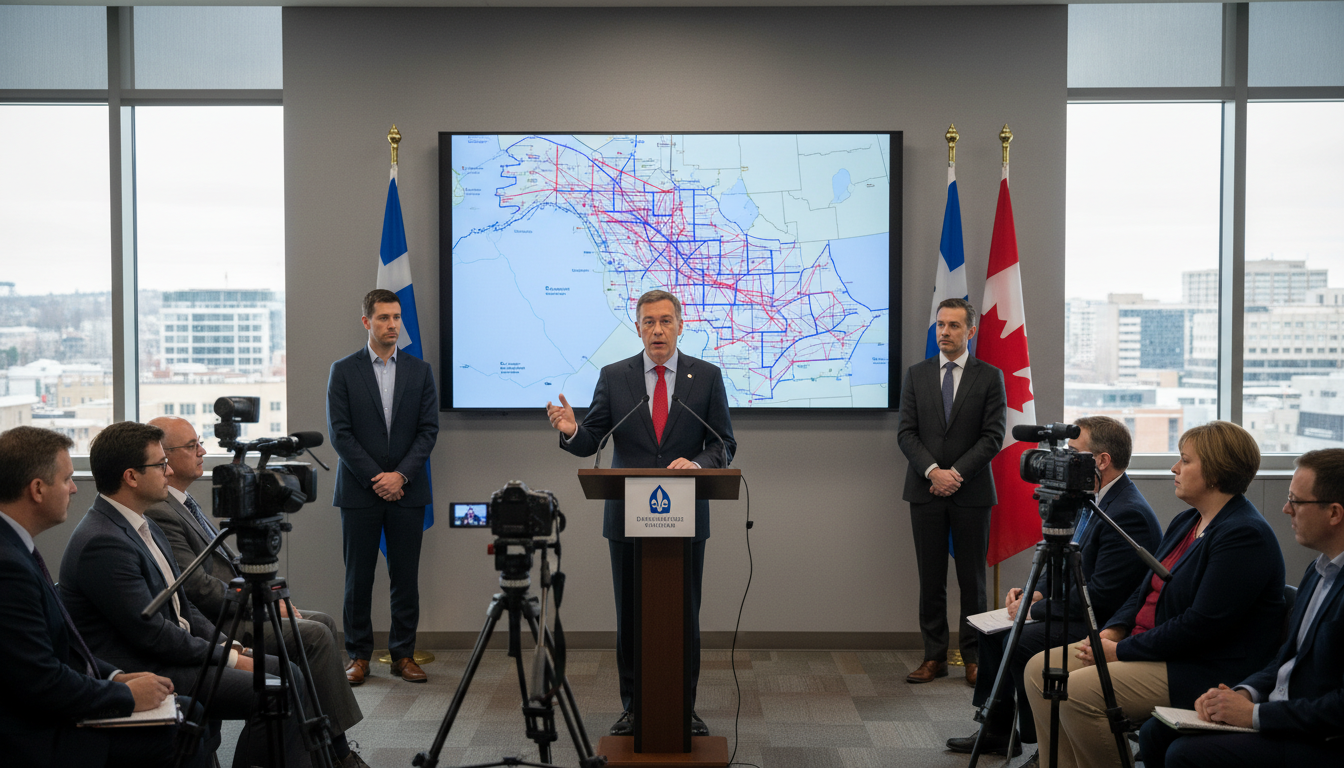
Quebec electoral map changes could jeopardize next provincial election, Elections Quebec warns
Elections Quebec warns that proposed last‑minute changes to the Quebec electoral map could compromise the integrity and timing of the province’s next general election.
A blunt letter from Jean‑François Blanchet, the director general of elections for Quebec, warns that a fresh legislative intervention into the Quebec electoral map may leave Elections Quebec unable to meet legal and operational obligations ahead of the province’s upcoming fall vote.
Mr. Blanchet sent the two‑page notice to leaders of the five parties represented in the National Assembly after learning the government is considering adding two seats to protect ridings slated for dissolution.
He flagged a basic timing problem: the commission’s work to redraw boundaries typically requires several months, and the proposed changes arrive too close to the writ period to be implemented without disrupting election administration.
Government signals plan to protect vulnerable ridings
Minister Christine Fréchette and Jean‑François Roberge, the minister responsible for democratic institutions, told reporters they intend to pursue legislation with willing opposition partners to protect specific constituencies.
The ministers cited concerns about the disappearance of ridings in Gaspésie and Montreal and said an amendment could preserve those names and communities by creating two additional seats.
That approach, however, would alter the map that Elections Quebec and the independent electoral commission have already prepared for implementation this year.
Elections Quebec cautions on timing and capacity
In his letter, Mr. Blanchet outlines the practical constraints facing his office if the legislature changes boundaries now, including shortened lead time for revising voter lists, reassigning polling places and retraining staff.
He wrote that establishing a new electoral map typically takes at least six months and that his institution has not been able to prepare for the scenario described by government officials.
Given those limits, he said Elections Quebec could face issues fulfilling its mandate and could not confirm that conditions for holding the next general election could be met in compliance with legal and operational requirements.
Court rulings reshaped the timeline
The controversy follows an oral ruling from the Supreme Court of Canada that struck down a provincial law which had temporarily halted the redistricting process in 2024.
That decision cleared the way for the new electoral map to be published in the Gazette earlier this year, with plans for the map to come into force by mid‑July in time for the scheduled fall election period.
The latest announcement of possible corrective legislation has reopened timing questions that the court ruling had, in effect, settled for the moment.
Specific boundary changes at the centre of dispute
The new map proposed by the Commission de la représentation électorale would remove one riding each from Eastern Quebec and Montreal while adding two new ridings in other regions.
Among the specific adjustments are the creation of new seats in the Laurentides, named Bellefeuille, and in the Bois‑Francs, provisionally called Marie‑Lacoste‑Gérin‑Lajoie.
The plan also merges Gaspé and Bonaventure, shifts the Haute‑Gaspésie regional county municipality into Matane‑Matapédia and dismantles Anjou–Louis‑Riel in Montreal, a move that would cascade changes across several neighbouring constituencies.
Litigation and regional advocacy shaped the process
The Conseil des préfets et des élus de la région des Laurentides (CPERL), backed by groups from Estrie and Outaouais, led a court challenge to stop legislative interference in the redistricting process.
Their legal fight moved through Quebec courts, with mixed results at trial and appeal levels, before reaching the Supreme Court where the provincial interruption was ultimately invalidated.
The case drew brief interventions from other provinces, including Ontario, Alberta and Saskatchewan, but the high court’s decision favoured the commission’s independent process.
Operational consequences and political tensions
Election administrators warn that last‑minute boundary changes can cause practical failures ranging from inaccurate voter assignments to confusion at polling stations and delays in candidate nominations.
Political parties, local officials and community groups will have to adjust campaign plans quickly if additional seats are added or if ridings are reshaped at this stage.
Beyond logistics, Elections Quebec’s letter raises a reputational risk: any perception that administrative shortfalls stem from political manoeuvring could undermine public confidence in the vote.
The coming weeks will test whether the government and opposition can agree on legislative language that respects the timelines needed for a lawful and orderly election, or whether further legal and administrative friction will force harder choices about deadlines and implementation.
