
2026 NBA draft lottery in Chicago will decide top picks after a season of tanking
The 2026 NBA draft lottery in Chicago will determine the top selections after a season marked by deliberate tanking, traded pick swaps and complex outcomes for multiple franchises.
The 2026 NBA draft lottery arrives on Sunday in Chicago with high stakes for a dozen-plus teams that deliberately prioritized draft positioning over competitiveness this season. The lottery, still using the system adopted in 2018, will decide the order for the top selections and could validate or condemn teams that focused on rebuilding via losses. With the league reportedly moving to a “3-2-1” lottery format next season, this drawing is widely viewed as the last meaningful opportunity to gain maximum odds under the current structure.
Lottery mechanics and transparency
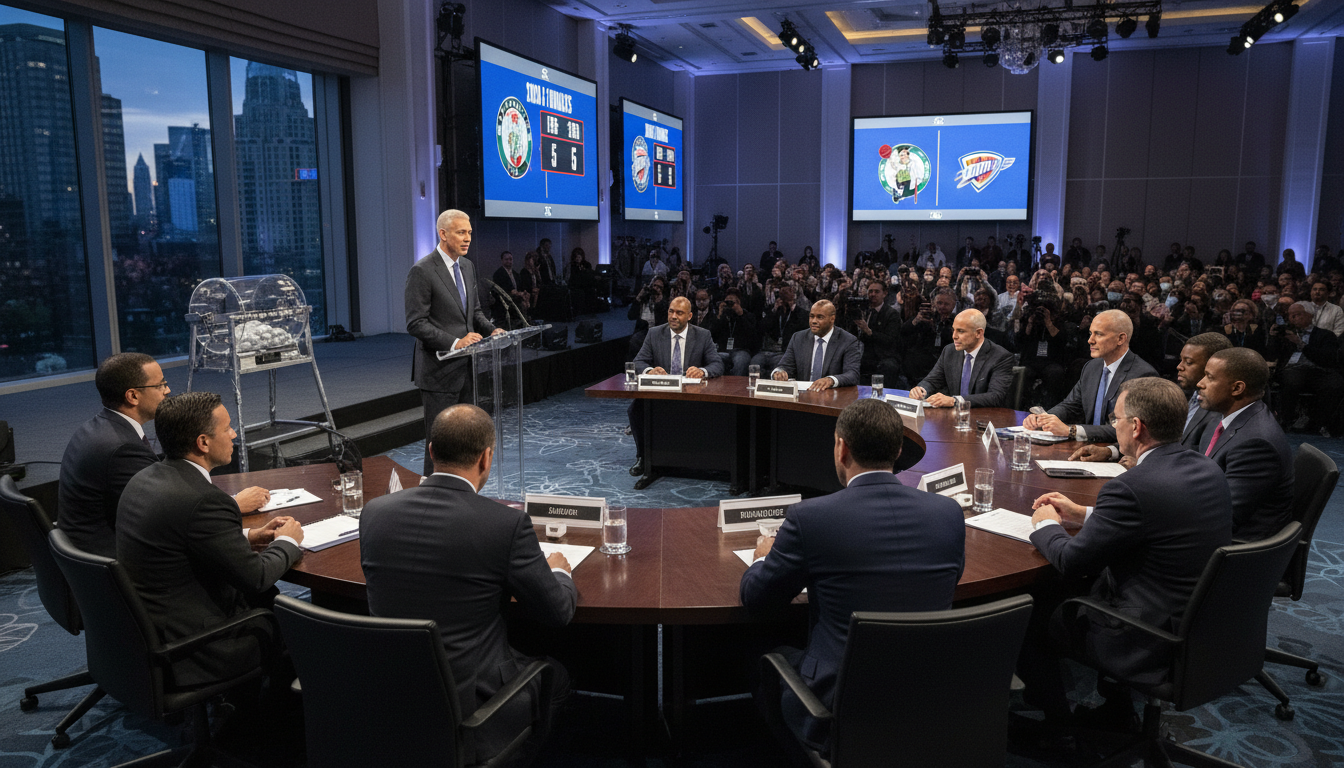
The NBA conducts the official ball-drawing in private and later releases a recording of the proceedings, while team representatives and members of the media are invited to observe to ensure integrity. What viewers see on broadcast are Deputy Commissioner Mark Tatum and invited team delegates opening oversized envelopes and revealing placards with team names and logos on stage. No one on stage is meant to know the drawing-room results beforehand, and the onstage reactions are presented as genuine responses to the later-revealed outcomes.
The lottery itself involves 14 non-playoff clubs, with the three worst records each holding the highest single-team odds to leap into the top selections. Under the 2018-era odds still in use for this drawing, the Washington Wizards (17-65), Indiana Pacers (19-63) and Brooklyn Nets (20-62) each carry a 14 percent chance to win the lottery outright. The team with the worst record, Washington, cannot fall lower than fifth in the finalized order.
Consequences of a season of tanking
A notable portion of the league pursued intentional losing this season to align with a draft class widely considered strong and deep. That strategy produced visible consequences for fans and the product on the court, prompting questions about competitive integrity and fan relations. For teams that land inside the top four, proponents argue the tactic could be justified by the long-term payoff. For others, the gamble risks alienating local supporters and drawing scrutiny from the league as future lottery rules are poised to blunt the incentive to tank.
The looming adoption of a reported 3-2-1 system next year changes the calculus for front offices. Under the new approach, teams with the very worst records would likely see diminished lottery odds, making this year’s drawing potentially the last with the current levels of reward for finishing near the bottom.
Trade fallout and unusual beneficiaries
Several consequential trades from past seasons and the current trade deadline have created scenarios in which playoff teams and recent champions could gain extraordinary draft leverage. Notably, the Los Angeles Clippers traded a package that included first-round picks and player assets in the Paul George deal, sending an unprotected future first to the Oklahoma City Thunder. As a result, the defending champion Thunder — despite being a playoff club this season — could inherit the Clippers’ pick and, by extension, land a top selection.
The mechanics make the Thunder an unlikely but possible contender to climb into the top four, with about a 7.1 percent chance to do so and roughly a 1.5 percent chance of securing the No. 1 overall selection. Other deadline moves add further complexity: the Clippers dealt center Ivica Zubac to Indiana for a protected first-round pick that could convey depending on where Indiana ultimately falls, potentially shifting picks between those franchises.
Complicated pick swaps involving Atlanta, New Orleans and Milwaukee
Several teams not officially in this year’s lottery nevertheless retain draft leverage through prior transactions. Atlanta, for example, will be able to select in the lottery on June 23 because of a prior trade with New Orleans that sent draft rights and a future first-round consideration to the Hawks. That pick will convey to Atlanta as the better of the Pelicans’ and the Milwaukee Bucks’ outcomes, guaranteeing the Hawks a selection likely no worse than 10th and offering a reasonable chance at a top-four slot despite Atlanta’s stronger regular-season record.
Milwaukee will not walk away empty-handed, since it retains the lesser of its own pick or the New Orleans pick, preserving some upside depending on how both clubs finish. The net effect is a web of interdependent results: one franchise’s leap up the board can directly alter another team’s selection range and long-term roster planning.
Top prospects and character questions
The 2026 draft class is widely heralded as deep and high-ceiling, which is the primary reason several teams embraced tanking this season. Many projected lottery selections are viewed as potential All-Star caliber players or high-level starters, creating strong incentives to secure an early pick. Among the names generating debate is Darryn Peterson, who has played a limited number of games this season and faced public scrutiny after reports that high doses of creatine led to significant cramping.
Peterson’s availability and public handling of the situation have prompted questions about his readiness and competitive desire, and those concerns could influence how teams position themselves on draft night. For many evaluators, medical clarity and behavioral signals in the pre-draft process will determine whether he remains in the top tier of the draft or slides because of perceived risk.
Broadcast, stage guests and fan interest
Onstage representatives will include general managers, current players and franchise legends, names chosen to add visibility and narrative flair to the televised reveal. Atlanta general manager Onsi Saleh is scheduled to represent the Hawks, Hall of Famer Vince Carter will be on stage for the Nets, and rookie of the year runner-up Kon Knueppel will represent Charlotte. The spectacle is designed to dramatize results that are already set by the private drawing, and to provide genuine reactions for viewers.
Despite the closed drawing room, the combination of compelling prospects, pick swaps and the final application of the current lottery format has created heightened interest across the league. For franchises, the results will carry short- and long-term consequences; for fans, the outcome may determine whether a season of strategic losing yields a franchise-altering prize.
Teams and front offices will now await the reveal and the domino effect of where high-upside prospects land, knowing that the decisions of this season could reconfigure rosters and rivalries for years to come.
