
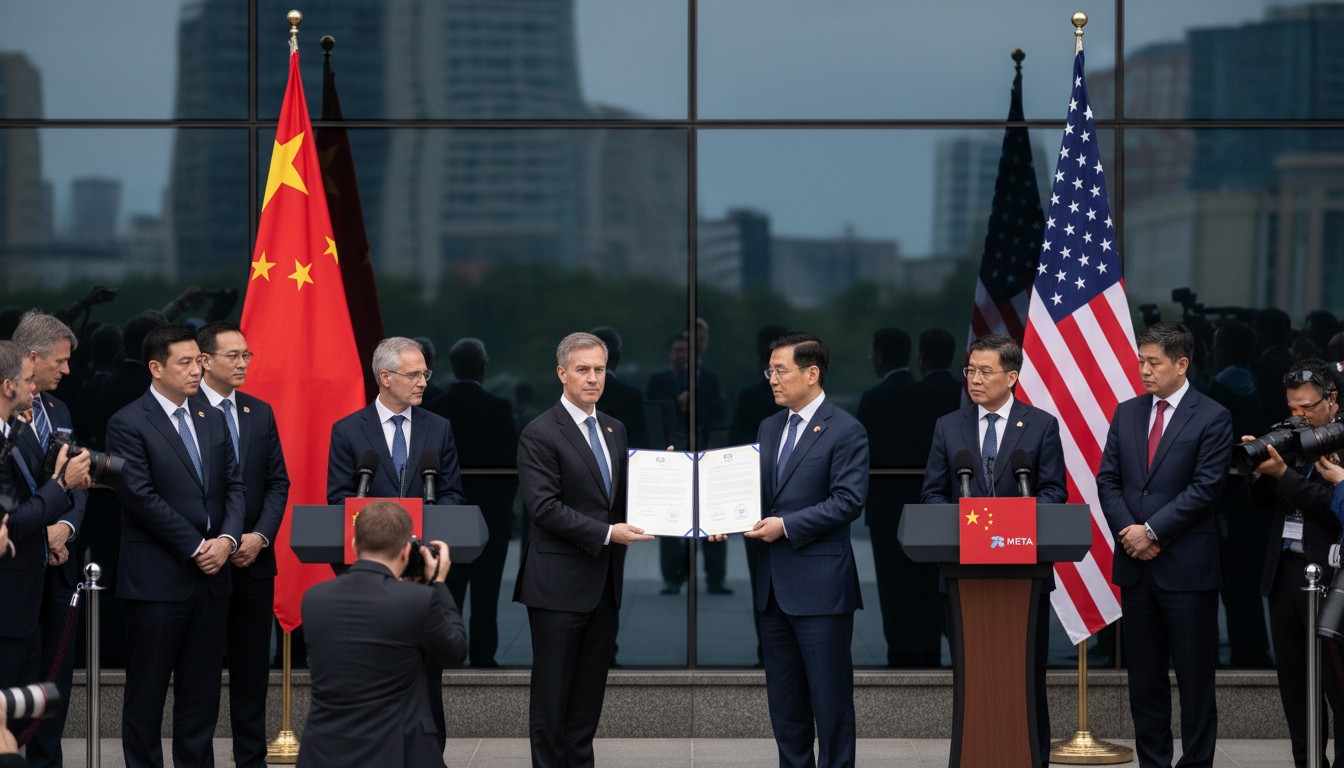
China Blocks Meta Acquisition of Manus, Escalating Scrutiny of Cross‑Border AI Deals
China’s NDRC has moved to block Meta’s acquisition of Manus, intensifying oversight of U.S. investments in Chinese-linked AI startups ahead of a mid-May summit.
China’s decision to prohibit the foreign takeover of Manus marks a significant escalation in scrutiny of international investment in advanced artificial intelligence, the National Development and Reform Commission said on Monday. The move targets a completed deal announced in December and underscores Beijing’s growing concern about the transfer of AI talent and intellectual property abroad.
NDRC Announces Prohibition on Transaction
The National Development and Reform Commission said it is prohibiting the foreign acquisition of Manus under Chinese laws and regulations, without explicitly naming the buyer. The statement said the action followed an inquiry into whether the transaction complied with domestic rules governing sensitive technology and capital flows.
Officials did not detail the specific legal grounds for seeking to annul the deal or explain how an already executed acquisition would be unwound. That ambiguity leaves open a range of outcomes, from regulatory fines or divestment orders to negotiated remedies between the parties.
Manus’s Corporate Restructuring and Singapore Reincorporation
Manus, a developer of general-purpose AI agents, has Chinese roots but relocated its operations to Singapore after a mid-2025 funding round. Following a $75 million financing led by a U.S. venture firm in May 2025, the company closed its China offices and shifted employees and legal domicile to Singapore.
The parent firm, Butterfly Effect, reconstituted Manus under Singaporean incorporation, a step companies sometimes take to navigate differing U.S. and Chinese investment controls. That restructuring was intended to address limits on technology transfers and foreign ownership constraints in both jurisdictions.
Meta’s Statement and Legal Position
Meta, which announced the acquisition of Manus in December, has maintained that the transaction complied with applicable law. The company said it expects an “appropriate resolution” to the regulatory inquiry and has contended there would be no continuing Chinese ownership interests in Manus following the deal.
Meta had also signaled that Manus would stop providing services in China and that the acquisition would strengthen the company’s AI capabilities across its platforms. The firm has not publicly detailed how it would alter product road maps in response to Beijing’s decision.
U.S. Reaction and Broader Policy Context
A White House spokesperson reiterated that the United States will defend its technology sector against “undue foreign interference,” framing the dispute within a wider contest over AI leadership. Washington has simultaneously tightened export controls aimed at restricting China’s access to advanced semiconductor technology.
Analysts say the Manus case sits at the intersection of two policy trends: U.S. efforts to protect sensitive technologies from transfer to China, and Chinese efforts to retain control over domestic AI assets and talent. Those twin pressures complicate cross-border mergers and acquisitions in the field.
Legal and Practical Challenges of Annulment
Unwinding a cross-border acquisition that has already been executed presents legal and logistical hurdles, lawyers and corporate advisers note. Questions include whether remedies would target shareholdings, intellectual property assignments, personnel transfers, or contractual obligations, and which courts or agencies would enforce any order.
Regulators may also weigh national security reviews, capital repatriation constraints and corporate governance issues. For bidders, the Manus decision increases the risk profile of buying companies that have substantial personnel or IP links to China, even if re-domiciled elsewhere.
Diplomatic Timing Ahead of Bilateral Summit
The announcement comes weeks before a planned mid‑May summit in Beijing between the presidents of the United States and China, raising the prospect that the Manus dispute could enter high-level talks. The timing is likely to add political sensitivity to any regulatory outcome and could complicate efforts to stabilize broader economic and technology ties.
Observers say leaders may opt to discuss procedural transparency, mechanisms for dispute resolution and potential grandfathering arrangements for previously approved deals. However, with both capitals asserting stronger controls over strategic technologies, a quick diplomatic fix appears unlikely.
Beijing’s move to block the Meta acquisition of Manus signals a tougher posture on outbound transfers of AI capability and may prompt U.S. firms to re-evaluate acquisition strategies involving China-linked startups. Whether the NDRC pursues full annulment, a negotiated settlement, or other remedies will shape how global companies approach AI investments in the months ahead.
