
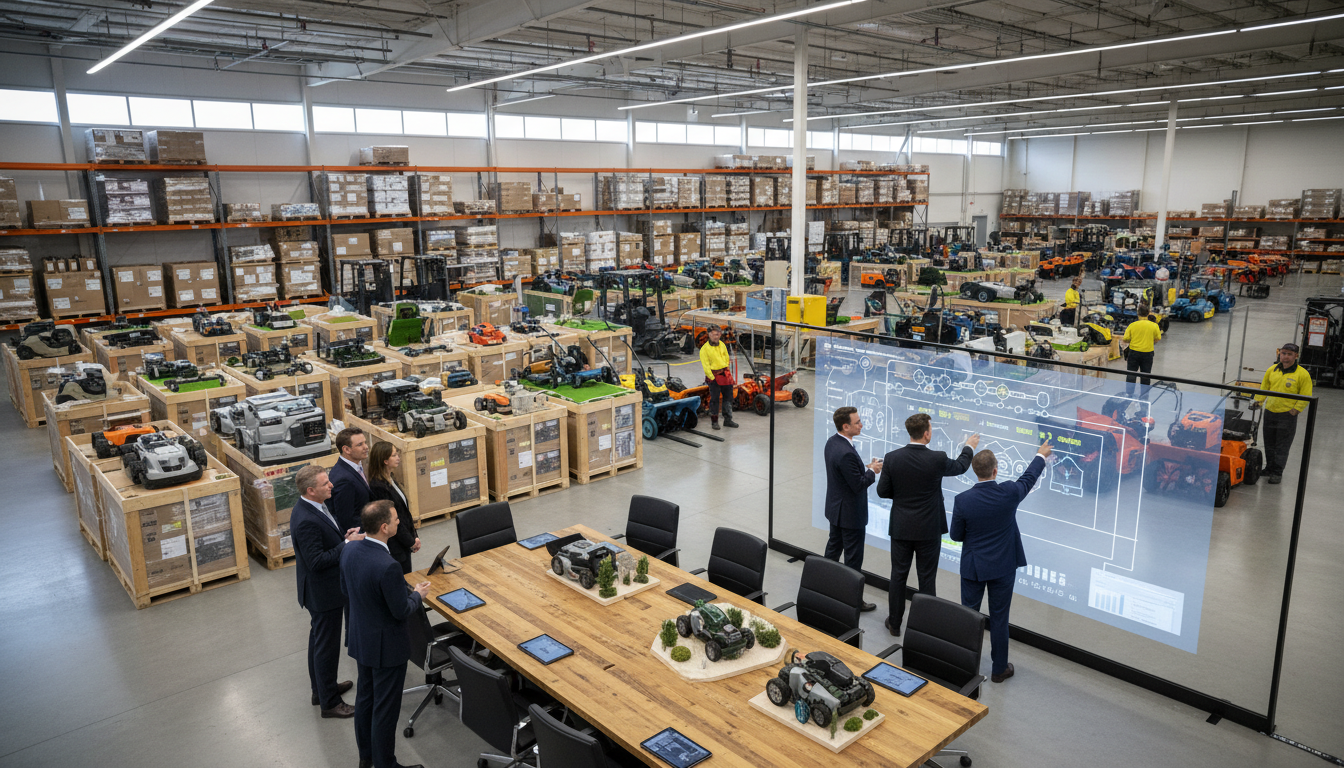
Landscaping firms turn to automated lawn mowers and snow blowers to manage rapid growth
Canadian landscapers adopt automated lawn mowers and snow blowers to manage rapid growth, ease labour shortages and maintain service levels.
A surge in demand for landscaping and property maintenance has prompted several Canadian firms to evaluate automation, including automated lawn mowers and robotic snow blowers, as a practical response to expanding inventories and tight labour markets. Company leaders say they are reluctant to cut staff, but growth in contracts and equipment has made purely human-powered scaling increasingly difficult. Firms are weighing the trade-offs between upfront investment in machines and the need to sustain service standards across larger territories.
Rapid growth forces operational rethink
Business owners across urban and suburban markets report year-over-year increases in contracts that outpace their ability to hire seasonal and permanent staff. That imbalance is leading operators to rethink how work is scheduled, tracked and executed on residential and commercial sites. Rather than reduce headcount, several managers are exploring equipment and workflow changes that preserve customer-facing roles while shifting some repetitive tasks to machines.
Many operators describe a tension between preserving jobs and meeting client expectations. The decision to introduce automation has been framed as a supplement, not a replacement, for skilled crews who oversee quality, client relations and complex tasks that machines cannot perform.
Robotic mowers and automated snow removal join fleets
Companies are piloting automated lawn mowers for large, repetitive turf areas and testing mechanized snow blowers for routine winter routes. These platforms can operate on pre-mapped lawns or along programmed paths, freeing crews to focus on edging, planting and property inspections that require human judgment. Early adopters say the technology can reduce overtime and enable faster response to new contracts.
Adoption is being staged, with firms integrating machines on a route-by-route basis and closely monitoring performance, uptime and customer feedback. Vendors and field technicians are consulted to align equipment selection with the scale of each company’s inventory and the characteristics of client sites.
Balancing labour, costs and service expectations
For many operators, the financial calculus centers on whether automation lowers per-job costs without eroding service quality. Automated mowers and snow blowers carry significant capital costs, require specialized maintenance and can introduce new logistics for charging, storage and repairs. Managers weigh these costs against overtime, recruitment expenses and the risk of failing to meet seasonal demand.
Owners emphasize that customer perception is critical: clients expect manicured lawns and timely snow clearance, and any shift to machines must not diminish the finished look or reliability of service. As a result, most firms are keeping people in supervisory and finishing roles to ensure standards are maintained.
Training, safety and municipal rules shape deployment
Introducing automated equipment brings new training requirements for staff and raises safety considerations, especially where machines operate near pedestrians, pets or public pathways. Companies are investing in operator training and revised safety protocols to manage machine deployment and emergency procedures. Insurance implications and liability coverage are also top of mind for owners evaluating fleet changes.
Municipal regulations and bylaws can affect where and when autonomous equipment is permitted to operate, and firms report working closely with local authorities to ensure compliance. In some jurisdictions, routes with heavy foot traffic or complex terrain remain off-limits for robotic devices until clearer rules are established.
Inventory pressures prompt maintenance and management upgrades
Rapid expansion of service areas has increased the volume of equipment and consumables that firms must track, from trailer counts to replacement blades and batteries. Managers say the growth in inventory has forced upgrades to asset tracking systems and preventative maintenance schedules to avoid unplanned downtime. Automated platforms add another layer, with battery management systems and software updates requiring dedicated attention.
Operators are integrating telematics, digital work-order systems and parts-management tools to provide real-time visibility across larger fleets. Those investments help identify when machines should be rotated out for manual attention or when an automated unit can be pushed into heavier use without risking failure.
What operators expect next season
Many businesses plan to expand pilot programs after a single season of testing, but most stress a phased approach to preserve client trust. Investments will likely focus first on the highest-return routes—large municipal properties, commercial campuses and repetitive residential contracts—before broader rollouts. Companies also expect collaboration with suppliers to shorten learning curves and improve service warranties.
Owners foresee a hybrid workforce in which automated lawn mowers and snow blowers handle predictable, repetitive tasks while skilled workers concentrate on craftsmanship, client communication and complex site work. That balance is shaping recruitment, training and capital plans heading into the next growth cycle.
As firms continue to adapt, operators say the priority remains consistent service delivery and protecting jobs that require human skills. While automation is seen as a necessary tool to handle rapid expansion and inventory pressures, company leaders emphasize it will augment rather than replace the people who deliver the final product to customers.
