
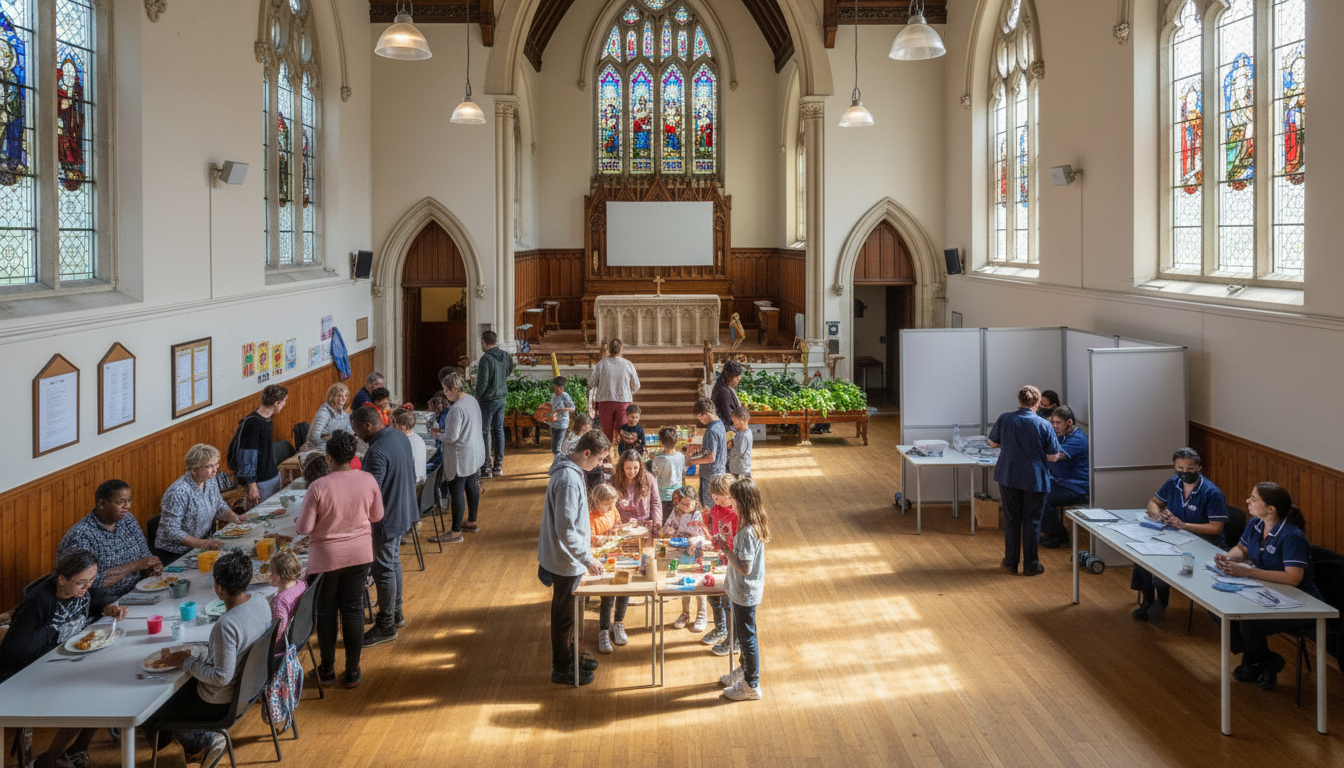
Local church reimagines building as community hub to serve neighbours
Local church reimagines its building as a church community hub, offering weekday services, food support and social programs to serve neighbours and outreach.
A local congregation has begun converting its church into a church community hub, expanding weekday use of its facilities to deliver social supports and programs for residents. Pastor Rev. Travis Enright said the shift reflects a desire to be “neighbourly” and to keep church spaces active beyond Sunday worship. The initiative aims to make the building a steady source of neighbourhood support, not just a place for weekly services.
Pastor Frames Mission Around Neighbourly Care
Rev. Travis Enright told members that the church’s purpose extends beyond proselytizing to practical acts of care and compassion. He said the congregation intends to open its doors on weekdays so the facilities can serve more people and address local needs.
Enright’s remarks emphasize a pastoral philosophy that measures ministry by service and presence in the community. That language has helped frame the hub as a civic neighbour as much as a house of worship.
Weekday Programs Target Food, Shelter and Support
Church leaders say the hub will host food distribution, drop-in support and indoor daytime shelter on scheduled days. Organizers plan to stagger services so visitors can access meals, clothing and referrals to health or housing resources with regularity.
The model mirrors a growing trend of congregations offering material supports in their sanctuaries and common rooms. Officials argue that predictable, weekday openings reduce pressure on emergency services and provide a humane option for residents in need.
Redeploying Space for Practical Uses
Architectural adaptations are modest: parish halls will be used for meal service, classrooms for counselling appointments, and kitchen facilities for community cooking programs. Volunteer teams are reconfiguring storage and seating to create flexible, accessible spaces suitable for different activities.
Leaders highlight that reusing existing buildings preserves public assets and reduces the need for new construction. The changes also aim to keep the facility lively throughout the week and to increase public safety through regular occupancy.
Partnerships with Social Agencies and Volunteers
Church officials are negotiating partnerships with local food banks, shelters and health providers to coordinate programming and referrals. Those collaborations are meant to bring professional case management and consistent program delivery while the congregation provides space and volunteer staff.
Volunteers from the congregation and neighbouring residents are being trained to run intake desks, manage meal service and support outreach workers. Organizers say combining institutional expertise with local goodwill produces a more effective and compassionate response.
Financing and Governance of the Hub
Funding for the conversion and ongoing programs will come from a mix of congregation donations, community grants and in-kind support from partners. Church trustees are preparing a modest budget and a governance structure to ensure accountability and continuity as the hub evolves.
Leaders emphasize transparency about expenditure and programming to maintain trust among congregants and the broader public. They also expect to seek municipal and philanthropic funding as program offerings expand.
Community Reaction and Accessibility Measures
Responses from neighbours have been cautiously supportive, with residents welcoming new services while asking for clear hours and safety measures. Church staff say they are working to minimize disruption by setting operating hours, security protocols and channels for feedback.
Accessibility improvements include ramp upgrades, improved lighting and clearly signposted entry points to help seniors and people with mobility challenges. Organizers are also scheduling multilingual volunteers to reduce barriers for non-English-speaking residents.
The church community hub project is being rolled out incrementally to allow staff and volunteers to adapt program schedules and staffing as demand becomes clearer. Organizers say they will monitor usage, collect feedback and adjust services to ensure the building remains a dependable resource for neighbours in need.
