
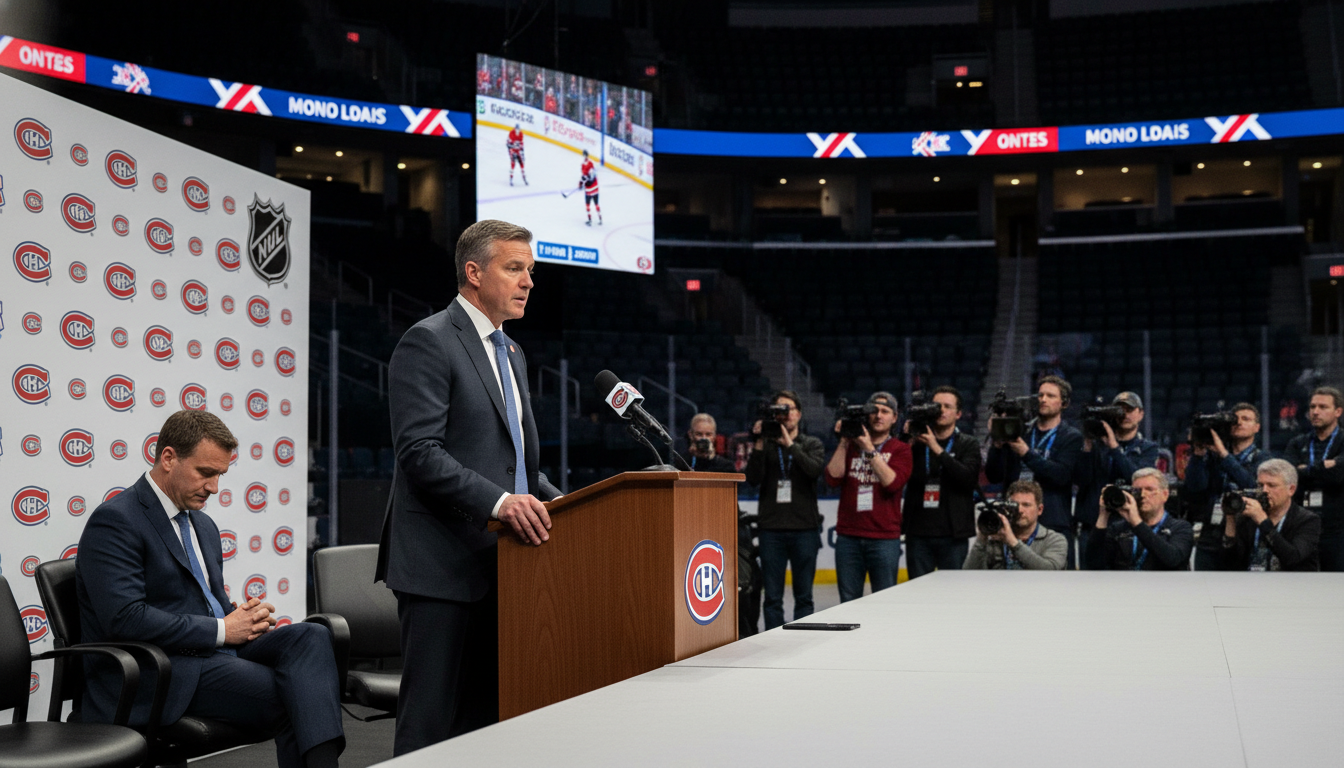
Montreal Canadiens to Prioritize Roster Upgrades After Eastern Final Exit
Montreal Canadiens face a pivotal offseason after the Hurricanes loss, as management eyes roster reinforcement, cap flexibility and guidance for a young core.
The Montreal Canadiens’ unexpected run to the Eastern Conference Final ended with a decisive series loss to the Carolina Hurricanes, leaving management with a clear view of roster shortfalls. The team’s playoff performance—an opening win followed by four straight defeats—exposed gaps that president of hockey operations Jeff Gorton and general manager Kent Hughes say must be addressed. The club now enters a busy summer focused on targeted upgrades without jeopardizing the long-term plan.
Canadiens acknowledge roster deficiencies
Gorton and Hughes have been frank in assessing the team’s needs, identifying the absence of an established second-line centre and a reliable right-shot partner for rising defenseman Lane Hutson. They also flagged the need for two heavier, physical depth wingers to add bite through the lineup. Management believes these pieces are necessary to alleviate pressure on Nick Suzuki and properly unlock Ivan Demidov’s offensive potential.
The front office’s evaluation was influenced by the contrast with Carolina, whose depth and balance turned the series into a rout after Game 1. Gorton noted the Hurricanes’ experience and roster construction left Montreal exposed in many areas, underscoring that the club must improve across multiple fronts to contend for the Stanley Cup.
Young core gained playoff experience
While shortcomings were evident, the Canadiens’ youngsters left the postseason with valuable lessons and notable individual achievements. Suzuki completed a 100-point season, Ivan Demidov provided a jolt of offense, Cole Caufield reached 50 goals and Juraj Slafkovsky surpassed the 30-goal mark. Those milestones affirm the offensive foundation Montreal can build around.
Coaching staff and veterans emphasized that the stretch of seven- and seven-game series wins earlier in the playoffs accelerated the team’s maturation. Management views that accumulated postseason exposure as a developmental asset that should translate into improved decision-making and resilience in future playoff wars.
Management outlines offseason priorities
Hughes said the club will pursue upgrades that complement, rather than replace, the existing core, and that he and Gorton have already begun outreach to other teams. The duo stressed they will not mortgage the team’s future for short-term gain, preferring deals that sustain long-term competitiveness. Priority targets include a top-six centre, a steady right-shot defenseman and more depth scoring capable of matching playoff physicality.
Gorton reiterated the plan to add young, impactful players rather than solely veteran stopgaps, pointing to prior moves that brought in Noah Dobson and Zack Bolduc as examples. The front office intends to remain patient but proactive as the market unfolds, balancing trades, free agency and internal development in its decision-making.
Cap flexibility gives Canadiens room to maneuver
Montreal enters the offseason with meaningful cap space to chase upgrades, with roughly $11 million available and additional savings expected after Brendan Gallagher’s departure. That financial flexibility should allow the Canadiens to be active in trade talks and free agency while still planning for contract extensions for key youngsters. The club will also weigh the impact of potential moves involving Samuel Montembeault and other constrained roster spots.
Management acknowledged upcoming payroll considerations, including potential deals for rookies eligible to sign new contracts on July 1. Hughes signaled that cap space offers options but stressed prudent planning, noting the importance of retaining core talent under team control through the coming years.
Leadership and mentorship after Gallagher’s exit
Brendan Gallagher’s emotional farewell underscored his broader influence beyond on-ice production, with teammates and staff crediting him for veteran leadership and mentorship of the young group. Club veterans praised Gallagher’s competitiveness and presence in the locker room, saying his influence will be missed even as his trade opens financial flexibility. Management emphasized that replacing his heart and guidance will be as important as filling the roster vacancy he leaves.
The organization believes Gallagher’s imprint on younger players has lasting value, contributing to an internal culture that can help carry the team forward. That intangible legacy, combined with physical cap savings, gives the Canadiens both a leadership gap to address and tools to pursue on-ice upgrades.
Timeline and trade strategy ahead of training camp
Hughes and Gorton made clear they will balance urgency with caution as they pursue reinforcements before training camp, accepting that some prospects may be moved if it expedites competitiveness. The front office is open to trading future assets for players who can close immediate gaps, provided the returns align with the club’s long-term objectives. They also noted a willingness to stand pat if the right opportunities do not present themselves.
With seven core players under contract through 2030 and none carrying an exorbitant cap hit above the top blue-line salaries, Montreal believes it has roster stability to pursue selective improvements. The coming weeks will reveal whether the Canadiens prioritize buying a proven veteran, signing a free agent, or using draft and prospect capital to reshape depth ahead of September.
The Canadiens’ playoff run provided a rare and rapid apprenticeship for a young group that appears closer to contention but still short of cup-calibre depth. Management’s challenge is to convert those lessons into precise roster moves that preserve the core while adding the toughness and defensive balance required to compete in future postseasons.
