
Calgary flooding risk eased as heavy rain raises Bow River flows and prompts boating advisory
City says Calgary flooding risk is reduced after heavy rain; reservoirs and barriers limit runoff versus 2013, but boating advisory and pathway closures remain.
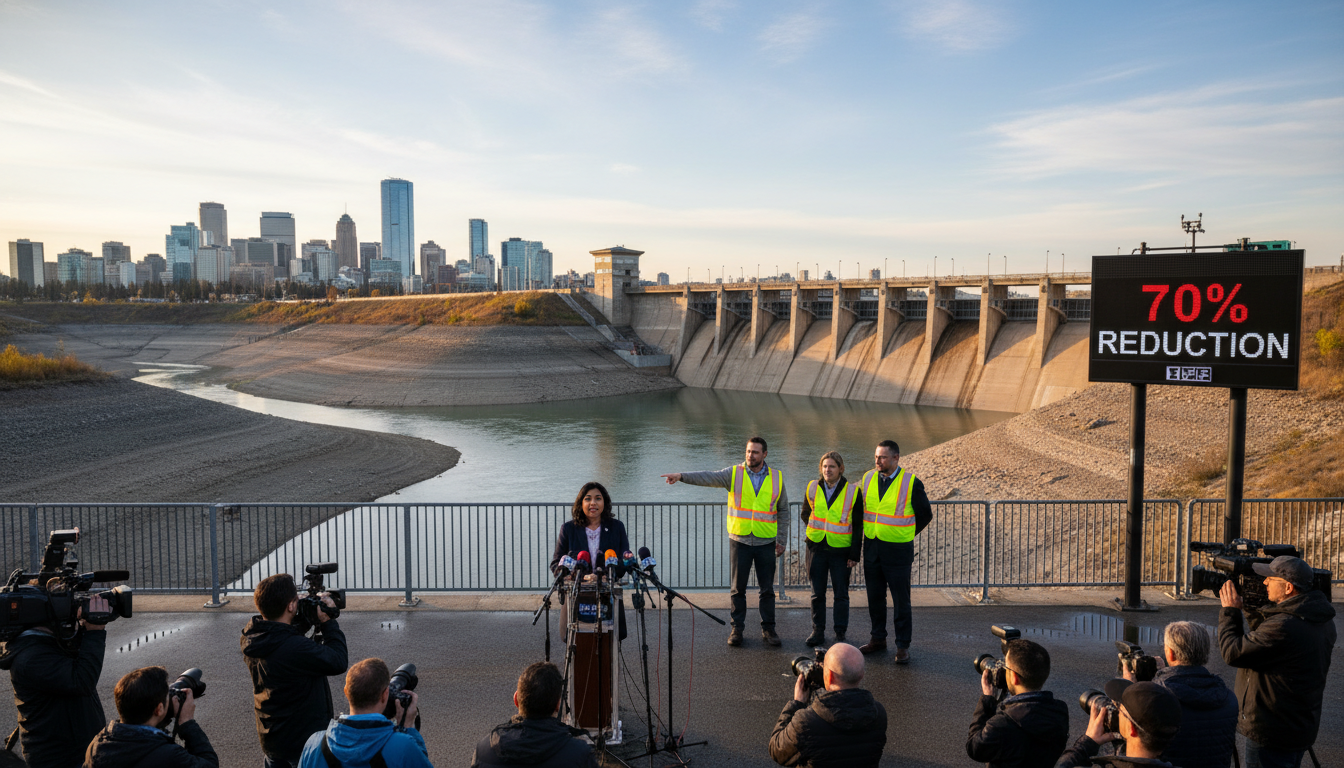
Calgary city officials say widespread flooding is unlikely this week despite continued heavy rain, as reservoir operations and new flood infrastructure have eliminated more than 70 per cent of the damage potential compared with 2013. The statement, issued Monday, added that colder temperatures and managed storage at Glenmore and TransAlta’s Ghost Reservoirs are keeping river flows below historic peaks. City and meteorological officials warned that elevated Bow and Elbow River flows and strong winds will persist through Tuesday, while a boating advisory remains in effect.
City reassures public on flood risk reduction
The City of Calgary told residents its flood resilience investments and active reservoir management have significantly reduced the chance of large-scale inundation this season. Officials said combined federal, provincial and municipal funding of roughly $1.3 billion has gone toward reservoirs, community flood barriers, stormwater outfall gates, erosion protection and pumping stations. Those measures, along with improved forecasting and response capability, mean most communities are now protected from a one-in-100-year flood scenario.
City communications stressed that while the risk of major infrastructure impacts is much lower than in 2013, residents should remain cautious near waterways. Authorities noted bank instability and erosion remain concerns when river flows are high, and they urged homeowners to double-check basement flood resilience and downspout direction.
Rainfall patterns and forecast across Calgary
Environment Canada meteorologist Christy Climenhaga said rainfall amounts are highly variable across the region, with 40 to 70 millimetres expected in Calgary and the Bow and Elbow catchments through Tuesday. Local totals over the past 48 hours ranged from about 28 mm at Calgary International Airport to roughly 42 mm toward Springbank, with isolated mountain locations recording near 100 mm. June’s typical rainfall for Calgary is 112.7 mm, and forecasters said cooler temperatures are helping to slow alpine snowmelt, reducing additional runoff.
The weather system pulling moisture into Alberta is also delivering strong gusts, with peak winds near 80 kilometres per hour recorded over the weekend. Environment Canada expects rain to taper by Wednesday, but warned that additional showers and possible thunderstorms could return by Thursday.
Reservoir operations and river flow management
City officials highlighted the role of Glenmore Reservoir and TransAlta’s Ghost Reservoir in moderating river flows, noting both have the capacity to store runoff and release it more slowly. Those managed operations mean anticipated river flows are less than 25 per cent of the peak amounts recorded during the 2013 flood, city spokespeople said. Cooler mountain temperatures that keep precipitation as snow at higher elevations have also helped blunt potential spring runoff.
Operators continue to coordinate with the Alberta River Forecast Centre and Environment and Climate Change Canada to adjust releases as conditions evolve. Officials emphasized that reservoir releases and storage decisions are designed to protect downstream communities while balancing other operational needs.
Pathway closures, boating advisory and measured river flows
Despite reduced overall flood risk, the Calgary Fire Department has maintained a city-wide boating advisory that was issued on Friday and remains in effect. The threshold flow rate for concern on the Bow River is 280 cubic metres per second; the latest city measurement reported Monday morning was 360 cubic metres per second. Public information officers said flows are expected to rise and could peak above 400 cubic metres per second on Tuesday.
A number of river pathways and underpasses are closed as a precaution, including sections along the Elbow River and multiple Bow River underpasses near Reconciliation Bridge, Centre Street Bridge and the Louise Bridge north bank. Bowmont Park pathways, channels near the Calgary Zoo and St. Patrick’s Island north pathways are also closed until conditions improve.
Emergency services and public safety directions
Calgary’s fire and emergency teams reported more weather-related calls this weekend, largely for downed power lines and trees rather than direct flooding. Fire department officials urged residents to be vigilant for arcing lines and falling trees, and to call 911 for immediate danger. The city also asked Calgarians to report stalled storm drains or persistent pooling by using the 311 app or online service — photographs with timestamps can help crews prioritize responses.
Mayor Jeromy Farkas reiterated the boating advisory on social media and reminded residents to keep clear of riverbanks and fast-moving water. Drivers were warned against attempting to cross flooded roadways, and homeowners were advised to ensure downspouts direct water at least five feet from foundations to reduce basement infiltration.
Comparing 2026 conditions to the 2013 flood
City officials repeatedly contrasted current operations and infrastructure with the conditions during the 2013 flood, saying investment and planning have placed Calgary in a stronger position. Projects completed since 2013 include expanded reservoir storage and revised operating plans, the construction of community-scale flood barriers and upgrades to forecasting and monitoring systems. Those efforts underpin the city’s assessment that most neighbourhoods now have a higher level of protection against extreme river events.
Officials cautioned, however, that protective measures do not eliminate all local risk and that riverbank erosion can occur even when large-scale flooding is unlikely. Residents were encouraged to follow official advisories, steer clear of river areas, and report hazards promptly.
Calgary’s river and flood information continues to be updated by the city and provincial partners, and officials said they will maintain monitoring and response activities as the weather system moves through the region.
