
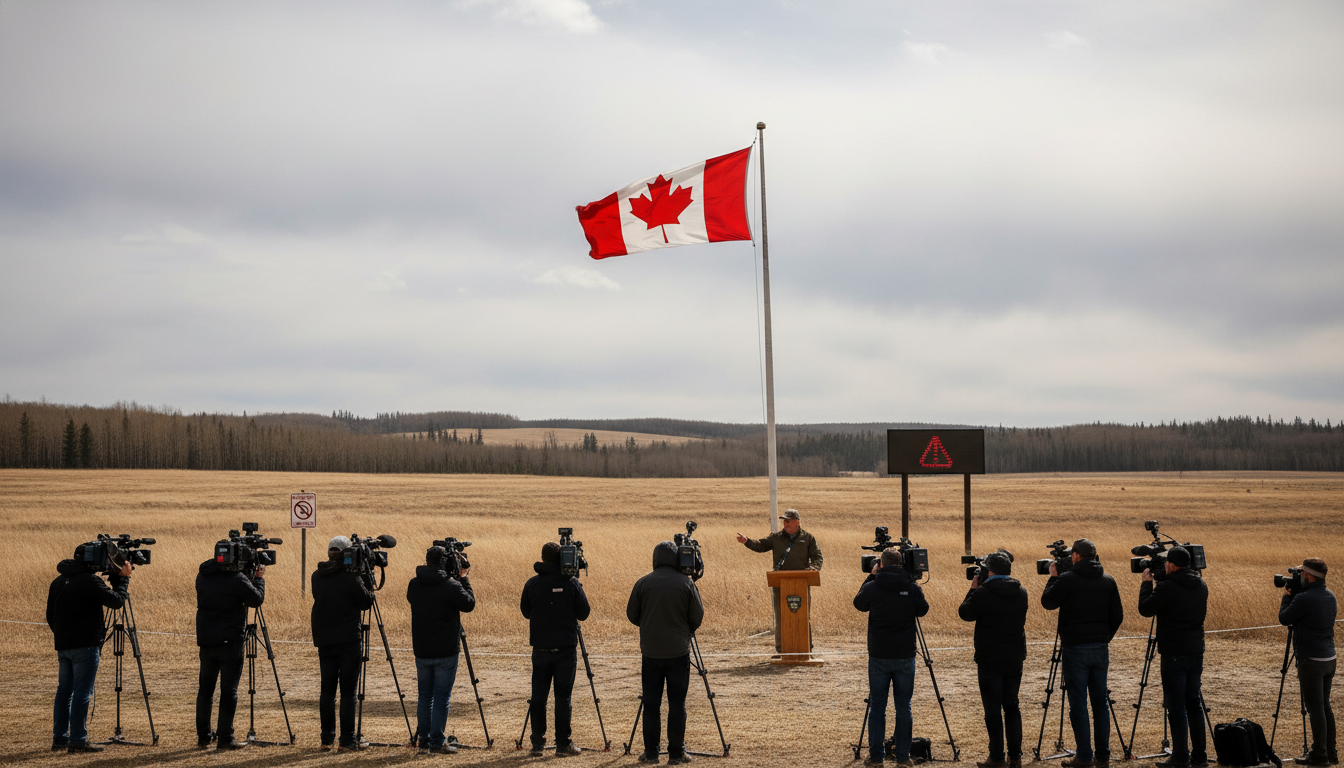
Central Alberta fire advisories expand as dry spring fuels and gusty winds raise wildfire risk
Central Alberta fire advisories and restrictions now cover six counties as dry spring fuels and forecasted high winds raise wildfire risk across the region.
Stretches of central Alberta moved into heightened fire alert this week as Leduc, Westlock and Lac Ste. Anne counties issued fire advisories and Barrhead, Sturgeon and Parkland counties imposed fire restrictions. Local officials warned the public that a combination of exposed dead grass after the spring melt and an upcoming spell of gusty winds is lifting the region’s wildfire risk. Fire chiefs and Alberta Wildfire emphasized that many recent fires have been triggered by human activities, underscoring the need for public caution.
Six counties under fire advisories and restrictions
Local governments announced differing levels of controls as conditions shifted from snowmelt to dry grass across central Alberta. Fire advisories in Leduc County, Westlock County and Lac Ste. Anne County warn residents to be vigilant and limit open burning where possible. Barrhead County, Sturgeon County and Parkland County have issued formal fire restrictions that prohibit or limit certain activities, depending on local bylaws.
Officials said the restrictions are targeted to reduce accidental ignitions from common sources like yard debris burns, campfires and recreational off‑roading. The rules vary by county, so residents are being urged to check their municipal communications before lighting any fire or operating equipment in dry grassy areas. Enforcement measures can include fines and orders to extinguish prohibited fires.
Human activity behind early-season grass fires
Fire crews in Sturgeon County reported seven grass fires so far this season, and the county’s fire chief, Chad Moore, said each incident was linked to human action. Moore described typical ignitions including sparks produced when a mower or a rock struck by machinery starts a blaze, and cautioned that simple yard work can be hazardous during dry conditions. He recommended that anyone doing hot work such as welding or grinding have a water source and an emergency plan on hand.
Beyond yard maintenance, off‑road vehicles and improperly extinguished campfires remain common sources of accidental wildland fires. Fire services urge residents to follow FireSmart guidance and to delay nonessential outdoor burning until the landscape “greens up” and fuels become less flammable. The message from local departments is clear: many early-season incidents are preventable.
Wind and dry fuels heighten danger this weekend
Environment Canada forecasted gusts up to 60 km/h on Sunday, raising the prospect that small ignitions could spread rapidly under windy conditions. Meteorologists expect mostly sunny, warm conditions throughout the weekend before a cooldown early next week, a pattern that favors rapid drying of dead grasses left over from last season. Alberta Wildfire warned that the exposed litter from last autumn provides a continuous bed of fine fuel that ignites and carries fire efficiently.
Wildfire information officer Derrick Forsythe noted that while the total number of active wildfires this year — 98 since March 1 — is lower than at the same point in recent seasons, the present combination of fuel and wind still requires vigilance. He described the period between snowmelt and the “green up” of new vegetation as a predictable but risky window when the landscape is especially receptive to fire. Residents should avoid lighting fires outside approved pits and exercise caution with any equipment that can produce sparks.
Alberta Wildfire response and preparedness
Provincial wildfire authorities said preparations have been underway since the start of the season, with contracts signed for aircraft, air tanker deployments and firefighter training at the Hinton facility. The province has focused on mobilizing aviation resources and ensuring crews receive refresher training before peak activity arrives. Officials noted that predictability beyond a short forecast horizon is limited, so readiness efforts prioritize rapid response capacity and interagency coordination.
Forsythe emphasized that while early-season totals may be lower this year compared with 2023 and 2024, seasonal trends can change quickly with a single large ignition event. Alberta Wildfire continues to monitor provincial conditions and works with municipal departments on prevention messaging and resource sharing. The province is also reminding property owners about their role in reducing fire risk through vegetation management and adherence to local burning rules.
Planned controlled burn in Edmonton’s Jan Reimer Park
The City of Edmonton has scheduled a controlled burn at Jan Reimer Park for Monday, weather permitting, intended to reduce built-up fuels across about 19 hectares. Similar prescribed burns were carried out last year in the river valley and in the Horse Hills neighbourhood in 2024, municipal officials said, as part of broader risk‑reduction and ecological management programs. City crews and contracted resources will monitor the burn and advise residents of any air quality or access impacts.
Authorities said the controlled burn will be executed under strict conditions, with fire crews, equipment and contingency plans in place to limit spread and protect nearby infrastructure. Residents near the park are being asked to keep windows closed and to avoid the area while operations are underway. The practice is a standard forest and grassland management tool intended to lower the fuel load and reduce the chance of an uncontrolled wildfire later in the season.
Public education remains a key component of the response strategy, with municipal and provincial partners urging everyone to adopt simple precautions. Keep machinery tuned and free of debris, clear flammable material from around homes, delay recreational off‑roading in dry areas, and always ensure campfires are fully extinguished before leaving them unattended.
The combination of dry spring fuels, human-caused ignitions and forecasted high winds has prompted a coordinated warning across central Alberta, and officials say community cooperation will be critical in preventing a major fire event this season.
