
Calgary gas prices surge to 189.9¢/L as residents and businesses scramble ahead of May long weekend
Calgary gas prices climbed to 189.9 cents per litre on May 13, 2026, pushing residents and small businesses to change routines and raise fees as fuel costs spike.
Calgary drivers faced a steep jump at the pumps on Wednesday, May 13, 2026, when the price of regular gasoline reached 189.9 cents per litre across many stations. The surge prompted immediate changes for local businesses and households, with firms such as driving schools passing higher operating costs onto customers and commuters cutting nonessential trips. Economists and analysts point to a combination of seasonal demand and international supply disruptions as drivers of the sudden price pressure.
Fuel hits 189.9 cents per litre in Calgary
Pump prices in Calgary rose sharply to 189.9¢/L on May 13, marking a significant increase from about 126.6¢/L roughly six months earlier. Statistics Canada data show prices in the city last exceeded similar levels in June 2022, during the energy market turmoil following Russia’s invasion of Ukraine. The current rise comes as motorists prepare for the May long weekend, intensifying demand for travel across the region.
Retail stations in different neighbourhoods displayed the new price prominently, prompting longer lines and sharper reactions from regular customers. For many Calgarians the increase represents not only a short-term inconvenience but an added strain on household budgets already squeezed by other rising costs.
Driving schools and small businesses adjust fees and operations
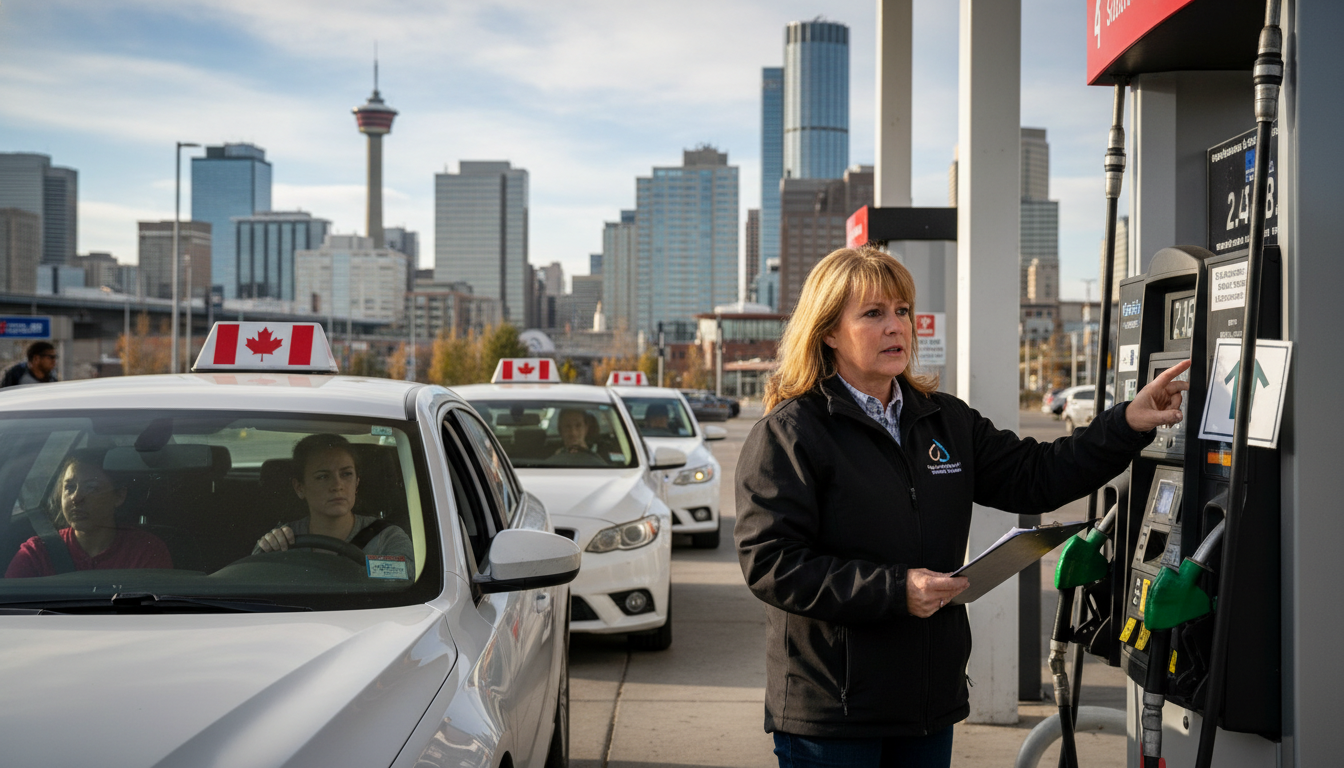
Small businesses that rely on frequent vehicle use reported immediate financial pressure and operational changes. Road Runner Driving School owner Angela Fuentes said daily fuel bills for her fleet have averaged about $150, leading her to raise the price of a 10-hour lesson package from $500 to $600. Managers at other local schools, including Okotoks Driving School, said they are trimming nonessential expenses such as advertising to absorb rising fuel costs.
Industry operators described a dilemma: raising fees risks deterring price-sensitive customers, while maintaining rates could undermine business viability. Several driving schools emphasized concern for younger and newly arrived students who may be disproportionately affected by both tuition increases and higher travel costs.
Commuters and low-income residents change travel habits
Individual drivers reported cutting discretionary travel and altering daily routines as pumps climbed. Some said they have reduced trips to parks, errands, and family visits, while others increased walking where feasible. For people who rely on vehicles for work or study, such adjustments are not always possible and the impact is felt more acutely.
Automotive service student Vincent Blais said he spends roughly $80 a week on fuel now, up from about $50–$60 previously, making it harder to balance school and part-time employment costs. Commuters living outside the city, like student Gregory Lavallee, said a growing share of paycheques is being spent on gasoline, leaving less available for other necessities.
Analysts point to Middle East disruptions and seasonal factors
Energy analysts have linked the current price spike to a mix of seasonal demand and geopolitical pressures. Patrick de Haan, head of petroleum analysis at GasBuddy, noted that tensions and disruptions in the Middle East, including an extended closure of the Strait of Hormuz, have tightened global supply routes and exacerbated price volatility. Those factors, combined with higher travel demand as warmer weather and holiday weekends approach, have amplified upward pressure on pump prices.
Local market observers cautioned that if the supply constraints persist, elevated prices could last longer than a typical seasonal spike. They also noted regional variability in pricing because of refinery maintenance schedules, wholesale market shifts, and transportation costs that feed through to retail stations.
Community impacts and coping strategies emerge
Residents and businesses are adopting a range of short-term measures to cope with higher fuel costs. Some are consolidating errands, carpooling, or choosing active transport where feasible; others are delaying nonurgent trips and optimizing routes to reduce consumption. Small service operators have cut discretionary spending and restructured offerings, while some students and low-income households seek additional work hours or rely more on public transit when available.
Local community organizations and service providers are monitoring the situation for potential knock-on effects, such as higher delivery charges and increased costs for goods and services. Driving school owners expressed concern for younger learners and newcomers who may face barriers to obtaining licensure if training becomes less affordable.
The sudden rise in Calgary gas prices has forced rapid adjustments across the city’s economy and daily life, with households, students and small businesses all feeling the squeeze. As officials and market analysts track developments, many Calgarians say they will continue to change travel habits and spending choices until prices ease.
