
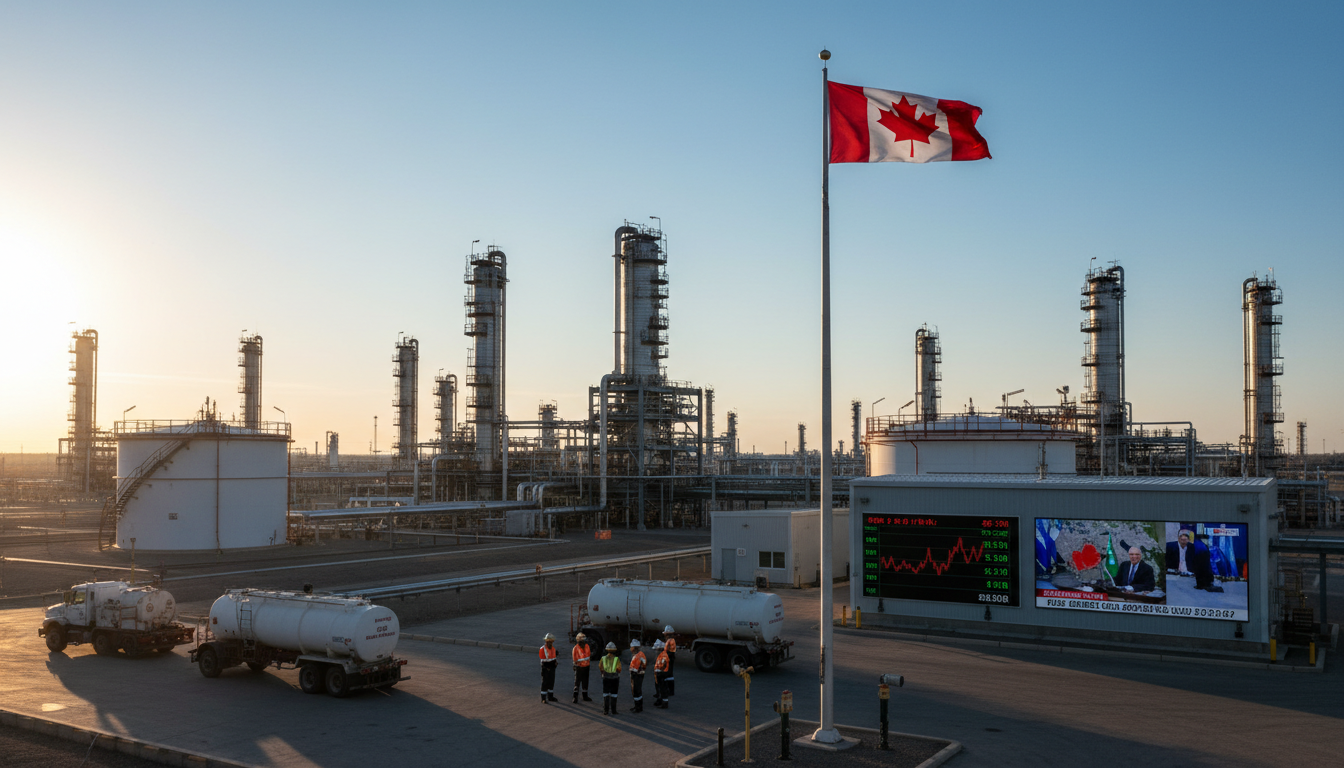
Alberta economic outlook improves as higher oil prices could deliver $15-billion windfall
Alberta economic outlook strengthened by higher oil prices, Business Council of Alberta says; conflict-driven gains could mean a $15-billion swing for the province.
Alberta’s economic outlook has brightened sharply this spring as rising global oil prices tied to the Middle East conflict lift prospects for the province’s energy sector, the Business Council of Alberta’s spring 2026 snapshot finds. The report says Alberta could see a fiscal turnaround worth roughly $15 billion if crude averages materially exceed budget assumptions, a development that places the Alberta economy well ahead of national growth trends. While the boost is notable, economists caution that the gains depend on volatile international conditions and several factors beyond provincial control.
Business Council of Alberta snapshot
The council’s spring 2026 snapshot frames Alberta as an outlier in Canada’s slowing economy, attributing the improved outlook largely to higher energy revenues. Analysts at the council note that Canada entered the year with modest growth expectations that were weakened by global market disruptions after the outbreak of conflict in the Middle East. The report highlights both the upside for energy-producing regions and the uneven distribution of gains across other sectors.
Oil price shock lifts provincial outlook
Higher oil and gas prices have directly improved confidence in Alberta’s energy industry and could push production past recent historic highs, the snapshot says. The council now forecasts provincial real GDP growth of about 2.7 per cent for the year, up from an earlier estimate near 2.0 per cent before the conflict. That divergence reflects Alberta’s role as a primary energy exporter and the immediate fiscal sensitivity of provincial revenues to per-barrel price movements.
Growth figures and sector performance
Nationally, Canada’s growth slowed from roughly 2.0 per cent in 2024 to 1.7 per cent in 2025 and had been expected to slip further before external shocks altered the picture. The snapshot points to several headwinds for the broader economy, including slowing population gains, lower trade flows with the U.S., a new 10 per cent tariff on non‑CUSMA goods and higher inflationary pressures. In Alberta, non-residential construction investment is a bright spot, rising about 22 per cent year‑over‑year, even as residential starts have eased from a 2025 peak.
Household finances and labour market
Household balance sheets in Alberta remain relatively manageable compared with many other provinces, with insolvencies and bankruptcies holding at low levels and only a modest uptick in mortgages in arrears. However, labour market improvements have been uneven: overall unemployment has stabilized following a prolonged adjustment, but youth unemployment remains elevated at roughly 14.4 per cent and newcomers and urban jobseekers face tougher conditions. The snapshot also notes that oilpatch employment has not expanded in step with rising production, tempering broader consumer confidence.
Fiscal impact and $15‑billion swing
The report quantifies the fiscal upside: if global crude averages land in the low‑$80s per barrel this year instead of the roughly $60.50 per barrel assumed in the provincial budget, Alberta’s projected $9.4‑billion deficit could flip to an estimated $6‑billion surplus. That represents a swing on the order of $15 billion and underscores the province’s revenue sensitivity to oil prices, where each dollar above expectations translates into about $680 million in additional revenue. Under current fiscal rules, roughly half of any surplus must be used to reduce debt, with remaining funds available for extra debt repayment, one‑time spending, or the province’s Heritage Fund.
Political calendar and exposure to global risks
The council cautions that the Alberta economy’s improved near‑term picture remains contingent on global developments and domestic policy choices. Key external variables include conditions in the Strait of Hormuz, sustained world oil demand, and broader geopolitical stability that could reverse price gains. Domestically, negotiations under CUSMA and a provincial referendum scheduled for October introduce additional uncertainty that could influence investment decisions and consumer sentiment.
Alberta’s stronger near‑term outlook offers a significant fiscal opportunity, but the Business Council of Alberta emphasizes that the gains are fragile and potentially fleeting. Policymakers and businesses will need to weigh how much of any windfall to lock into long‑term priorities such as debt reduction and the Heritage Fund, while preparing for downside scenarios if oil prices retreat. The report concludes that Alberta stands on firmer ground than most provinces today, yet remains exposed to external turbulence that could quickly reshape prospects.
