
Calgary shooting trial: Defence says Berhe acted in self‑defence after failed drug deal
A Calgary shooting trial examines a fatal December 18, 2023 drug exchange in which the accused, Paulos Berhe, admits shooting two people but contends he acted in self‑defence during a confrontation.
Defence argues self‑defence
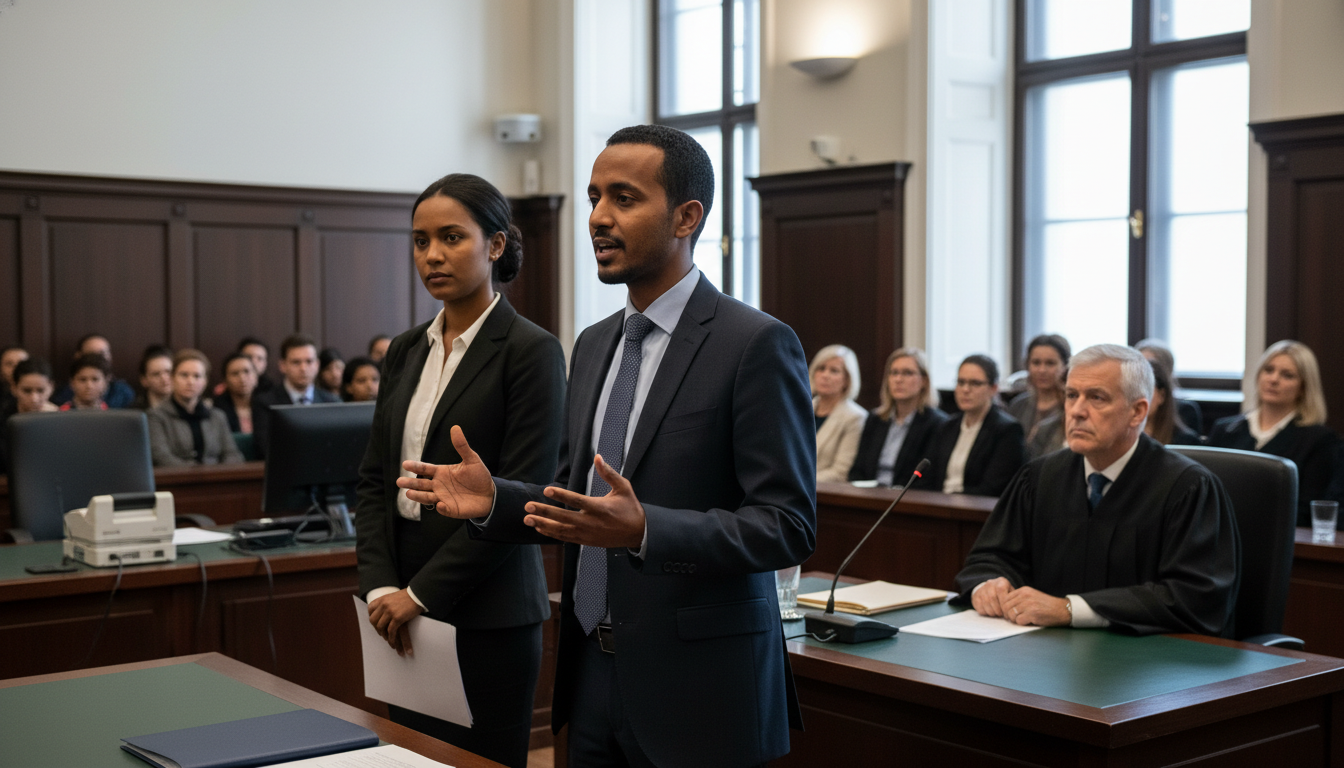
The defence told jurors that the evidence shows Paulos Berhe discharged his firearm because he reasonably feared for his life during a violent encounter in the front seat of a pickup truck. Allan Fay, representing Berhe, portrayed the shooting as a defensive response after he was allegedly stabbed and confronted with a gun. Fay asked jurors to assess the accused’s account that he was under attack and had no safe means of retreat.
Fay emphasized details from his client’s testimony about being assaulted shortly after entering the vehicle outside a southeast Calgary lounge. He described repeated stabbings and a blanket thrown over Berhe’s head, which the defence says left Berhe disoriented and facing an imminent threat. The lawyer argued that those circumstances justified the use of force under the law governing self‑defence.
The defence challenged the credibility of the Crown’s principal witness and framed the encounter as a planned robbery that turned violent. Fay urged jurors to weigh inconsistencies and motive, noting that the alleged purchaser had texted to arrange a large crack cocaine buy before the meeting. He reminded the jury that defensive force can be lawful even when the accused was involved in criminal conduct at the time of the incident.
Crown rejects self‑defence claim
The Crown told the jury the shooting cannot be explained away as legitimate self‑defence and urged a guilty verdict on second‑degree murder and attempted murder charges. Prosecutor Peter Mackenzie noted that Berhe had armed himself with a loaded handgun the night of the incident and did not respond with nonlethal measures. Mackenzie described the sequence of events as a drug deal gone wrong in which the accused chose to use lethal force rather than withdraw.
Crown counsel repeatedly pointed to the injuries sustained by the surviving witness and the fatal outcome for 43‑year‑old Donald Lyons as evidence inconsistent with a defensive reaction. The prosecution highlighted witness testimony it considered clear and credible, asking jurors to accept that the shootings occurred without the defensive provocations described by the accused. Mackenzie asked the panel to apply the legal standard strictly and to find that the accused’s actions were not reasonable under the circumstances.
The Crown also addressed the context of the arranged meeting and argued motive for the accused to carry a firearm and use it during the exchange. Prosecutors told jurors to consider whether Berhe’s preparation and conduct before and during the encounter undermined his claim of immediate necessity. They asked the jury to balance all testimony and physical evidence before reaching a verdict.
Conflicting witness accounts in the pickup truck
Central to the trial are sharply different accounts from the accused and the surviving passenger, Amber Beach, who was shot and survived the incident. Berhe testified that Beach attacked him with a knife and that Lyons then constrained him and pointed a gun in his face. He said that in that moment he reached for his own weapon and fired to stop what he perceived as an imminent attack.
Beach’s testimony painted a different picture of events, telling jurors she and Lyons were shot without warning while Berhe sat in the back seat. She denied attacking the accused and described being struck by gunfire as they sat inside Lyons’ truck. Beach’s account is a critical part of the Crown’s case because it directly challenges the self‑defence narrative.
Jurors heard both versions across several days, and the trial record includes cross‑examination on memory, timing and physical evidence. Both sides asked the panel to assess credibility, to reconcile physical injuries with witness statements, and to decide which account best accords with the broader facts. The divergence in testimony is what the judge and lawyers have said will ultimately determine the legal outcome.
Reconstruction of the December 18, 2023 meeting
Court evidence established that the parties agreed to meet at the Portico Hookah Lounge in southeast Calgary on the evening in question. Prosecutors presented text messages indicating that Lyons intended to buy a large quantity of crack cocaine and had communicated that intent directly to Berhe. Witnesses and phone records were used to place the meeting in time and to show that both vehicles were present at the scene.
According to testimony, Lyons and Beach arrived in Lyons’ truck and Berhe got into the rear seat before the situation escalated. The confrontation unfolded inside the parked vehicle, where shots were fired and both occupants were struck. Lyons was killed inside the truck and Beach was taken to hospital with injuries she survived.
The court also heard about the condition of the truck, the number of gunshot wounds and the pattern of injuries sustained by both victims. Forensic evidence and medical testimony were introduced to assist jurors in understanding the physical dynamics of the shooting and to test the plausibility of the competing narratives offered by the defence and Crown.
Character evidence and prior conduct presented at trial
Throughout the trial, counsel introduced testimony and cross‑examination addressing the histories and behaviour of those involved, including references to past violence and substance use. The defence sought to portray Lyons as violent and controlling, describing prior incidents that they say are relevant to understanding his interactions with Beach. Those assertions were presented to explain motive and to support the defence’s picture of an imminent threat.
The Crown cautioned jurors against letting character evidence distract from the legal questions about what occurred that night and whether the accused’s response met the standard for self‑defence. Prosecutors asked the panel to focus on contemporaneous facts and the physical evidence rather than on allegations of prior misconduct. Both sides argued that background information helped illuminate credibility and context but must be weighed carefully.
Witnesses called on either side provided differing perspectives on relationships, past conflicts and patterns of behaviour that the lawyers said bore on the events inside the truck. The judge instructed the jury on how to treat such evidence and reminded jurors that prior conduct could be relevant only in limited ways under the law. Those legal limits were highlighted again during closing arguments as lawyers reminded the panel of what issues were before them.
Judge’s instructions and jury deliberation process
After closing arguments concluded, the trial judge prepared to give jurors the final legal directions they must follow in applying the law to the facts. Court of King’s Bench Justice David Labrenz is scheduled to outline the elements of the offences, the legal test for self‑defence and how to assess credibility. The judge’s instructions are designed to guide jurors in determining whether the Crown has met its burden of proof beyond a reasonable doubt.
Following the judge’s charge, jurors will be sequestered to begin deliberations and reach a verdict on second‑degree murder and attempted murder counts. The sequestration is intended to protect the jury from outside influence and to ensure their focus remains on the evidence presented in court. Legal observers said sequestration in a case of this profile is not uncommon given the seriousness and public interest.
The timeline for deliberations is uncertain and will depend on how quickly jurors reach consensus on the critical factual disputes. If the jury cannot agree, the court could consider options available under law, but the immediate next step is the judge’s guidance followed by the jury’s private deliberations. Courtroom staff and counsel confirmed that the jury will be instructed on how to navigate any hung jury scenarios and the legal consequences of different verdicts.
Legal implications and community reaction
Legal analysts following the courtroom exchanges said the case raises fundamental questions about how self‑defence is applied when the accused admits to firing the weapon. The legal standard requires that force be reasonable and necessary in response to an immediate threat, a threshold both sides argued about in their final submissions. Observers noted that jurors must weigh subjective perceptions of danger against objective evidence of what actually occurred.
The shooting and the trial have drawn attention in the local community because of the fatality and the involvement of illicit drugs in the arranged meeting. Community leaders and service providers who work with people affected by substance use said the case underscores broader challenges around safety, exploitation and violence in contexts where drugs are traded. Those stakeholders urged a careful and impartial legal process while emphasizing the need for supports that reduce the risk of such tragedies.
Victim impact and public safety concerns were also referenced in court filings and statements, although the live testimony in this trial focused on the immediate facts of the December 18 incident. Both the defence and the Crown asked jurors to approach their duty with seriousness given the life and liberty consequences at stake.
The trial concludes with the jury’s role as the arbiter of contested facts and the judge’s role as interpreter of the law. The verdict will determine whether the accused will serve a significant prison sentence or be acquitted on the basis of self‑defence, and it will bring resolution for the families involved.
Jurors are now considering the evidence and the competing legal arguments in private, and the courtroom will await their decision. The panel’s verdict will bring closure to a case that began with an arranged drug transaction on December 18, 2023 and ended with a fatal shooting and a survivor’s injuries.
