
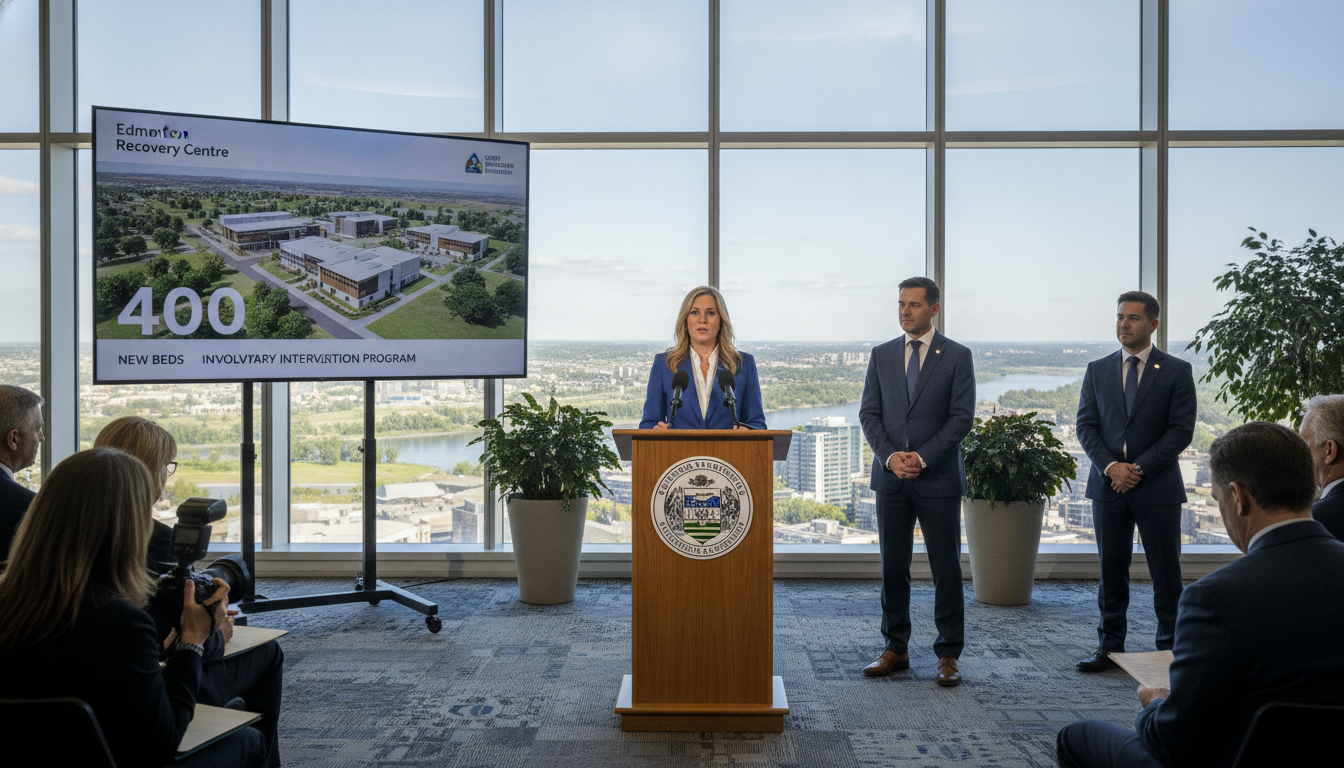
Alberta announces $30-million addiction recovery package for Edmonton with 400 new beds
Alberta unveils $30M plan for addiction recovery in Edmonton, adding 400 treatment beds, involuntary intervention, a police stabilization centre and new youth supports.
Edmonton and provincial officials announced a $30-million investment Wednesday in a multi-pronged addiction recovery strategy aimed at expanding treatment capacity and introducing new tools for involuntary intervention. The plan includes 400 additional recovery beds across the city, a short-term integrated stabilization centre co-located with Edmonton Police Service headquarters, and a 105-bed facility for youth to open later this year or early next. Officials said the measures will be paired with outreach, navigation and supportive housing to help people move from crisis to sustained recovery.
Provincial funding and program goals
The $30-million package is directed at strengthening outreach, stabilization services, recovery-oriented treatment and emergency shelter capacity in Edmonton. Mental Health and Addiction Minister Rick Wilson described the investment as intended to shorten wait times for treatment and reduce repeated cycles of detox and relapse. Officials emphasized coordinated supports that connect people from emergency response through recovery and into supportive housing.
The province framed the approach as an expansion of the Alberta recovery model for mental illness and addiction, with an emphasis on quicker access to treatment. Minister Wilson said the goal is to make a measurable difference in outcomes by creating more immediate opportunities to enter care when people are ready.
Involuntary intervention and new youth facility
A notable element of the announcement is expanded authority for involuntary intervention, including a facility designed for youth who would otherwise cycle through short-term detentions. Minister Wilson said legislative changes now permit longer placements where clinically warranted, moving beyond the previous short maximum stays. The planned youth facility will offer up to 105 beds and is slated to open in late fall or early next year, according to provincial officials.
Government representatives indicated some existing underused beds at other facilities will be repurposed to support the involuntary intervention rollout. Officials framed the measure as one component among expanded voluntary options and community-based services, while acknowledging the policy has been controversial among some advocates.
New recovery beds and Indigenous partnerships
The 400-bed expansion includes a mix of new construction and partnerships with Indigenous communities and local organizations. The Enoch Cree First Nation is establishing 75 recovery beds, including a designated portion for women, and is expanding downtown supports through a drop-in centre. The Métis Nation of Alberta is also contributing recovery programming, including community-based services at Métis Crossing and a downtown New Beginnings centre.
Construction is underway on two new 150-bed treatment buildings in Edmonton and Calgary, intended to relieve province-wide bottlenecks in accessing treatment. Officials said increasing physical capacity across multiple providers will reduce the time people wait for placement and decrease the frequency of return to street use and emergency care.
Edmonton Police stabilization centre and detention detox
Edmonton Police Service will open a short-term integrated stabilization centre at EPS headquarters later this summer with 18 recovery beds for detainees assessed as impaired. The centre will be staffed 24/7 by Recovery Alberta clinicians, include non-intrusive biometric monitoring in each room, and use a body scanner as part of on-site intake procedures. Insp. Michael Dreilich said the intent is to medically stabilize people and divert them from the justice system into voluntary treatment and supports.
EPS characterized the centre as a pivot in frontline response, reflecting the reality that officers frequently encounter people in mental-health or substance-related crises. Police and health partners described the model as focused on immediate safety and rapid connection to care rather than criminal processing.
Municipal reaction and community health hubs
Mayor Andrew Knack welcomed the provincial investment and said it represents renewed collaboration between the city and Alberta on complex social challenges. Knack highlighted a recent community health hub pilot that reported a 321 percent increase in youth visits over six months, and signalled interest in jointly funding expanded community-based hubs through the city’s upcoming four-year budget deliberations.
City officials said supportive housing investments remain a key part of the continuum, offering longer-term stability for people moving from treatment into recovery. Local leaders stressed that beds and facilities must be paired with wrap-around services to translate capacity into sustained outcomes.
Implementation timeline and remaining questions
Officials provided a broad timeline: some measures are already under construction, the police stabilization centre will open this summer, and the youth facility is expected by late fall or early next year. Beyond construction schedules, operational details such as referral pathways, oversight of involuntary interventions and measures of program success were not fully detailed at the announcement.
Advocates and service providers are likely to seek clarity on how involuntary placements will be governed, what safeguards will be in place, and how expanded capacity will be matched with trained clinical staff. Provincial and municipal representatives said ongoing collaboration and monitoring will guide the rollout.
The announcement frames a significant shift in Edmonton’s response to an entrenched addiction and mental-health crisis, combining expanded treatment capacity with new stabilization and intervention options. Officials said the intent is to reduce overdose deaths, lower emergency responses, and create clearer pathways from crisis to recovery.
