
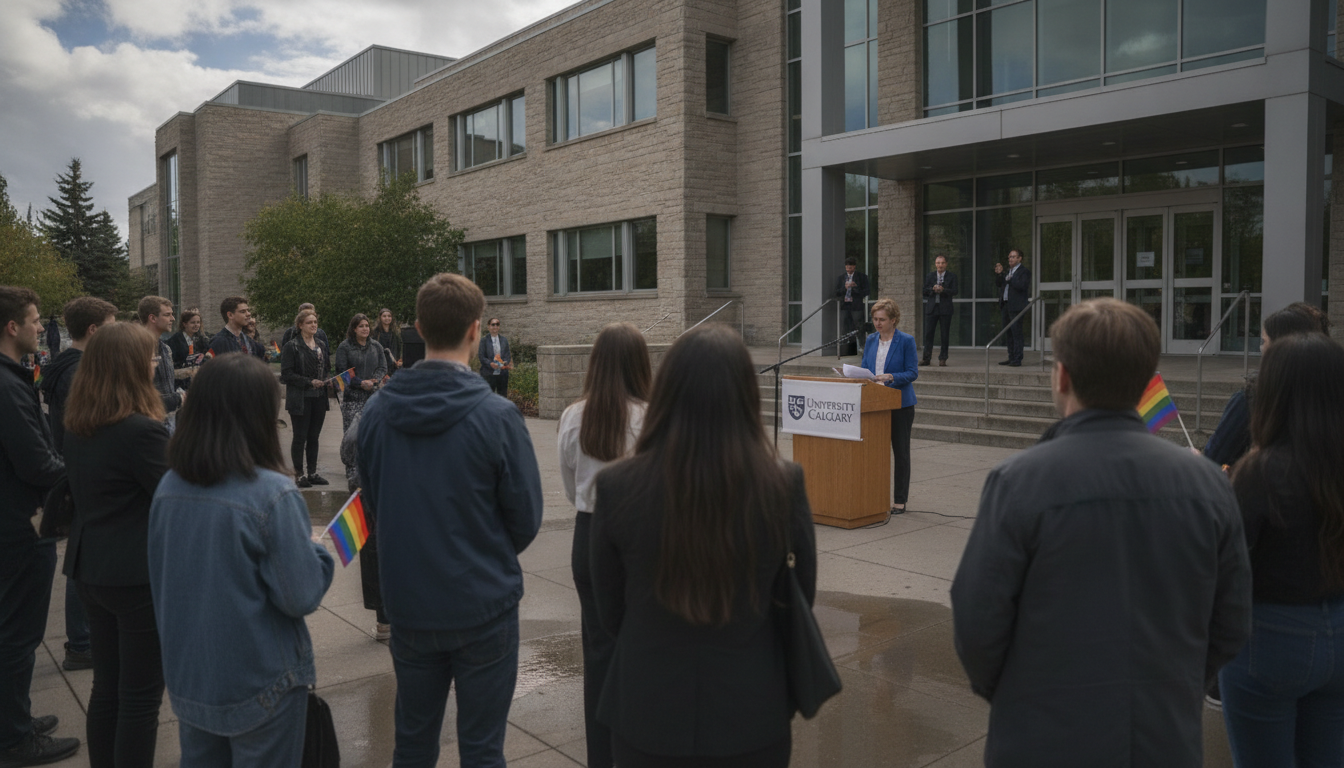
University of Calgary Will Not March in 2026 Calgary Pride Parade After Organizers’ Request
University of Calgary will not march in the 2026 Calgary Pride parade after organizers asked the institution to opt out; campus Pride events will continue while debate over sport policy and inclusion persists.
The University of Calgary announced it will not participate in the Calgary Pride parade this year after receiving a request from parade organizers, saying institutional representation will be different while individual groups may still take part.
The decision was framed in a university statement that reiterated its commitment to supporting the 2SLGBTQ+ community and confirming campus Pride Week celebrations will proceed.
The move follows a request from Calgary Pride that the university itself not march, though the student newspaper The Gauntlet first reported the development and the parade organization has not publicly explained the reasons for that request.
University statement and scope of participation
The university’s statement made clear that while the institution will not appear as an entity in the parade, individual faculties, student associations and campus groups remain eligible to apply to march.
That distinction separates formal institutional representation from the participation of community members and student-led organizations, a structure the university described as consistent with its support for Pride Week activities on campus.
University officials declined further comment beyond the written statement, leaving questions about how the change will be managed at the departmental and administrative levels.
Student reaction and the Graduate Students’ Association application
Graduate Students’ Association vice-president Wylie Pietsch said the GSA has submitted an application to march and is hopeful it will be approved by event organizers.
Pietsch framed the university’s absence as distinct from the grassroots participation of student groups, and urged the institution to move beyond symbolic gestures to more substantial policy changes that support queer students.
They also highlighted systemic patterns seen in both the university and provincial government that, in their view, have influenced community trust and shaped Calgary Pride’s request.
Concerns raised about the Fairness and Safety in Sport Policy
Pietsch pointed to the university’s Fairness and Safety in Sport Policy, introduced last September, as one of the sources of concern for students and advocates.
They characterized the policy as having been implemented with limited community engagement and said it restricts participation in female sports to athletes assigned female at birth, which they linked to provincial legislation.
The student representative urged the university to take further action to support queer communities beyond a single week of campus events.
Calgary Pride’s prior restrictions and organizational discretion
Calgary Pride has previously set rules about who may march in its parade, historically excluding uniformed police and federal or provincial political parties from marching in official capacities.
Those past decisions reflect the organization’s discretion to limit institutional presence when it deems such exclusions necessary for safety, inclusivity or community consensus.
Organizers have not publicly explained the rationale behind requesting the University of Calgary not march this year, and they did not respond to requests for comment at the time the university’s statement was released.
Responses from other institutions and community partners
Mount Royal University issued a statement saying it looks forward to participating in this year’s parade and noted a partnership with Calgary Pride that dates back to 2012.
The differing approaches from local post-secondary institutions underscore a broader debate about how campuses should engage with Pride events, balance institutional branding with community needs, and manage internal policy disagreements.
Community organizations and student groups are watching closely as decisions by universities and public agencies shape perceptions of support and inclusion.
Logistics and timing for Calgary Pride 2026
Calgary Pride is scheduled to begin on August 31, 2026, and will culminate with the annual parade on Sunday, September 6, 2026, providing a week of events, rallies and celebrations across the city.
With the parade date less than two months away, organizers are finalizing approvals for marchers and updating parade protocols, leaving a short window for any negotiation or appeals related to institutional participation.
Event planners must balance public-safety considerations, accessibility, and the diverse perspectives of participating communities while finalizing the parade roster.
Implications for campus climate and institutional relations
The university’s decision not to march as an institution is likely to fuel ongoing conversations among students, faculty and community partners about the sincerity and substance of campus support for 2SLGBTQ+ people.
For many advocates, the distinction between hosting Pride Week events on campus and declining institutional representation in the parade raises questions about where symbolic support ends and policy-driven exclusion begins.
University leaders now face pressure to clarify how their internal policies and public actions align with their stated commitments to inclusion.
The university’s written reassurance that Pride Week will be celebrated on campus signals a desire to maintain visible support for 2SLGBTQ+ communities within its own spaces.
At the same time, requests from Calgary Pride for the institution to opt out of the parade introduce a public-facing dynamic that university administrators must navigate carefully.
How the university responds in the weeks ahead—through dialogue, policy review or additional engagement—will shape student and community perceptions leading into the fall term.
Decisions by parade organizers to limit institutional participation have precedent and reflect broader tensions between community-defined safety and institutional visibility.
For Calgary Pride, the decision to request the University of Calgary not march appears rooted in a calculus about what voices and organizations best serve the event’s goals and the safety of participants.
For the university, the choice to accept that request and allow individual groups to march represents a compromise between institutional caution and support for grassroots expression.
Outlook and next steps for students and organizers
Students and campus groups that wish to march will proceed with applications under the same process as other community organizations, and their inclusion will depend on Calgary Pride’s final approvals.
Student leaders and advocacy groups are expected to continue discussions with university administrators about policy changes and increased engagement that go beyond one-week celebrations.
Observers say that the coming weeks will be critical for establishing channels of communication between the university, student representatives and Calgary Pride organizers.
Mount Royal University’s commitment to participation highlights that institutional approaches to Pride differ across the city’s post-secondary landscape.
That variance suggests there is no single template for how universities must engage with community Pride events, but it also underscores the potential for institutional choices to influence campus culture.
As the parade approaches, comparative responses from Calgary’s colleges and universities will likely factor into public debate about higher education and inclusion in the province.
The university, student associations and Calgary Pride each face practical decisions on event logistics, messaging and outreach that will affect attendance, media coverage and the lived experience of participants.
How organizers and institutions reconcile differing priorities—safety, visibility, policy consistency and community trust—will be watched closely by advocates and the broader public.
Ultimately, the path chosen by each party in the weeks before the parade will shape Calgary’s Pride season and set expectations for future campus–community relations.
University administrators have signaled continued campus-based support, student leaders are pursuing opportunities to march individually, and Calgary Pride’s roster decisions remain central to how the parade will look on Sept. 6, 2026.
This sequence of choices highlights the complex interplay of institutional policy, community governance and student activism in contemporary Pride events.
Public attention to these developments reflects broader conversations about inclusion, representation and the responsibilities of large public institutions in civic life.
As Calgary prepares for Pride Week beginning August 31, 2026, community members and campus stakeholders will be paying close attention to whether dialogue yields changes in policy or practice that address the concerns raised by students and advocates.
The coming weeks present an opportunity for renewed engagement and transparency from all parties involved, as well as a chance to ensure that Pride celebrations are both safe and representative.
For many on campus, the expectation is that meaningful follow-up—beyond statements and single-week programming—will be necessary to restore confidence and demonstrate sustained institutional commitment.
University of Calgary will not march as an institution in the 2026 Calgary Pride parade but will host Pride Week on campus, while individual faculties and student groups may seek approval to participate independently, leaving organizers and campus communities to navigate the final decisions ahead of the festival.
