
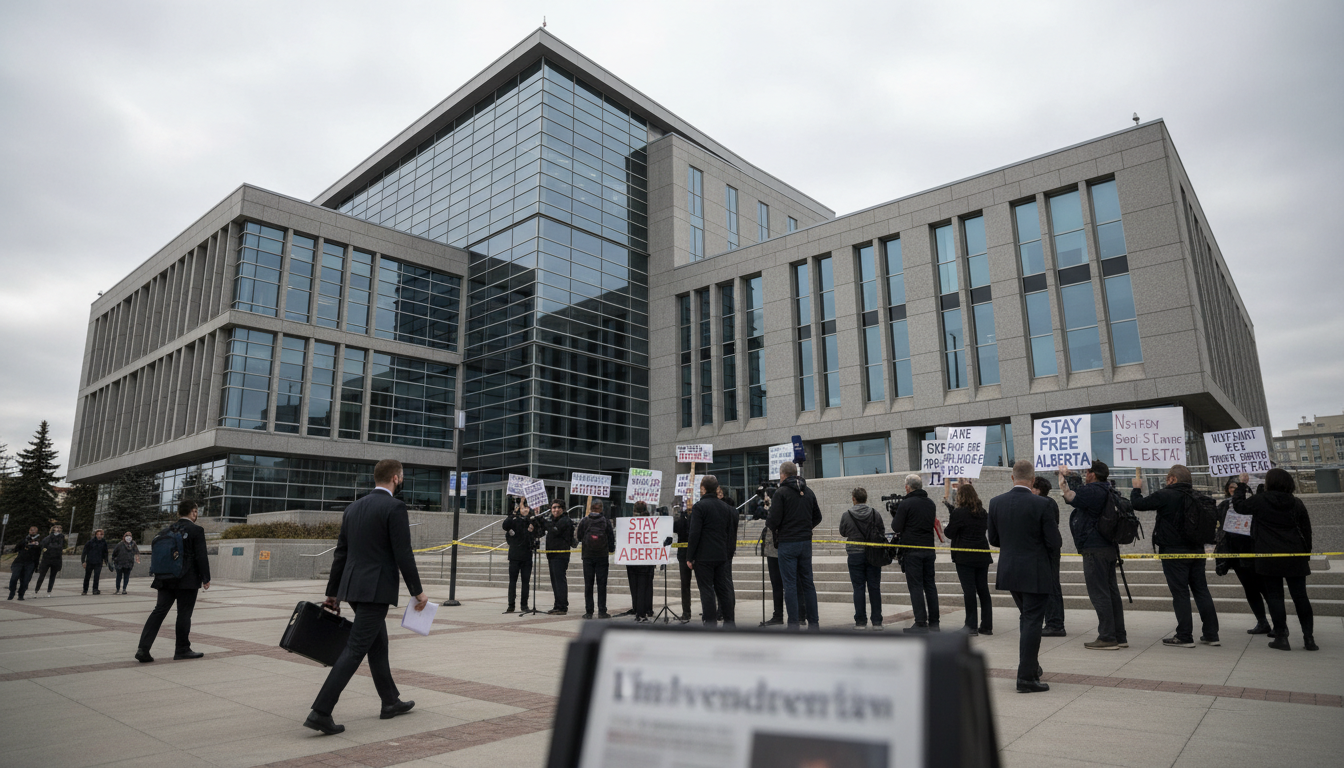
Court quashes Elections Alberta approval of Alberta independence petition
Court quashes Elections Alberta approval of the Alberta independence petition, citing legal error and treaty concerns; government and proponents signal appeals.
The Alberta independence petition approved by Elections Alberta has been quashed by a Court of King’s Bench justice, removing a key step toward a citizen-led referendum.
Justice Shaina Leonard found errors in the chief electoral officer’s handling of the second citizen’s initiative, a ruling that directly challenges the procedural path for the separatist petition.
The decision puts the future of the Alberta independence petition — which its proponents say gathered more than 300,000 names — into legal uncertainty as both the government and the petition’s backers prepare next steps.
Court overturns chief electoral officer’s approval
Justice Leonard concluded that Elections Alberta’s chief electoral officer, Gordon McClure, made an error in law in approving the second citizen’s initiative submitted by Stay Free Alberta.
The ruling states the officer failed to take into account an earlier legal finding that a proposal for provincial separation would inevitably breach Treaty rights, a consideration the judge said was essential to the validity assessment.
By quashing the approval, the court determined that the decision was unreasonable on the grounds of legal error, effectively nullifying the administrative step that would have permitted signature verification to proceed.
The judge’s written reasons also identified a separate failure by the Crown — represented by the government — to consult with several Indigenous applicants who had raised concerns about the petition’s implications.
Judge cites Treaty rights and duty to consult
A fundamental thread in the decision was the court’s view that proposals for secession cannot be divorced from Indigenous Treaty rights that predate provincial authority.
Justice Leonard referenced prior rulings indicating that secession proposals could contravene Treaty obligations, and said Elections Alberta should have considered those precedents before approving the petition.
The court also found that the government did not fulfill its duty to consult with specific First Nations — Athabasca Chipewyan First Nation, Blood Tribe, Piikani Nation, and Siksika Nation — who had applied to the court raising concerns.
That failure to consult was judged material to the validity of the approval and formed part of the legal basis for setting aside the chief electoral officer’s decision.
Injunction request from Sturgeon Lake Cree Nation denied
In a separate ruling delivered the same day, Justice Leonard refused an injunction sought by the Sturgeon Lake Cree Nation to halt the petition process and to challenge recent legislative changes.
The SLCN had argued the province’s changes to the law, enacted through Bill 14, violated Treaty 8 and created conditions that risked harm to Indigenous communities and relationships.
The judge found the evidence did not meet the legal threshold to demonstrate irreparable harm that would justify an injunction, and she was not persuaded that observed increases in racism or misinformation were directly attributable to the citizen initiative process or the legislation.
SLCN counsel Orlagh O’Kelly said her clients were disappointed and would review the decision to determine whether further steps were available.
Proponents and organizers respond; appeals expected
Stay Free Alberta, the separatist group behind the petition, says its campaign collected signatures between January 2 and May 2 and that leader Mitch Sylvestre delivered the petition to Elections Alberta on May 4.
One of the group’s lawyers, Jeff Rath, publicly criticized the ruling, saying on social media that the decision “appears on its face to violate principles of natural justice” and indicating the group will file appellate documents.
Premier Danielle Smith immediately signalled the provincial government’s intent to appeal, characterizing the ruling as “incorrect in law and anti-democratic” and saying it would deny hundreds of thousands of Albertans the chance to have their petition verified.
The premier also indicated cabinet and caucus would meet to consider the ruling’s implications and the province’s legal strategy, framing the outcome as a direct challenge to the government’s approach to citizen-led initiatives.
Political context: referendums, Bill 14 and competing petitions
The judicial decisions arrive against a backdrop of bold provincial moves to expand direct democracy and to place constitutional questions to voters.
The premier has proposed a separate set of nine referendum questions on immigration and constitutional change to be held on October 19, reflecting a government agenda that embraces referendums as a tool for public policy direction.
That same appetite for plebiscitary politics has produced competing petitions: a pro-federalist “Forever Canadian” petition led by Thomas Lukaszuk previously had just over 400,000 signatures verified by Elections Alberta in December.
Bill 14, the statute cited by challengers, was designed in part to lower administrative barriers for citizen initiatives to move forward, a change that critics say did not adequately account for Indigenous rights or the constitutional complexities surrounding secession.
Legal and constitutional implications for Alberta and Canada
Legal experts have long warned that any provincial initiative seeking separation raises complex constitutional and international issues that cannot be resolved through a provincial petition alone.
The court’s emphasis on Treaty rights underscores a broader legal reality: Indigenous treaties and federal constitutional frameworks impose limits on unilateral secessionist efforts by a province.
By setting aside the approval on grounds of legal error and inadequate consultation, the court has signalled that administrative facilitation of a separation question must be reconciled with existing constitutional duties and court precedents.
The decision is likely to prompt appeals that will force higher courts to address whether and how citizen initiatives on constitutional matters can proceed within existing legal constraints.
Implications for First Nations and public discourse
First Nations that brought the challenges framed their interventions as efforts to protect Treaty obligations and to ensure their voices were heard before a public process moved forward.
Chief Sheldon Sunshine of Sturgeon Lake Cree Nation said the litigation, even without an injunction, helped shift public awareness about the centrality of Treaty rights and concerns about foreign interference raised during the petition debate.
The court’s findings on consultation duties also reinforce that governments must engage meaningfully with Indigenous nations before allowing public initiatives that might affect Treaty interests to advance.
For many Indigenous and civic leaders, the rulings highlight the need for clearer protocols and more thorough engagement when provincial governments redesign processes that touch on constitutional or treaty-protected rights.
Appeals and procedural maneuvers are now likely to dominate the near-term timeline for the Alberta independence petition, with both legal and political actors preparing for further confrontation in provincial and possibly appellate courts.
The coming weeks will determine whether the provincial government’s planned appeal and the petitioners’ own legal responses will succeed in re-opening the path to signature verification, or whether courts will maintain the strictures identified by Justice Leonard.
Until appellate courts weigh in, the Alberta independence petition remains in legal limbo, and the broader questions it raises about referendums, Treaty rights and provincial authority are poised to become subjects of sustained legal and public debate.
