
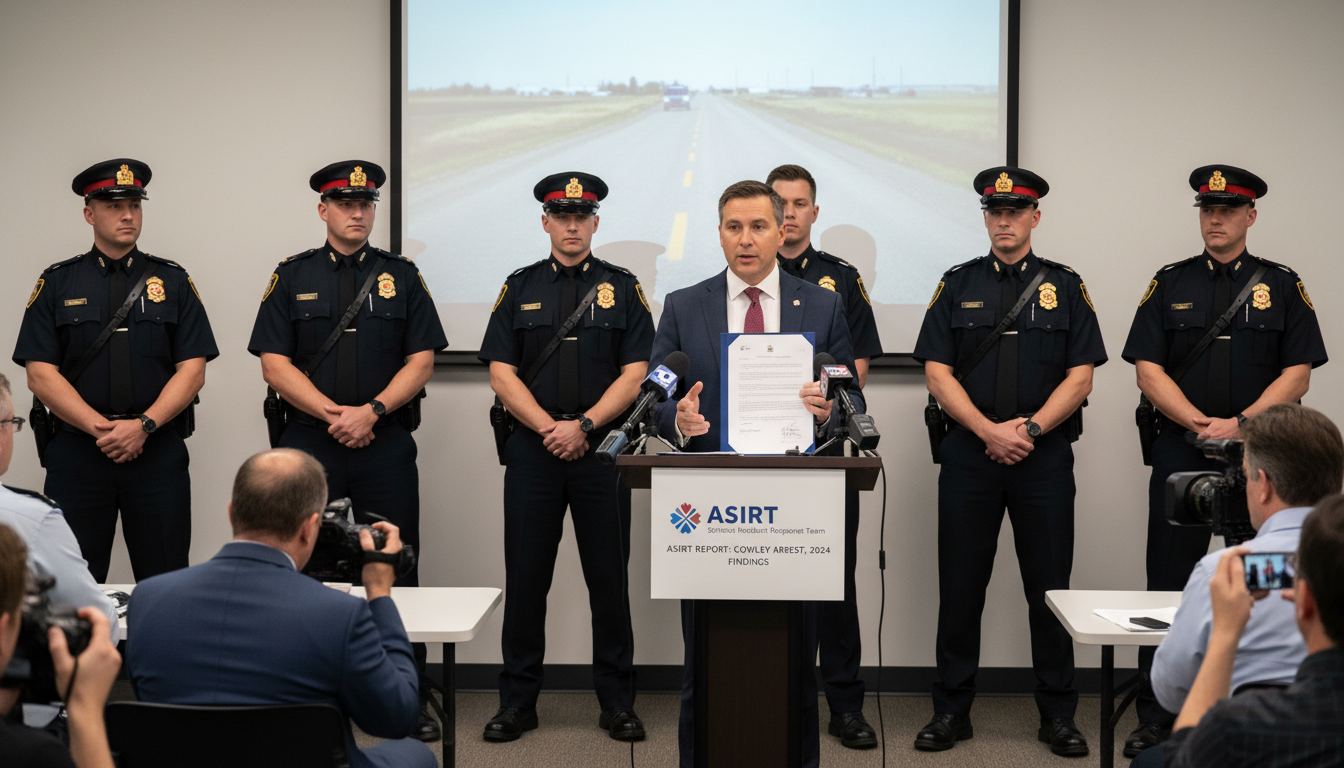
ASIRT clears RCMP officers in Cowley arrest, rules force was reasonable
ASIRT clears RCMP officers over a 2024 Cowley arrest, ruling the use of force was reasonable after review of the incident, medical records and witness accounts in May.
ASIRT clears RCMP and summarizes finding
Alberta’s Serious Incident Response Team concluded there were no reasonable grounds to charge two RCMP officers over their handling of a March 23, 2024 arrest in Cowley. ASIRT determined the officers used “reasonable and necessary” force when they pulled a woman down a short staircase and secured her in handcuffs. The decision follows a directed investigation launched on March 12, 2025 into allegations of excessive force and a possible link to a subsequent pregnancy loss.
Sequence of events on March 23, 2024
RCMP responded just before midnight after a call about suspicious persons walking off Highway 3 into a farmhouse in Cowley, a village roughly 160 kilometres south of Calgary. The first officer noted footprints leading to an open window, prompting the call to be upgraded to a break-and-enter and additional officers to be dispatched. The occupants at the farmhouse included a woman who had been staying with her grandmother, along with the woman’s boyfriend and the grandmother’s partner.
Arrest at the farmhouse and the stairway interaction
According to ASIRT’s report, officers repeatedly commanded the woman to show herself before she emerged behind a curtain at the top of a four-step stairwell. She did not comply with directions to come down the steps, and one of the accused officers then took hold of the scruff of her jacket at the right shoulder to guide her down. The report notes the officer described the descent as a controlled pull to the ground, after which the other officer handcuffed her; the woman was said to be on the ground for less than a minute before being stood up and escorted outside.
Allegation of miscarriage and medical timeline
The woman alleged she experienced a miscarriage a few days after the arrest and linked it to being taken to the ground during the encounter. ASIRT reviewed medical records and noted that when the woman sought emergency care at the Crowsnest Pass Health Centre on April 30, 2024 she was estimated to be almost six weeks pregnant. The investigative team concluded the available evidence could not establish a causal connection between the arrest and the pregnancy loss, and medical records suggested the loss occurred sometime after April 30.
Accounts from officers and witnesses
All officers present at the scene confirmed the woman was taken to the ground in a controlled manner, the report records. One officer told investigators he guided the woman down by her jacket and restrained her for roughly 10 seconds while handcuffs were applied, and he denied that she indicated pain, visible injury, or a pregnancy at the time. The report also observed that while being pulled down a few steps can be unsettling and the landing may not have been delicate, lack of visible injury weighed in the assessment of control and proportionality.
ASIRT’s legal assessment and no charges recommended
After weighing witness statements, officer accounts and available medical documentation, ASIRT concluded there were no reasonable grounds to believe an offence had been committed by the two officers. The agency characterized the force used as both reasonable and necessary in the circumstances, given the officers’ account that the woman had not complied with directions and the risk assessment that accompanied a break-and-enter response. The report stops short of determining the cause of the pregnancy loss and therefore did not link it to criminal conduct by police.
Community impact and procedural questions
The case has heightened local attention in the Crowsnest Pass region and among those concerned about policing and pregnancy-related vulnerabilities during arrests. Advocates and some community members often emphasize the need for clear police protocols when interacting with people who may be pregnant or otherwise medically vulnerable. The ASIRT report underscores the evidentiary limits investigators faced, particularly around timing and medical causation, which can complicate accountability questions in similar incidents.
The ASIRT decision concludes the investigative directive issued in March 2025 and closes the file without recommending charges against the two RCMP members involved. The Alberta Serious Incident Response Team’s findings rest on its assessment of necessity, proportionality and the medical record timeline, leaving questions about institutional policy and training to other forums or oversight reviews.
