
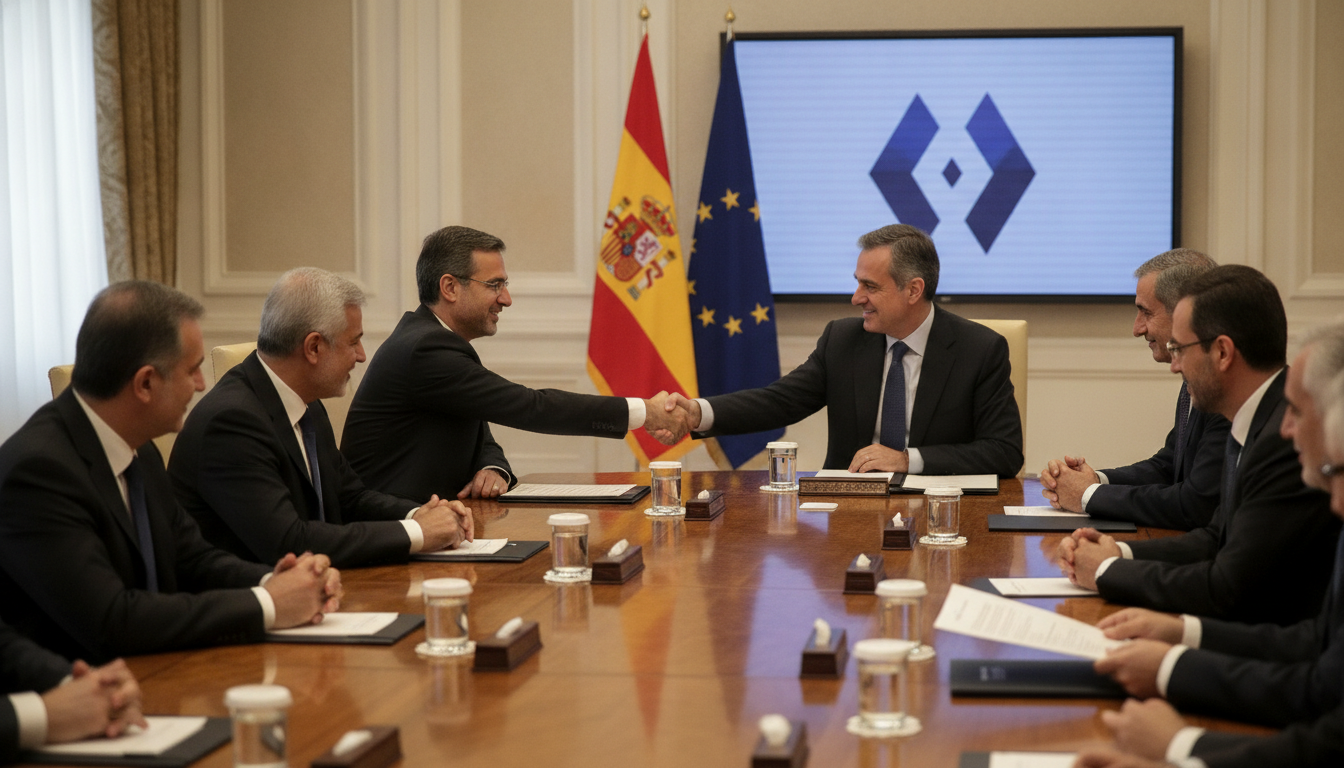
Spain’s World Cup victory prompts praise from Iran amid Madrid’s Gaza criticism
Iran praises Spain’s World Cup victory and links the win to Madrid’s condemnation of Israel’s Gaza campaign; reactions split across Iran, Israel and Argentina.
Spain’s World Cup victory drew public praise from Iran on Monday, with Tehran linking the national team’s triumph to Madrid’s recent criticism of Israel’s actions in Gaza. The congratulatory comments, carried by Iranian state media, framed the result as a source of joy for countries and communities opposed to policies by the United States and Israel. Spanish officials and players who had signalled positions on the Gaza war became focal points in a wider diplomatic and political response after the final.
Iran hails Spain’s World Cup victory
Iran’s top negotiator, Mohammad Bagher Ghalibaf, publicly congratulated Spain and cast the result as resonant beyond sport, according to the Iranian state news agency IRNA. He told reporters the Spanish side’s victory had "made the hearts" of many nations that oppose what he described as aggression very happy, language that Tehran used to politicize the sporting outcome. Iran’s foreign ministry spokesman Esmaeil Baghaei also praised the Spanish team and Madrid’s stance in recent months, describing their behaviour as "valuable" in opposing what Iran calls oppression.
Madrid’s recent statements and player gestures noted
Spanish government statements in the weeks leading up to the final drew attention for their condemnation of Israel’s campaign in Gaza, language that officials in Tehran highlighted after the match. Spanish players’ public remarks and gestures in support of Palestinian civilians were widely shared on social media, and Tehran cited those displays when welcoming the result. Madrid’s criticism extended to what some Spanish officials described as allied policies toward Iran, a line that has deepened the diplomatic resonance of the victory.
Support for Argentina rallied in Israel and among some fans
By contrast, Israeli politicians and many football supporters rallied behind Argentina during the tournament, reflecting deep political and social divisions that intersected with the match. Argentina’s president, Javier Milei, has been an outspoken supporter of Israel’s policies, and his vocal stance drew attention to the political stakes perceived by different governments. That divergence turned the World Cup final into a moment where sporting allegiances and international policy positions overlapped in public commentary and social media debate.
Social media amplified competing narratives
The match quickly became a flashpoint online, where fans and political actors framed the result to suit broader geopolitical narratives. Clips of players’ reactions, officials’ statements and excerpts from national governments circulated widely, with hashtags and commentary trending in multiple countries. Analysts said the rapid spread of those posts intensified the symbolic meaning assigned to the final, turning a single football result into a subject of international commentary and state-level rhetoric.
Diplomatic undertones between Tehran and Madrid
Iran’s public congratulations come amid a complex diplomatic backdrop in which both Tehran and Madrid have stepped up rhetoric on regional conflicts. Tehran framed Spain’s win as aligned with nations it described as "free, independent and justice-loving," language used by Iranian officials to underscore ideological sympathy. Spanish officials have defended their public criticism of the Gaza campaign on humanitarian grounds, while avoiding direct escalation of diplomatic tensions; nonetheless, the exchange of public statements illustrates how sports can intersect with foreign policy.
Potential ripple effects for bilateral and regional politics
Observers caution that while sporting events rarely reshape formal diplomacy, they can alter public perceptions and provide new platforms for political messaging. The World Cup final has offered a moment for both governments and non-state voices to reiterate positions on Gaza and regional security, potentially influencing domestic audiences and international discourse. Governments in the region and in Europe are likely to monitor how this episode is discussed in domestic media and whether it affects longer-term diplomatic engagement.
The Spanish victory thus became more than a sporting milestone: it was seized on by state actors and supporters as a symbol in ongoing disputes over Gaza and regional tensions. As governments weigh public sentiment and diplomatic priorities, officials on all sides will likely continue to use high-profile events to press their narratives while attempting to prevent short-term rhetoric from causing lasting diplomatic damage.
