
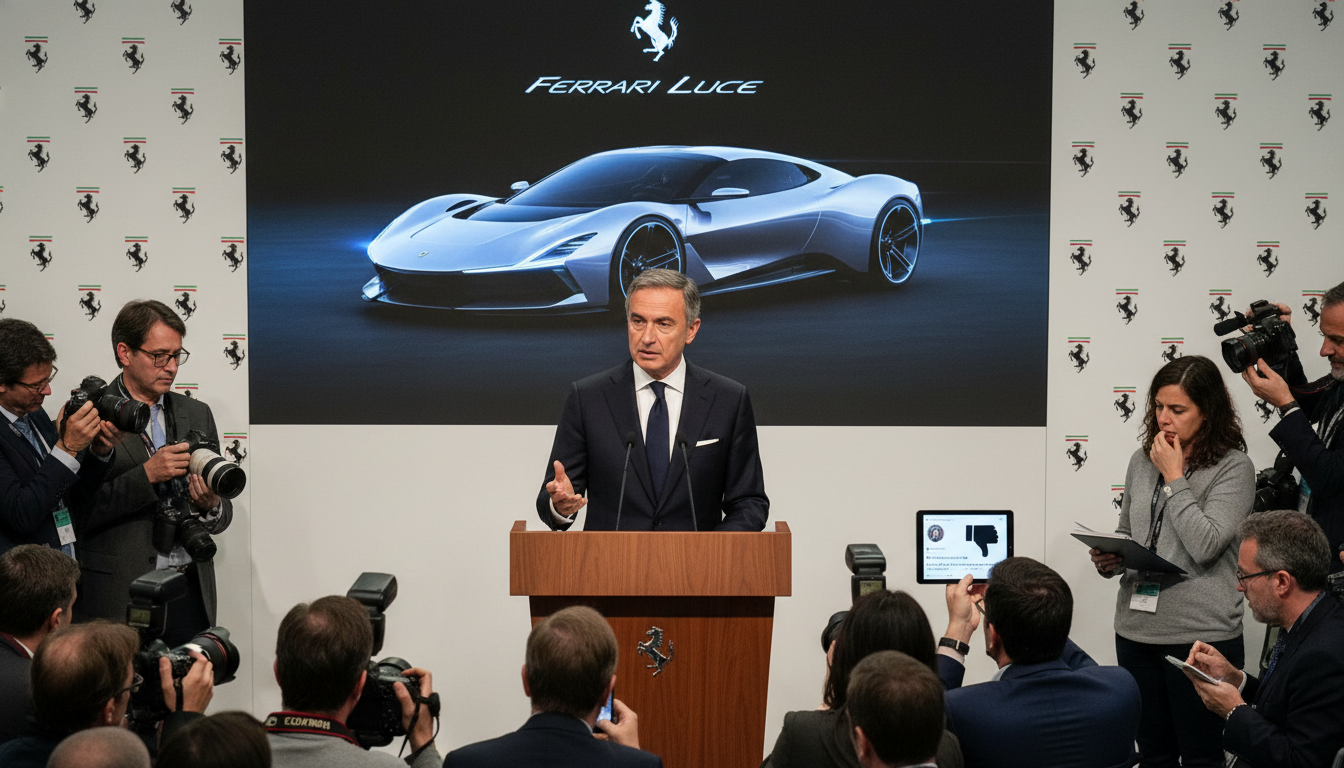
Ferrari Luce EV fuels online uproar as automaker reports early orders
Ferrari Luce EV fuels online backlash and debate over buyers as Texas opens a public AV registry; mobility startups also close several major funding deals.
The release of Ferrari’s first all-electric model, the Luce, has triggered an intense online reaction even as the company says it is receiving orders. The Luce, a five-seat EV designed by former Apple design chief Jony Ive and priced near $650,000, became a lightning rod for criticism and memes within hours of its reveal. Ferrari insists there is buyer interest, but public response has focused attention on who will actually purchase the Luce and whether the marque’s traditional clientele will embrace an electric departure.
Ferrari Luce ignites social media storm
The Luce’s design prompted sharply divided views across social platforms and industry channels. Some enthusiasts voiced dismay at the aesthetic shift, while critics and designers compared the car unfavorably to far cheaper electric models. The intensity of the reaction shows how volatile public response can be when a storied luxury brand takes an unexpected design path.
Memes and commentary proliferated quickly, amplifying the backlash beyond specialist forums and automotive press. Established figures in car design questioned the styling in public posts, which intensified scrutiny. For Ferrari, the social media uproar represents both reputational risk and widespread visibility for the new model.
Who is the Ferrari Luce buyer?
A central question for Ferrari is whether the Luce will appeal to the company’s existing customer base or attract a new cohort of wealthy EV buyers. Ferrari has historically relied on repeat purchasers, and the company points to a high share of owners who return for additional models. If the pool of interested customers is limited, Ferrari may face difficult allocation decisions if demand outstrips production.
Luxury automakers often prioritize margin and customer lifetime value over broad market acceptance. The Purosangue SUV, once criticized by purists, ultimately found buyers and helped expand Ferrari’s lineup. The Luce’s fate may hinge less on immediate public sentiment than on whether enough affluent customers value its combination of brand, design and electric performance.
Ferrari reports early orders and strategic positioning
Ferrari leadership has said the Luce is already accumulating orders from both long-standing and new customers. Company executives frame the model as part of a broader electrification strategy that does not aim for mass-market volumes. For a maker whose economics rely on scarcity and high prices, selling a limited run to select clients can be commercially sufficient.
How Ferrari allocates initial production—and whether priority will go to repeat owners—will shape perceptions of the Luce’s exclusivity. If allocations favor established collectors, the model may be insulated from mainstream criticism. Conversely, targeting new owners could broaden Ferrari’s market footprint but invite further debate among brand loyalists.
Texas opens autonomous vehicle registry; Waymo leads filings
Meanwhile, in a separate development for mobility, a new Texas law has given the state motor vehicle authority expanded oversight of autonomous vehicle testing and deployment. The legislation requires companies to obtain licenses for AV operations and makes registration data publicly available, creating a rare degree of transparency for a rapidly evolving sector. Early public records show a range of participants, from robotaxi pioneers to logistics and trucking startups.
Within that registry, Waymo tops the list with the largest number of registered AVs, followed by other players with notable fleet entries. The state’s online tracking tool also includes a complaints feature and identifies firms that have filed to operate, offering journalists and policymakers new visibility into autonomous operations. Observers note, however, that fleet size is only one metric; commercial service rollout and regulatory compliance will determine which companies ultimately succeed in Texas.
Mobility deals highlight investor interest and consolidation
The broader mobility sector continues to see significant financing and M&A activity even as product debates unfold. A new single-asset fund has taken a majority stake in a European micro-mobility operator, with a major institutional investor leading the round. An electric motorcycle spin-off completed an acquisition of an off-road EV startup, while an autonomous drone delivery company raised $33 million in private placement and completed a reverse merger to prepare for public markets.
Other transactions include an EV charging operator merging with a network-backed business and a German drone manufacturer in advanced talks for a large funding round that would substantially raise its valuation. Travel and adventure startups also landed sizable rounds to support U.S. expansion. These moves underscore investor appetite for hardware, logistics and platform plays even as regulatory regimes and consumer tastes shift.
Ferrari’s entry into electrification and Texas’s move to make AV operations more transparent are part of a broader industry shift toward new propulsion and autonomy models. The Luce controversy illustrates how brand heritage and modern design can collide under intense public scrutiny, while the flurry of deals shows capital remains available for companies that can combine technology with commercial scale. As the automotive and mobility landscapes evolve, the ultimate test for new products and services will be whether they convince both regulators and paying customers.
