
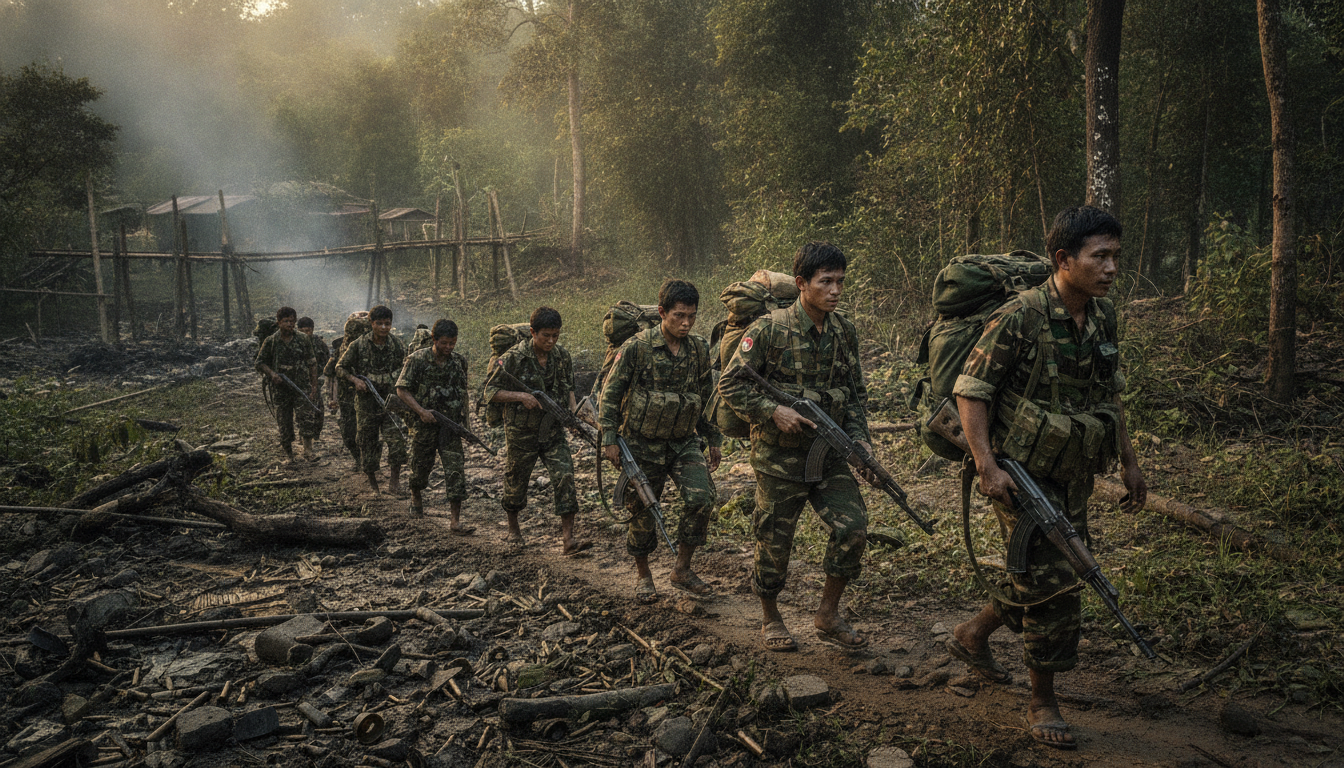
Front Lines of Myanmar’s Forgotten War: Inside the Armed Resistance
Journalists report from the front lines of Myanmar’s forgotten war on June 24, 2026, where rebel fighters face persistent shortages and communities are being displaced.
Reporters Reach Rebel-Held Highlands
On June 24, 2026, journalists reached the center of an armed resistance movement in Myanmar to observe fighters and civilian life amid protracted conflict. The visit brought renewed attention to what locals and combatants alike describe as a war that receives little sustained international coverage.
Travelers found checkpoints, informal encampments and makeshift clinics clustered around mountain villages where command posts are often mobile. Fighters and community leaders described years of attritional warfare that has left units under-equipped and dependent on local supply chains.
Tactical Disadvantages and Equipment Shortfalls
Rebel commanders described being outgunned by better-armed forces in several encounters, relying instead on guerrilla tactics and intimate knowledge of terrain. Shortages of ammunition, medical supplies and winter gear were cited repeatedly as limiting the operational reach of resistance units.
Multiple fighters explained that improvisation and small-unit mobility have been essential to survival, but they acknowledged the sustainability gap against an adversary with heavier weaponry. Maintenance of captured equipment and the scarcity of trained technicians were additional constraints on longer operations.
Command Structure and Local Coordination
The resistance movement observed in the field appears to be a mosaic of regional brigades, ethnic militias and urban defectors, each operating with degrees of autonomy. Coordination is often pragmatic and driven by immediate tactical needs rather than by a single, centralized command.
That fragmentation complicates efforts to plan sustained offensives and to present unified demands at the negotiating table. Fighters said ad hoc alliances form around shared objectives, but longstanding mistrust among groups hampers large-scale cooperation.
Humanitarian Toll and Displacement
Civilians in areas adjacent to clashes reported repeated displacement and disruptions to agriculture, health care and schooling. Local aid workers estimated that families who have fled villages now depend on small host communities or temporary camps for shelter and food.
Access for international humanitarian organizations remains constrained by security concerns and by the fragmented control of territory. Residents described shortages of clean water and medicines exacerbated by seasonal rains and damaged infrastructure.
Border Pressures and Regional Dynamics
Communities along border areas reported increased movement of people and goods as families seek refuge or attempt to trade for supplies. Those crossings have raised tensions with neighbouring districts and complicated the response of regional authorities tasked with policing flow and safety.
Observers warned that ongoing instability could broaden into adjacent zones if pressure on fighters and civilians forces larger population movements. Governments in neighbouring countries have expressed concern about spillover risks, while also balancing diplomatic and security priorities.
Calls for Greater Global Attention
Local leaders and field commanders appealed for sustained international attention to the humanitarian crisis and for practical support that would reduce civilian suffering. They emphasized that short-term donations help, but that predictable aid and medical corridors are needed to address chronic shortages.
Journalists on the ground urged international agencies to increase monitoring and to press for safer access for humanitarian convoys. Advocates said that recognition of the conflict’s persistence is the first step toward concerted assistance and a durable political response.
The communities visited on June 24, 2026, underscored the complex realities of a conflict that many observers consider underreported. Fighters remain determined but constrained by resources, while civilians continue to bear the brunt of violence and displacement.
As the situation evolves, local commanders and aid workers say meaningful de-escalation will require both regional diplomacy and sustained humanitarian engagement to stabilize front-line areas and protect vulnerable populations.
