
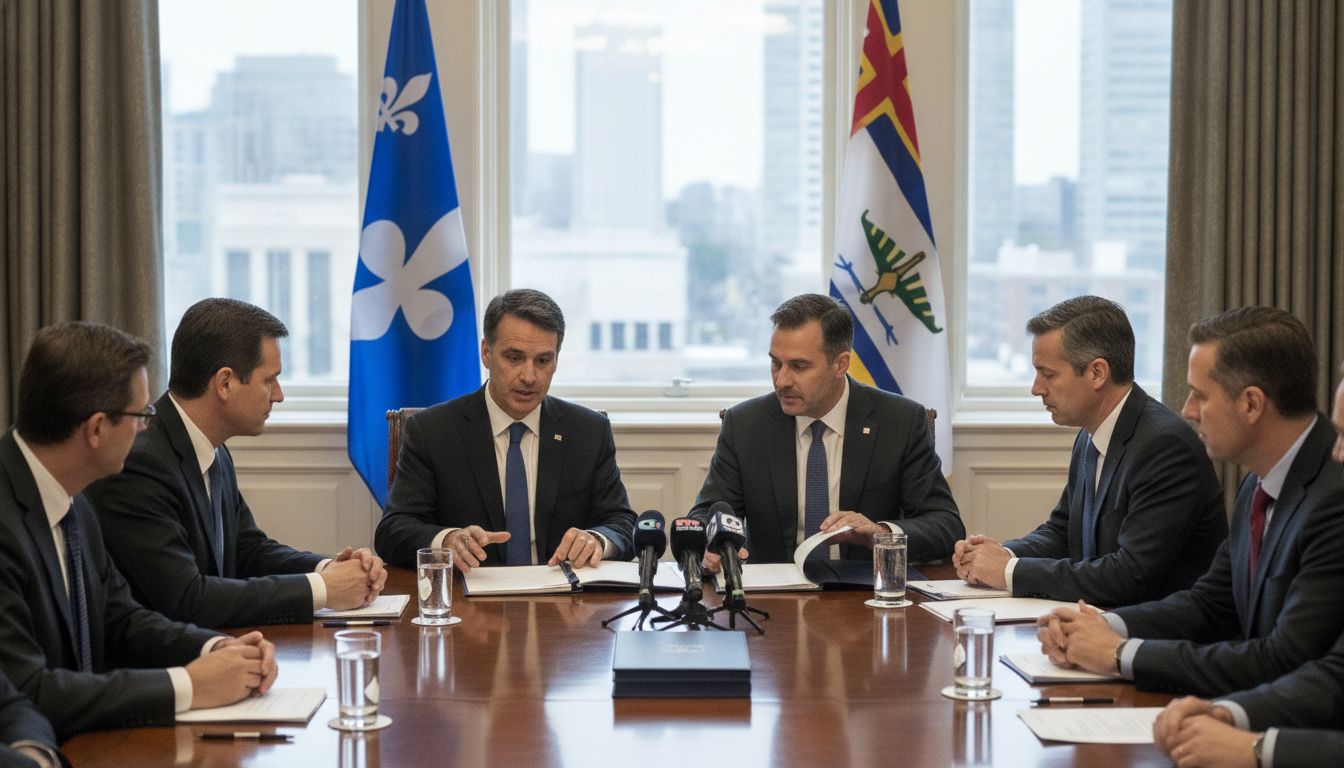
Quebec and Newfoundland and Labrador near deal on Churchill Falls hydroelectric developments
Quebec and Newfoundland and Labrador near a deal next week on Churchill Falls and Gull Island after resumed talks to replace a controversial 1969 hydro contract.
Quebec and Newfoundland and Labrador are poised to formalize an agreement early next week that would reshape the governance and commercial terms for the Churchill Falls hydroelectric complex and the adjacent Gull Island development. Sources indicate negotiators have made significant headway toward replacing the 2024 protocol of understanding with a new, binding arrangement that the two provinces and the federal government have been discussing. The office of Newfoundland and Labrador Premier Tony Wakeham confirmed recent progress but underscored that no final agreement has yet been signed.
Agreement Expected Early Next Week
A source close to the talks told reporters that the document could be announced at the start of next week, pending final legal and financial reviews. Officials in St. John’s and Quebec City have been racing to resolve outstanding issues that observers say have national implications for electricity markets and interprovincial relations. While participants expect a formal signing, both governments caution that details remain subject to change until the agreement is executed.
Provincial Leaders Describe Negotiation Progress
The office of Premier Tony Wakeham issued a statement confirming "important progress" in recent days and noting that negotiations involve both Quebec and the federal government. Quebec Premier Christine Fréchette has previously said the talks were advancing and warned the project could be at risk if an agreement was not reached before the province’s October election. Both premiers have emphasized a desire to secure long-term economic benefits for their respective provinces while addressing longstanding grievances tied to historic contracts.
The 1969 Contract Still Shapes the Debate
The dispute traces back to a 1969 contract that set the original terms for electricity sales from Churchill Falls, a facility with roughly 5,428 megawatts of installed capacity. Under that arrangement, Hydro‑Québec secured the bulk of the plant’s output at a deeply discounted rate that remains in effect for much of the generation through the next decade. Critics in Newfoundland and Labrador have long argued the formula shortchanged the province’s returns on a resource developed on its territory, and the issue has periodically resurfaced in provincial politics.
Changes Proposed in 2024 and Subsequent Revisions
In 2024, Quebec and Newfoundland and Labrador reached an initial protocol of understanding that would have gradually increased prices paid for Churchill Falls output — a plan that envisioned a rise to 2 cents per kilowatt-hour in 2025 and further increases to around 7 cents between 2041 and 2075. After taking office, Premier Wakeham said his government would review that agreement and commissioned an expert report published in May that questioned whether the 2024 terms served Newfoundland and Labrador’s long-term interests. That review prompted the two provinces to reopen negotiations in June and seek a replacement accord.
Gull Island and Future Development Rights
Negotiators are not only addressing legacy pricing but also the development pathway for Gull Island, a large potential hydro site on the Lower Churchill River. Any new agreement is expected to cover allocation of development rights, revenue-sharing mechanisms and governance arrangements for future projects. Industry analysts say clarity on Gull Island will be essential for private investment decisions and for provincial planning tied to energy exports and domestic needs.
Federal Involvement and the National Electrification Strategy
The federal government has confirmed it has been involved in discussions as part of a broader national electrification strategy that aims to expand Canada’s clean electricity capacity. Ottawa has signalled interest in aligning provincial agreements with national targets, including efforts to scale up non-emitting power generation. Federal participation could take the form of funding, regulatory alignment or guarantees intended to facilitate interprovincial electricity trade and grid expansion.
Next Steps, Timing and Political Considerations
If the agreement is announced next week as anticipated, officials will move quickly to finalize the legal texts and prepare regulatory filings where required. Observers note the timing is politically sensitive: both provincial electorates and energy markets will scrutinize any changes to long-standing contracts. Legal challenges remain possible given the decades-long litigation history surrounding Churchill Falls, and investors will watch closely for details about pricing, governance and export arrangements.
For now, parties are proceeding cautiously: officials say they will disclose further information only when a definitive agreement is signed and ratified through the appropriate processes. Stakeholders from industry, Indigenous groups and neighbouring jurisdictions are expected to seek briefings and assess the implications once the text is released.
