
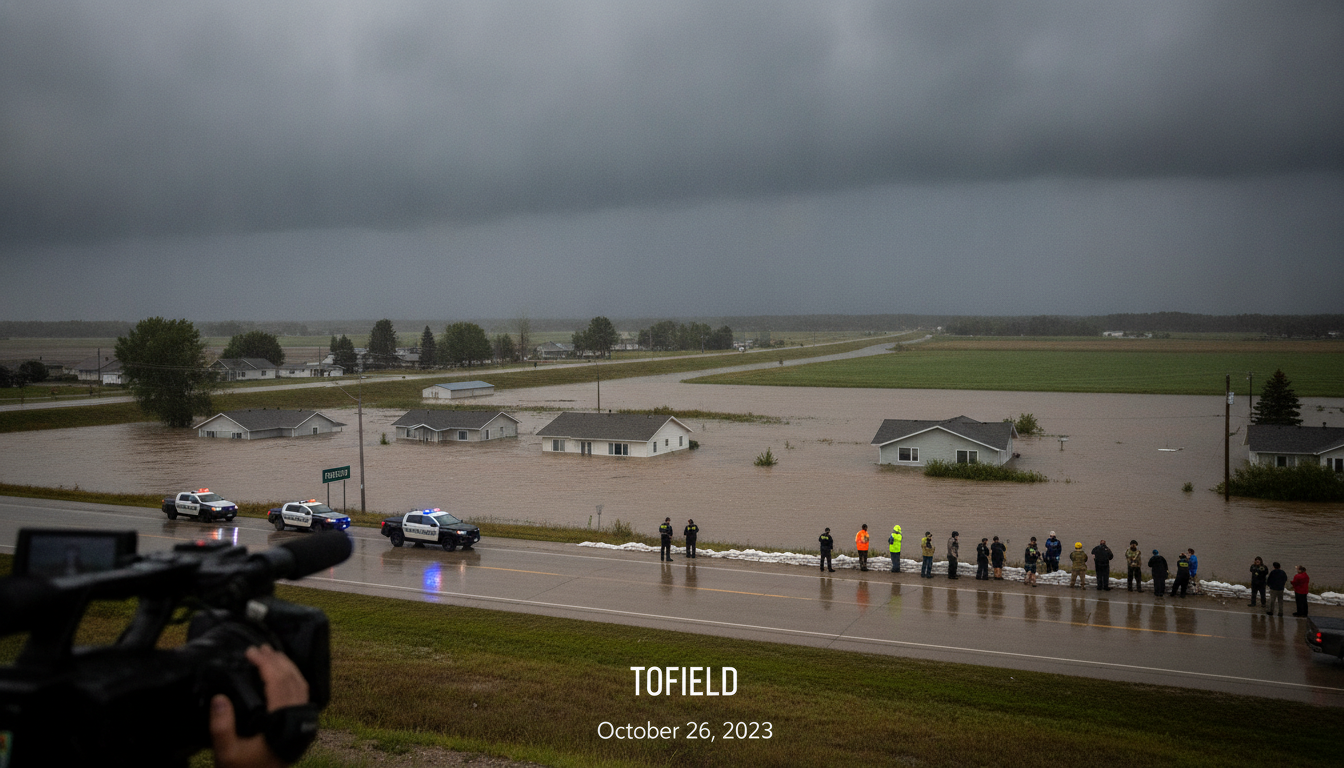
Tofield flooding forces state of emergency as Edmonton area copes with high river levels
Tofield flooding forces local state of emergency; pump trucks and water restrictions continue while high North Saskatchewan River levels impact Edmonton.
A weekend of heavy rain left parts of central Alberta underwater and prompted the Town of Tofield to declare a local state of emergency as crews battle standing water and storm-system overwhelm. The Tofield flooding has triggered water restrictions, pumping operations and damage assessments while higher-than-normal flows along the North Saskatchewan River are creating erosion and unsafe conditions for residents in and around Edmonton. Municipal officials, emergency responders and public safety crews are continuing to work on containment and rescue operations as river levels remain elevated.
Tofield Declares Local State of Emergency
The Town of Tofield declared a local state of emergency after more than 100 millimetres of rain fell across parts of central Alberta over the weekend, overwhelming stormwater infrastructure and inundating low-lying areas. Municipal staff reported flooding affecting business areas and residential pockets, with pump trucks deployed to remove standing water and reduce further damage.
Local authorities also put water-use restrictions in place for residents to preserve municipal supplies while crews work to restore normal service and prevent contamination. Officials said assessments of roads, sewage and stormwater infrastructure would continue as conditions allow and that updates would be issued as new information becomes available.
North Saskatchewan River Shows High Water and Erosion Near Edmonton
Following the heavy rainfall, the North Saskatchewan River has recorded higher-than-normal flows through the Edmonton area, leading to visible erosion along riverbanks and submerged park signage. City crews observed that some interpretive signs and trail markers near Capilano Park were nearly submerged, a sign of how much the waterline has risen compared with typical seasonal levels.
Erosion has exposed soil and destabilized sections of bank in places where trails run close to the river’s edge, prompting temporary closures and additional inspections. Engineers and parks staff are assessing the affected corridors to determine immediate mitigation, and longer-term stabilization work will be planned once water levels recede enough for safe access.
Edmonton Fire Rescue Services Conduct River Rescue
Edmonton Fire Rescue Services responded to a morning call after a person slipped into the North Saskatchewan River from a nearby trail and was pulled from the water by emergency crews. The individual was transported to hospital with injuries described as non-life-threatening, and the department reiterated warnings about the increased hazard posed by swollen river conditions.
Emergency responders noted that fast-moving water and hidden debris can make even short distances across the river dangerous, and they urged the public to avoid waterfront trails and river access points until conditions stabilize. Rescue personnel continue to monitor river-related calls as the spring runoff combines with localized rainfall to maintain elevated flows.
Whitemud Drive Embankment Slides onto Freeway in South Edmonton
In south Edmonton, saturated soil along the embankment at the 122 Street overpass on Whitemud Drive loosened and slid down onto the freeway, depositing mud and debris across traffic lanes. The slide forced lane closures while city crews cleared the roadway, inspected the structure and began temporary stabilization measures to prevent further movement.
Transportation officials warned drivers to expect residual closures and possible traffic interruptions as cleanup and repair work proceed, particularly during heavy vehicle loads or additional rainfall. Structural assessments will determine whether longer-term repairs to the embankment and overpass are required to restore full traffic capacity and ensure public safety.
Pump Trucks and Water Restrictions Drive Immediate Municipal Response
Municipal crews in Tofield and surrounding jurisdictions mobilized pump trucks and heavy equipment to remove pooled water from business districts and residential areas affected by the flooding. Town officials emphasized that pumping operations are prioritized to protect critical infrastructure, including wastewater systems and electrical equipment, and to limit damage to commercial properties.
Water restrictions remain in effect for residents until supply integrity can be confirmed and distribution systems are fully inspected, with the town advising conservation and careful use. Officials also asked property owners to document damage for insurance and to report any hazards such as exposed wires, compromised septic systems, or erosion that threatens buildings.
Public Safety Advisories Issued for Trails, Parks and Waterfront Areas
City and county authorities have posted advisories urging the public to stay away from waterfront trails, riverbanks and any areas where erosion has been observed because of the danger posed by fast currents and unstable ground. Signs near parks have been submerged or displaced in some locations, making it harder for recreational users to identify safe routes and boundaries.
Emergency services recommend keeping children and pets away from river edges and refraining from attempting water rescues, as bystanders can be swept away by swift flows. People who observe someone in immediate danger are advised to call 911 and provide as much location detail as possible rather than entering the water themselves.
Assessment, Repair and Longer-Term Recovery Plans Underway
Once water levels fall to safe operating conditions, municipal engineers and environmental specialists will conduct detailed assessments of roads, bridges, riverbanks and stormwater systems to determine repair priorities and costs. Officials said they will coordinate with provincial agencies and, where applicable, regional partners such as Beaver County to access resources for stabilization and infrastructure recovery.
Longer-term recovery efforts are likely to include bank stabilization projects, updated stormwater capacity planning and potential enhancements to protective infrastructure in flood-prone zones. Town and city staff are also preparing to communicate available support for impacted businesses and residents, including guidance on insurance claims and emergency assistance programs.
The immediate priority for responders and municipal crews is to safeguard lives and critical infrastructure, while recovery teams map out the steps needed to return affected communities to normal operations.
Public health and environmental agencies will continue to monitor water quality and issue advisories if municipal systems or private wells are at risk of contamination from floodwaters. Residents are encouraged to follow official channels for testing and guidance before resuming normal water use.
For motorists and commuters, authorities advise checking local traffic information before travel and observing posted detours or lane restrictions while cleanup and repair work proceed. Drivers should exercise caution in areas with standing water where pavement markings and shoulders may be obscured.
Local emergency management officials plan to release regular updates through municipal websites and social media channels as conditions evolve, and they have reminded the public to rely on those official sources rather than unverified reports. Community volunteers and non-profit organizations are expected to play a supporting role in recovery, including donations and logistical help for affected households.
The Town of Tofield, Edmonton Fire Rescue Services and allied agencies are coordinating immediate response actions and preparing for the next phase of assessment and repair. Residents in affected areas should heed water restrictions, avoid risky riverbank areas and report hazards so crews can prioritize mitigation. The Tofield flooding and elevated North Saskatchewan River levels underscore the need for continued vigilance and a measured recovery and rebuilding effort.
