
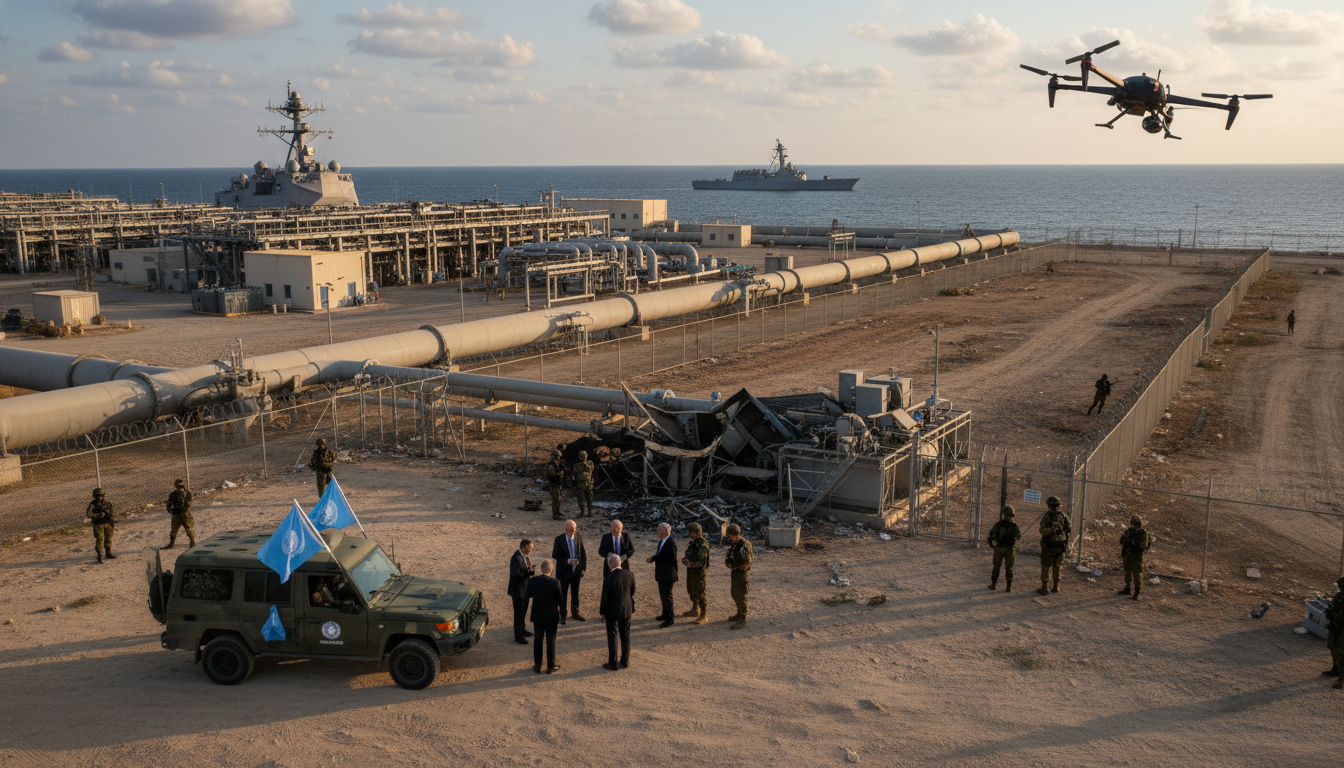
Water infrastructure targeted as Gulf desalination plants suffer strikes
Water infrastructure in the Gulf faces new threats as desalination plants supplying millions are struck amid regional hostilities, raising alarms over global scarcity and security.
Desalination plants struck in the Gulf
Recent attacks on multiple desalination facilities in the Gulf have disrupted supplies relied upon by coastal cities and industrial zones. Reports indicate damage to processing equipment and temporary shutdowns that have curtailed production for days at a time.
Officials and local authorities say millions of people and key industries depend on these plants, making them high-impact targets when struck. The scale of disruption has prompted emergency water rationing and contingency measures in affected areas.
United Nations issues stark warning
The United Nations has warned of a looming “water bankruptcy,” a term officials use to describe the risk that demand will dramatically outstrip supply in several regions. That warning links climate-driven shortages with rising consumption from population growth and expanding industrial use.
UN statements point to the compounding effect of infrastructure attacks on already stressed systems, noting that damage to treatment and desalination facilities can push communities toward acute shortages. International agencies are increasingly framing access to safe water as a security as well as humanitarian priority.
Experts tie scarcity to climate and new demands
Water experts say the targeting of desalination plants reflects broader vulnerabilities created by climate change and shifting demand patterns. Kaveh Madani of the UNU Institute for Water, Environment & Health and other analysts have highlighted how hotter, drier conditions raise dependence on engineered supplies like desalination.
Analysts also note new drivers of water demand, including expanding data centres and advanced manufacturing, which intensify pressure on limited freshwater and seawater treatment capacity. These overlapping trends make water infrastructure a critical node in both civic life and economic activity.
Humanitarian and economic ripple effects
When desalination and treatment plants go offline, the effects spread quickly: hospitals, schools and households face interrupted access while businesses confront supply chain and production challenges. Public health risks rise when alternatives are scarce or unsafe, amplifying the humanitarian stakes.
The economic fallout can be prolonged, with repair costs, lost productivity and higher utility bills for consumers and firms. Insurance and financing for infrastructure in contested regions may also become more expensive, eroding long-term resilience planning.
Calls for protection under international law and technical resilience
Humanitarian organizations and legal experts are calling for clearer protections for water infrastructure under international humanitarian law and for enforcement mechanisms to deter attacks. Advocates argue that infrastructure servicing civilian needs should receive explicit safeguards even amid armed conflict.
At the same time, engineers and planners urge investments in redundancy, decentralized supply systems and hardened designs that reduce single points of failure. Measures such as spare-part stockpiles, automated remote controls and diversified sourcing are being promoted as practical risk-reduction steps.
Policy responses and regional coordination
Governments in the Gulf and global partners are assessing rapid-response protocols and cooperative frameworks to restore service after attacks and to prevent cascading failures. Multilateral aid agencies have been asked to prioritize water-sector restoration in emergency funding allocations.
Regional coordination on surveillance, information sharing and joint technical teams is being explored to speed repairs and protect critical assets. Diplomats and security officials are also discussing whether new norms or deterrence measures are necessary to keep civilian water systems out of conflict calculus.
The targeting of water infrastructure in the Gulf spotlights a wider trend: as water becomes more scarce and engineered supplies more central to daily life, attacks on treatment and desalination capacity produce immediate humanitarian harm and longer-term economic damage. Strengthening protections under law, investing in resilient designs and coordinating rapid repair and relief efforts are emerging as urgent priorities for states and international agencies seeking to prevent localized disruptions from becoming broader crises.
