
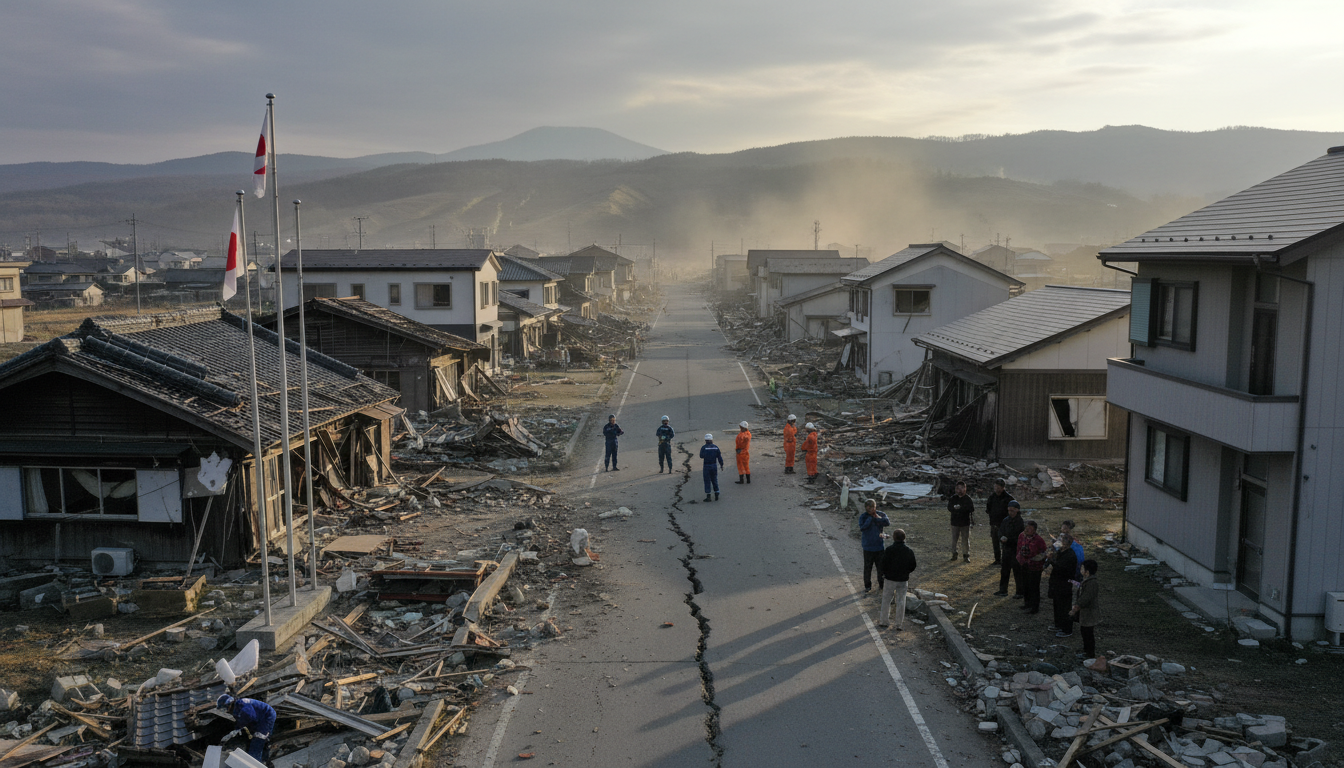
6.1-magnitude Japan earthquake rattles area west of Sarabetsu, USGS says
A 6.1-magnitude Japan earthquake struck near Sarabetsu at 5:23 a.m. Japan time, the USGS reported; seismologists may revise the magnitude as data are reviewed.
A strong earthquake with an initial magnitude of 6.1 struck off the coast of northern Japan early Monday, the United States Geological Survey said, registering at 5:23 a.m. Japan time roughly 11 miles (18 kilometres) west of Sarabetsu. The USGS noted that as seismologists examine additional readings the reported magnitude and the agency’s shake-severity map could be adjusted. Officials and monitoring agencies in the region were continuing to collect data and review the event’s potential impact on communities and infrastructure.
Magnitude, time and location
The United States Geological Survey placed the quake at magnitude 6.1, with the epicentre located about 11 miles (18 kilometres) west of Sarabetsu. The reading was recorded at 5:23 a.m. Japan Standard Time, and the USGS cautioned that earthquake parameters are subject to revision as more measurements and station reports are processed. The initial magnitude places the event among the stronger quakes of recent weeks in the region, though final assessments require further analysis.
Seismologists note possible revisions to reported magnitude
Seismologists reviewing the event told the USGS that preliminary values can change as additional seismic stations and aftershock records are incorporated into analyses. The agency said revisions are standard practice and help refine both the magnitude and the location of an earthquake. Any revision could also alter the interpretation of shaking patterns and the corresponding response from monitoring centres and local authorities.
Shake intensity map and areas of perceptible shaking
The shake-intensity map accompanying the USGS data shows areas that experienced a Modified Mercalli intensity of 3 or greater, a level the agency typically describes as “weak” shaking. That depiction does not preclude people feeling the temblor outside the regions shown on the map, and the agency underscored that perceived shaking can vary with local geology and building characteristics. The Modified Mercalli Intensity framework is used to translate instrument readings into likely human and structural experiences of shaking.
Aftershocks, monitoring windows and data timestamps
The USGS’s methodology notes that aftershock charts and maps commonly include seismic activity within a 100-mile radius and a seven-day window following an initial quake, and monitoring systems were populated accordingly. Shake data for this event were timestamped as of Sunday, April 26 at 4:44 p.m. Eastern Time, while aftershock listings were current as of Monday, April 27 at 2:08 a.m. Eastern Time. Scientists will watch the coming hours and days closely for aftershocks, which often account for the majority of subsequent seismic activity after a quake of this size.
Local authorities, emergency monitoring and public information
Local and national emergency-management bodies typically coordinate initial assessments and public messaging after a seismic event, relying on both instrument data and ground reports. The USGS provides one of several data streams that authorities use to gauge the scope of an event and to decide whether warnings or advisories are required. Residents in affected areas are generally advised to await guidance from municipal or prefectural authorities and to follow established safety practices until officials report assessments.
Seismologists continue to analyze incoming data from regional and international seismic stations to refine the event’s parameters and to update public shake maps and aftershock forecasts; further updates are expected as those analyses conclude.
