
Israeli attacks in southern Lebanon kill four in Nabatieh, state media says
Israeli attacks in southern Lebanon killed four people in Nabatieh district, Lebanon’s health authorities report, as strikes persisted despite a ceasefire extension.
Israeli attacks in southern Lebanon killed at least four people on Saturday when strikes hit a truck and a motorcycle in the town of Yohmor al-Shaqif, Lebanon’s Ministry of Public Health emergency operations centre said. The Lebanese National News Agency and state media reported the fatalities as wider bombardment and demolitions continued across the Nabatieh district. The incidents came after a three-week ceasefire extension was announced by the United States, a development that has not halted exchanges of fire.
Raids hit Yohmor al-Shaqif and surrounding areas
Lebanese authorities said two separate strikes struck a truck and a motorcycle in Yohmor al-Shaqif, killing four people on impact. Local civil defence teams and health officials were mobilized to recover the victims and treat the wounded, according to the emergency operations centre.
Residents in neighboring villages reported hearing multiple explosions and seeing smoke rise over the area, with some neighbourhoods left without power or communications. Local sources said the strikes occurred north of the Litani River, an area Israel has described as an operational boundary in recent weeks.
Damage reported in Bint Jbeil and Khiam
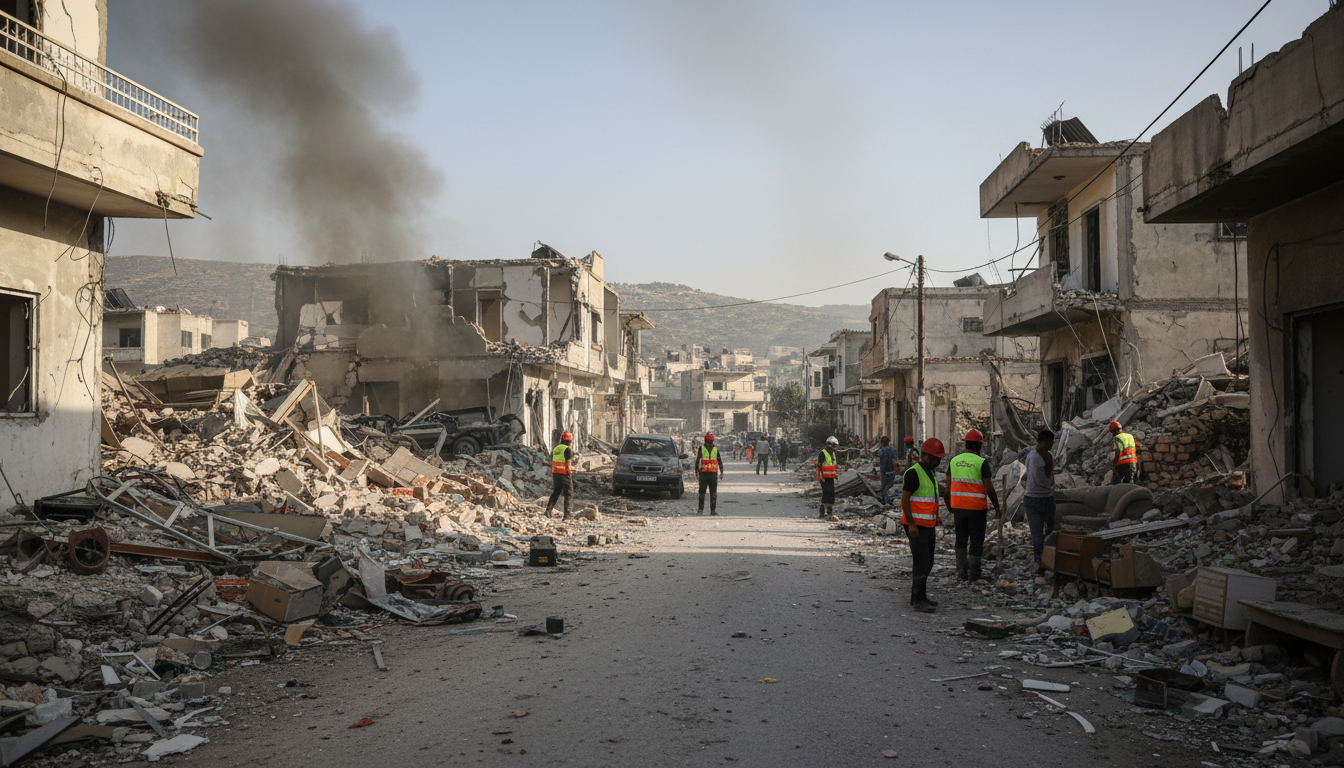
Correspondents on the ground reported that Israeli forces had carried out demolitions and bombardments in the city of Bint Jbeil, where buildings were intentionally blown up on Saturday morning. In the town of Khiam, local accounts and reporters said residential blocks were struck, causing both structural damage and civilian anxiety.
Witnesses described scenes of destruction and families evacuating homes as a precaution, while some neighbourhoods saw smoke and rubble scattered across streets. Municipal officials said assessments were under way to determine the scale of damage and to identify immediate needs for shelter and basic services.
Statements from Hezbollah and Israeli leadership
Hezbollah lawmaker Ali Fayyad condemned the strikes and described the ceasefire extension as “meaningless” while hostilities continue, asserting that the group retains the right to retaliate. Hezbollah spokespeople said exchanges of fire and targeted operations by Israeli forces undermined efforts to maintain calm.
Israeli Prime Minister Benjamin Netanyahu said Israeli forces were “maintaining full freedom of action against any threat” and accused Hezbollah of seeking to sabotage the pause. The Israeli military reported that it had killed several Hezbollah fighters in separate clashes near Bint Jbeil, framing the operations as defensive measures against cross-border attacks.
Ceasefire extension and diplomatic tensions
The renewed wave of strikes followed an announcement by U.S. authorities extending a previously agreed ceasefire for three weeks, a decision that was intended to reduce immediate escalation. Within hours of the declaration, however, both sides reported incidents, and violence resumed in southern Lebanon.
Lebanese officials warned against using Lebanon as a bargaining chip in broader regional negotiations, and called for international pressure to enforce the pause. The persistence of strikes despite diplomatic efforts has raised concerns among regional mediators and humanitarian organisations about the durability of any temporary ceasefire.
Civilian displacement and humanitarian needs
The ongoing operations have displaced thousands of civilians across southern Lebanon, many of whom have sought shelter in makeshift accommodations or public facilities in Beirut and other cities. Families interviewed by reporters described hurried evacuations, loss of property, and continuing fear as bombardment carried on around their villages.
Humanitarian groups have reported rising needs for food, clean water, medical care and temporary shelter as cold-season supplies dwindle. Local health authorities said hospitals in southern districts are stretched thin, treating both combat-related injuries and routine cases amid disrupted supply lines.
Local reporting and conditions on the ground
Al Jazeera correspondents in Tyre described the “rumble and thud” of explosions echoing across wide areas of southern Lebanon, and reported that Israeli forces were operating north of the Litani River. Journalists in the field said access to some impacted towns remained restricted, complicating independent verification of casualty figures and damage assessments.
Residents recounted scenes of tanks and military vehicles surrounding villages during evacuations, and some described entire neighbourhoods reduced to rubble. Municipal councils appealed for humanitarian corridors and international monitoring to document violations and protect civilians.
For many families, the immediate priority is safety and shelter as winter conditions and the destruction of homes intensify hardship across southern communities.
