
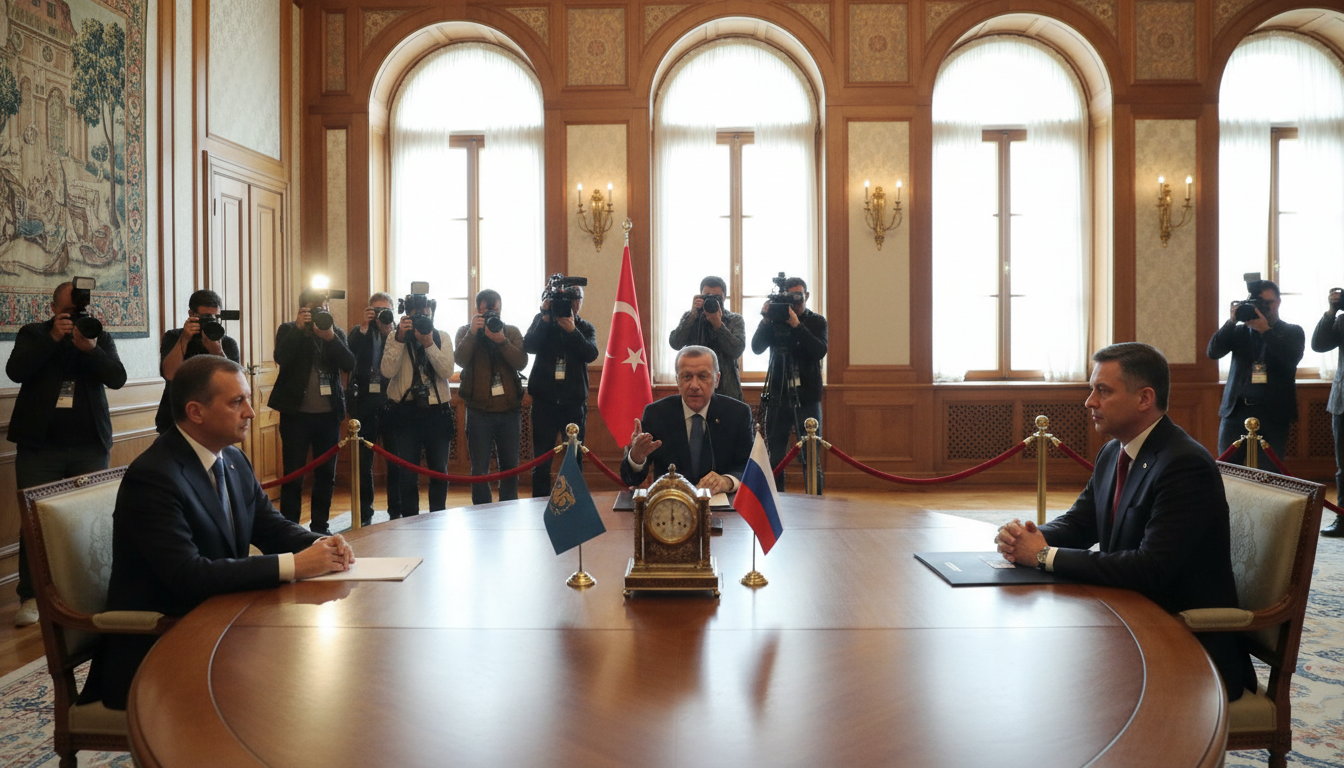
Turkiye seeks leaders’ meeting with Russia and Ukraine as Erdogan meets NATO chief
Turkiye seeks leaders’ meeting with Russia and Ukraine, President Erdogan told NATO chief Mark Rutte on April 22, 2026, as Kyiv formally asked Ankara to host a leaders‑level summit to try to end the war.
Turkish President Recep Tayyip Erdogan met NATO Secretary‑General Mark Rutte in Ankara on Wednesday and said Turkiye is working to revive negotiations between Russia and Ukraine.
Erdogan told Rutte that Ankara aims to restart talks at leaders’ level and is engaged to secure a peaceful end to the conflict, according to a readout from the Turkish presidency.
Erdogan meets NATO chief
Ankara’s readout said Erdogan also stressed the indispensability of transatlantic ties during his meeting with the NATO chief.
The Turkish president urged European NATO allies to shoulder more responsibility for transatlantic security even as Turkiye maintains relations with both Kyiv and Moscow.
Ankara’s mediation push
Turkiye has positioned itself as a potential intermediary since Russia’s full‑scale invasion of Ukraine in 2022 and is now seeking to translate that role into direct leaders’ talks.
The presidency said Erdogan framed his diplomacy as part of a broader effort to end the Ukraine‑Russia war through negotiation and to revive stalled discussions at the highest level.
Kyiv formally requests Turkey
Ukraine’s foreign ministry confirmed that Kyiv asked Turkiye to host a leaders’ level meeting with Russia, Foreign Minister Andrii Sybiha told reporters.
Sybiha said Ukraine had also enquired of other capitals and that President Volodymyr Zelenskyy remains willing to meet Putin in a third country, so long as the venue is not Belarus or Russia.
Kremlin sets conditions
Russian officials signalled a narrower purpose for any summit, with Kremlin spokesman Dmitry Peskov saying Vladimir Putin would meet only to finalise concrete agreements.
Peskov was quoted by Russian news agencies as stressing that a meeting should have a clear, productive objective and only proceed if it advances tangible settlements.
Erdogan’s outreach to Berlin and wider concerns
Separately, Erdogan phoned German President Frank‑Walter Steinmeier to outline Ankara’s simultaneous mediation efforts in Ukraine and concerns about broader regional tensions.
The Turkish presidency quoted Erdogan as warning that the US‑Iran conflict was beginning to weaken Europe and that damage could increase unless major powers adopted peace‑oriented approaches.
Practical hurdles and diplomatic dynamics
Despite Kyiv’s formal request, a leaders’ summit faces multiple obstacles including agreement on an agenda, guarantees for security, and agreement on a neutral venue acceptable to both sides.
Ukraine has ruled out Belarus and Russia as hosts, while the Kremlin insists on meetings that have a specific outcome, creating a narrow window in which a summit could be mutually acceptable.
The Turkish initiative comes amid continued international efforts to find diplomatic pathways out of a war that has reshaped European security since 2022.
Ankara’s position as a NATO member with maintained ties to Moscow and Kyiv gives it a unique platform but also complicates expectations from European allies and Kyiv.
Moving from proposal to a leaders’ meeting will require weeks of technical work, follow‑up diplomacy and likely third‑party guarantees, diplomats say, as both sides weigh the political costs and potential gains.
For now, Ankara has signalled willingness to host and to press forward, Kyiv has formally requested a venue, and Moscow has set conditions that make any successful summit contingent on substantive preparatory talks.
If talks proceed to a leaders’ level, negotiators will need to define what constitutes a productive outcome and how agreements would be implemented and monitored.
Until those details are settled, Turkiye’s bid to convene Russia and Ukraine is a high‑profile diplomatic opening with uncertain prospects and heavy international scrutiny.
