
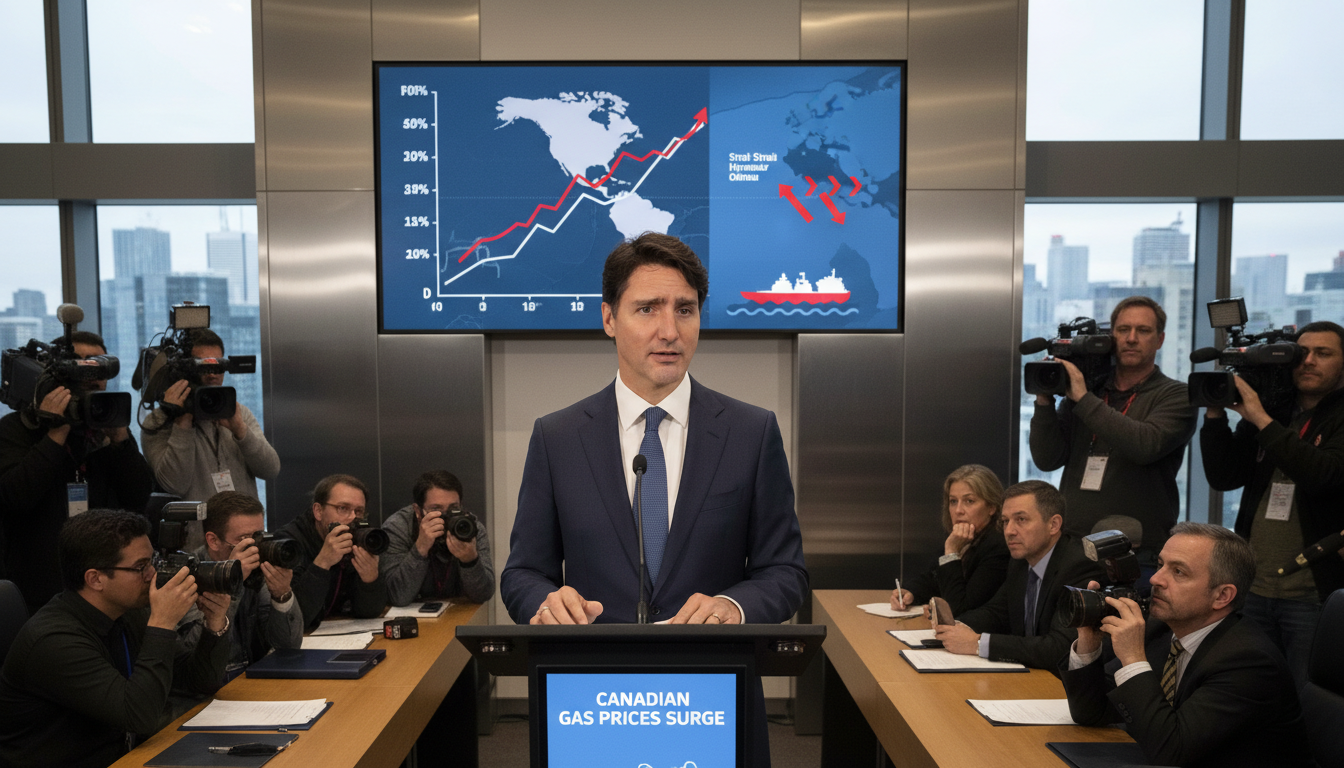
Gas prices surge across Canada as Strait of Hormuz disruptions push fuel costs higher
Gas prices spike in Canada after Strait of Hormuz disruptions, pushing households and transport firms to cut spending, add surcharges and change travel plans.
Canadians are confronting a sharp rise in gas prices that has already forced households and businesses to rework budgets and travel plans. The surge in fuel costs, driven by disruptions in tanker traffic through the Strait of Hormuz and wider Middle East hostilities, is squeezing fixed-income retirees, truckers and carriers alike. Consumers report trading away discretionary spending — and sometimes food choices — to cover the higher cost of filling their tanks. Industry and energy analysts warn the shock could take months or years to fully unwind.
Surge in gas prices hits Canadian households
John Hollinrake, a Calgary retiree on a fixed income, says the cost of filling his sedan increasingly competes with his food budget. He drives a friend 150 kilometres each day, and that routine now translates into significantly larger weekly fuel bills. Across cities and rural towns, drivers describe similar trade-offs: less dining out, fewer short trips and more scrutiny at the pump. For many households, those small daily choices are adding up to meaningful financial strain.
Strait of Hormuz disruptions drive supply shock
The immediate cause of the spike is constrained tanker movement through the Strait of Hormuz, a chokepoint for roughly one-fifth of global oil flows. Military maneuvers and threats to shut or restrict passage have amplified market fears, prompting traders to bid crude prices higher. Even brief interruptions in shipping corridors ripple through refineries, freight schedules and retail fuel pumps. Analysts note that shipping backlogs and production interruptions can take months to clear once flows resume.
Analysts warn of prolonged price pressure
Energy consultancies and bank analysts say the market may require sustained demand reductions to rebalance supply and demand. TD Securities economists flagged a threshold where Brent crude lingering near US$150 a barrel could trigger more permanent demand destruction. Susan Bell of Rystad Energy expects price-driven consumption cuts to start easing pressure, but she cautioned the adjustment will be painful for consumers. University of Calgary economist Kent Fellows described the shock as a significant blow that compounds recent global disruptions.
Transport sector passes costs to customers
Trucking firms, railways and airlines have begun adding or increasing fuel surcharges to protect already thin margins. Murray Mullen, who leads a Canadian logistics group, said companies are reluctantly relaying higher prices down the supply chain. Large carriers such as national railways and major airlines have signaled similar moves, which in turn raise costs for retailers and passengers. Operators say many of these fees are unavoidable when fuel accounts for a substantial share of operating expenses.
Truckers and shippers face operational strain
For long-haul drivers like Zekira Brate and Tyler Fox, diesel price spikes translate directly into climbing operating costs and squeezed household budgets. Some drivers are cross-border filling stations where diesel taxes are lower, but that workaround is not always practical. Freight firms may curtail routes or reduce service if volumes fall, creating knock-on effects for businesses that rely on timely deliveries. The result is a broader set of price increases and service disruptions across supply chains.
Household adjustments and potential demand shifts
Analysts say repeated high prices can induce structural shifts in consumer behavior, from choosing smaller or electric vehicles to cutting discretionary trips and vacations. Rystad projects notable declines in North American gasoline demand over coming months if prices remain elevated, with reductions potentially totaling hundreds of thousands of barrels per day. Those changes would eventually exert downward pressure on prices, but only after sustained consumer adjustments. Economists caution that the timing and permanence of such demand destruction are hard to predict and will vary across income groups and regions.
Federal and provincial tax levers come under scrutiny
Calls for temporary relief from fuel levies have risen as pump prices climb, but some analysts warn that cutting excise taxes could blunt necessary demand adjustments. Canada’s federal excise adds cents per litre on gasoline and diesel, and provincial levies compound the cost in jurisdictions such as British Columbia and Alberta. Policymakers must weigh short-term consumer relief against the risk of prolonging elevated demand that keeps global prices supported. Energy experts suggest targeted support for vulnerable households rather than broad tax cuts that could mute market signals.
The chain reaction from international conflict to Canadian pumps highlights how integrated energy markets are and how quickly geopolitical events can affect everyday spending. As households, carriers and policymakers respond, the key variables remain the duration of shipping disruptions and whether consumers change long-term behavior. For now, Canadians are making immediate choices at the till — and those decisions will play a central role in how fast gas prices settle back toward pre-shock levels.
