
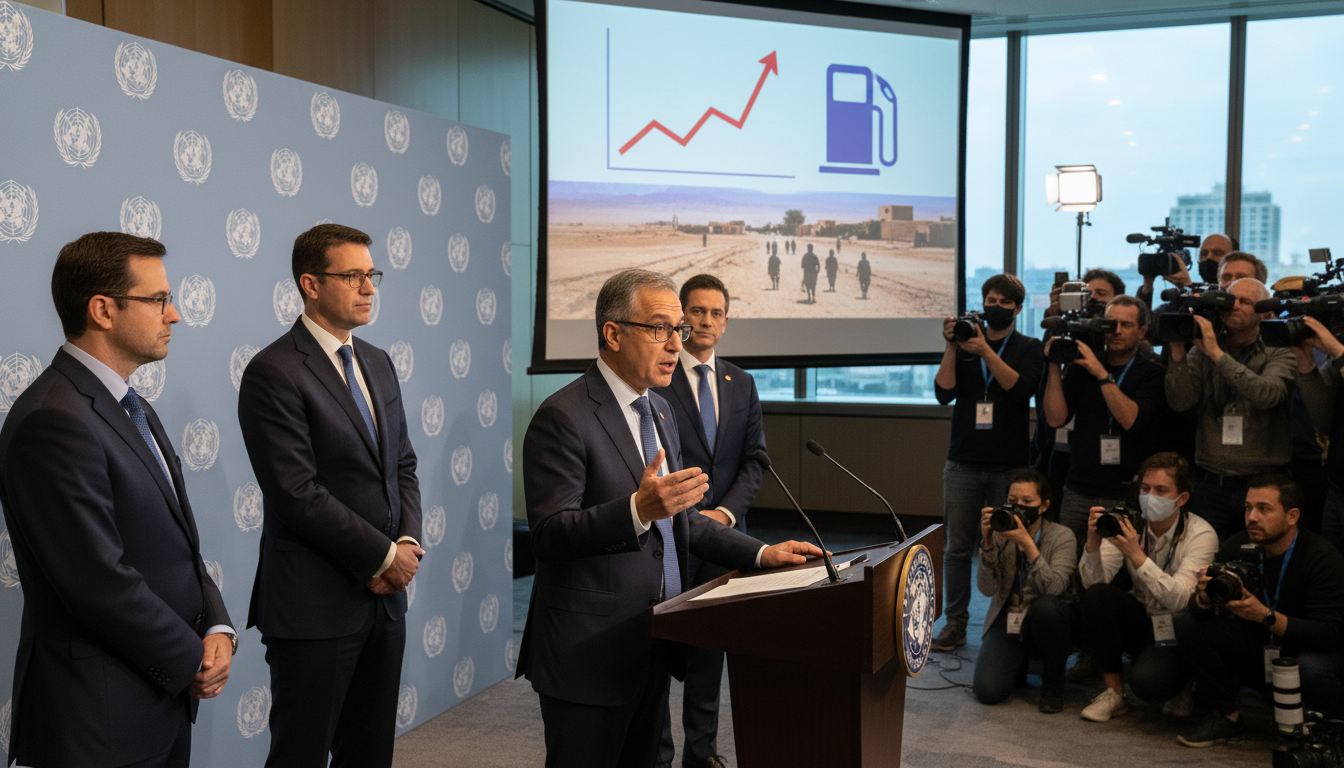
WFP warns global hunger risk as US–Iran conflict drives oil and food prices higher
The UN World Food Programme warns that the US–Iran conflict is threatening global hunger and worsening food insecurity, with a fresh analysis published June 5, 2026, spelling out the stakes.
The World Food Programme (WFP) said on June 5, 2026, that the ongoing conflict between the United States and Iran is disrupting oil shipments and pushing up costs in ways that already threaten households in fragile countries. The agency’s analysis links higher fuel and food prices, income losses and trade disruptions to immediate and severe impacts on food access in several vulnerable states.
WFP links US–Iran conflict to rising food prices
The WFP analysis points to sustained oil-market disruption as a key channel by which the conflict is affecting food security. With the Strait of Hormuz operating at near‑closure for tankers, transport and fuel prices have risen, magnifying the cost of moving food and running essential services.
The agency notes that while global food-price indices show only modest increases so far, those averages mask sharp, localized spikes in countries that import large shares of food and energy. The combination of local price shocks and fragile household incomes is already translating into reduced food access for millions.
Somalia, Afghanistan and Sri Lanka face acute shortfalls
The report identifies Somalia, Afghanistan and Sri Lanka among the countries most immediately affected by the disruptions. In Somalia, the WFP projects that roughly one third of the population—about 6.5 million people—could face severe hunger in 2026.
In Afghanistan, the analysis warns that up to 17.4 million people could be affected by worsening food insecurity, with an additional 2.3 million potentially slipping into food insecurity on top of the 13.8 million already identified before the conflict. Sri Lanka could see as many as 1.3 million people at risk of not meeting basic food needs as prices and import costs rise.
Fuel shock and supply disruptions driving price spikes
Fuel-cost increases are a primary transmission mechanism cited by the WFP, affecting everything from local food markets to international shipping. Higher transport costs feed directly into retail food prices, while elevated energy bills reduce household purchasing power and strain public services.
Trade disruptions are compounding the problem by interrupting normal supply chains and increasing the cost and time required to import staples. The WFP emphasizes that these shocks interact with preexisting vulnerabilities—such as high poverty rates and weak social safety nets—so poorer households feel the impact first and worst.
Projected numbers and household affordability in 2026
The WFP’s modelling, released in its June 5, 2026 analysis, suggests a sharp deterioration in household affordability in several settings. In Somalia the agency estimates that nearly 60 percent of households could be unable to afford essential needs in 2026, up from 47 percent in 2025.
The report also warns that if oil prices remain elevated and the conflict continues, millions more could lose the ability to purchase a basic food basket. Those projections underline how quickly international shocks can alter national-level food security outcomes in import‑dependent economies.
Humanitarian response squeezed by rising costs
The WFP says the global humanitarian system is facing a “double squeeze” as rising delivery and food costs erode purchasing power and reduce the reach of aid programmes. The agency forecasts that it may serve 1.5 million fewer people in 2026 than initially planned because of higher operational expenses and constrained resources.
If the conflict persists for another six months, the WFP warns more than nine million people could lose assistance, driven by a combination of higher logistical costs and local price inflation. Reduced coverage risks reversing hard-won gains and raising the likelihood of more acute crises in the worst-affected areas.
Diplomatic stalemate complicates relief prospects
The analysis notes that indirect negotiations between the United States and Iran have so far failed to secure a durable end to hostilities, leaving markets and humanitarian planners to contend with prolonged uncertainty. Without a clear diplomatic breakthrough, the WFP says, oil-route restrictions and trade frictions are likely to remain a structural challenge for global food systems.
The agency is urging donors and governments to scale up support for vulnerable countries and to prioritise measures that protect food access, such as cash assistance and targeted subsidies. It also calls for contingency planning to keep supply corridors open and to shield humanitarian operations from cost shocks.
The WFP’s June 5, 2026 analysis delivers a stark warning: unless the conflict’s spillover effects are addressed, fragile countries will bear the brunt of rising fuel and food costs, and humanitarian systems may be unable to fill the widening gaps.
