
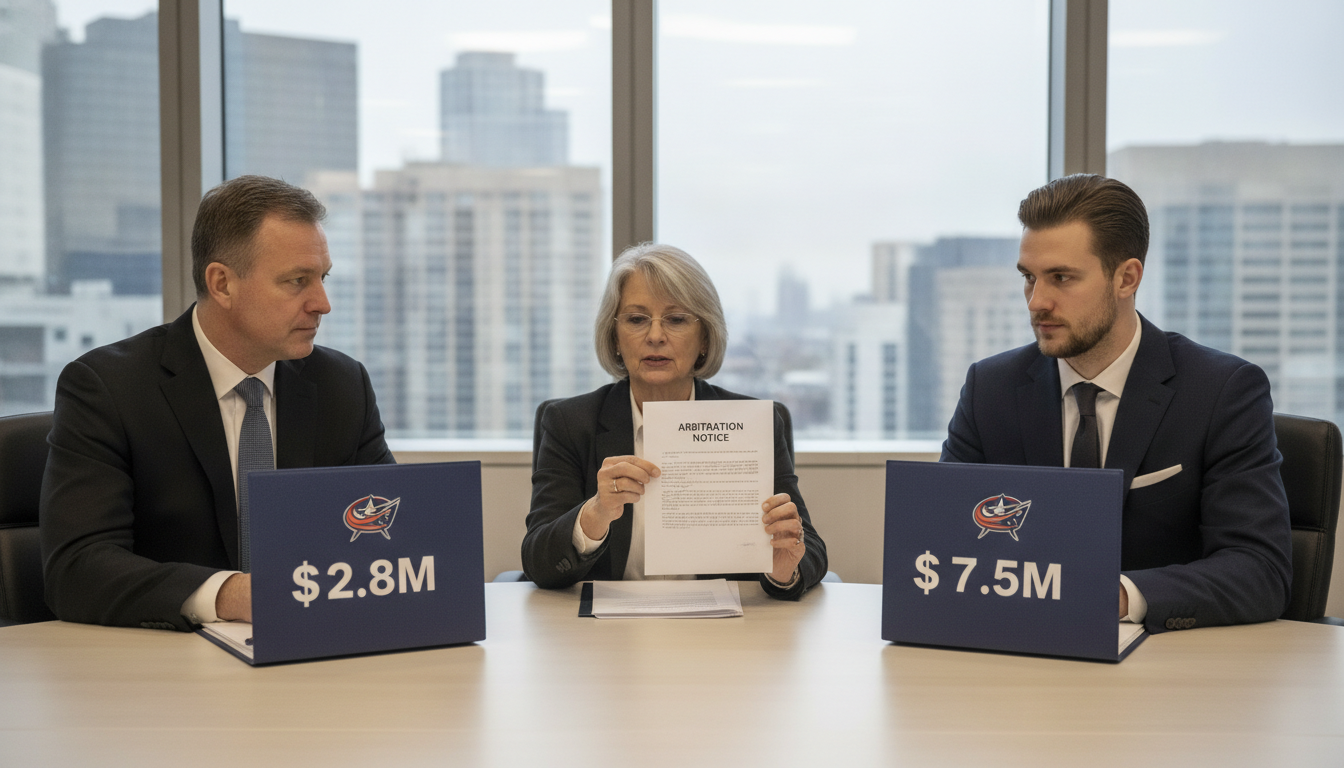
Jet Greaves Salary Arbitration: Blue Jackets and Goaltender File Widely Divergent Figures
Jet Greaves salary arbitration set for Thursday: Columbus filed $2.8M while the 25-year-old filed $7.5M, a decision that will set his 2026-27 pay in the NHL.
Jet Greaves salary arbitration is scheduled for Thursday after the Columbus Blue Jackets and the 25-year-old goaltender filed markedly different salary figures for 2026-27. The Blue Jackets submitted $2.8 million while Greaves asked for $7.5 million, according to a report from Sportsnet’s Elliotte Friedman. If no contract is agreed before the hearing, an arbitrator must pick one of the two figures, with no middle ground available.
Figures submitted for arbitration
Both sides have now formalized their positions ahead of the hearing, forcing a binary choice for the arbitrator between the team’s $2.8 million figure and Greaves’ $7.5 million request. Arbitration hearings in this format prevent compromise in the hearing itself, so the economic stakes are concentrated in the presentations made by each party. The hearing will determine Greaves’ official salary for the 2026-27 season unless the Blue Jackets and the player reach a long-term deal beforehand.
Season performance that strengthened Greaves’ case
Greaves comes into arbitration off a breakout season as Columbus’ primary starter, finishing with a 26-19-9 record, two shutouts, a 2.60 goals-against average and a .908 save percentage. Those numbers represent a substantive step forward for the four-year NHL veteran after he was given starting duties for the first time in his career. The statistical improvement and increased workload provide the core of the player-side argument that his market value and future contributions warrant the higher salary figure.
Cap considerations and team context
The Blue Jackets’ $2.8 million filing reflects the organization’s internal valuation and roster-management calculus heading into the new season. How the arbitrator rules will have immediate cap implications for Columbus as the team balances contracts across a roster that includes established and developing players. The club must weigh the potential cost of a higher arbitration award against other spending priorities and long-term planning for its goaltending pipeline.
Goaltending depth in Columbus
Columbus enters the arbitration with other netminding options already under contract, including Elvis Merzlikins and Pheonix Copley, a fact that figures into the team’s negotiation posture. Merzlikins has been an established presence in the NHL, while Copley provides experienced depth, and both could factor into the Blue Jackets’ allocation of playing time and salary cap. The team’s existing goaltending mix may have informed the lower figure the club submitted and how it frames its need for flexibility.
International form and added leverage
Greaves also enhanced his profile this spring with a strong showing for Team Canada at the 2026 World Championship in Switzerland, posting a 6-2-0 record, a .920 save percentage and a 1.88 goals-against average across eight games. That international performance will likely be cited by the player’s representatives as evidence of his rising standing and consistency against top competition. Such recent accolades can strengthen a case for a salary closer to the player’s requested amount when argued before an arbitrator.
Upcoming arbitration for Cole Sillinger and timing
The Blue Jackets have another pending arbitration date, with forward Cole Sillinger scheduled to go before an arbitrator on July 27. That additional hearing underscores a busy offseason calendar for Columbus as it resolves compensation for key contributors. How the team manages these hearings and any settlements that emerge could shape roster construction and contract strategy for the coming season.
The arbitration outcome for Jet Greaves will resolve a clear financial divide between team and player and set the terms for his next season in the NHL unless a negotiated contract is reached beforehand.
