
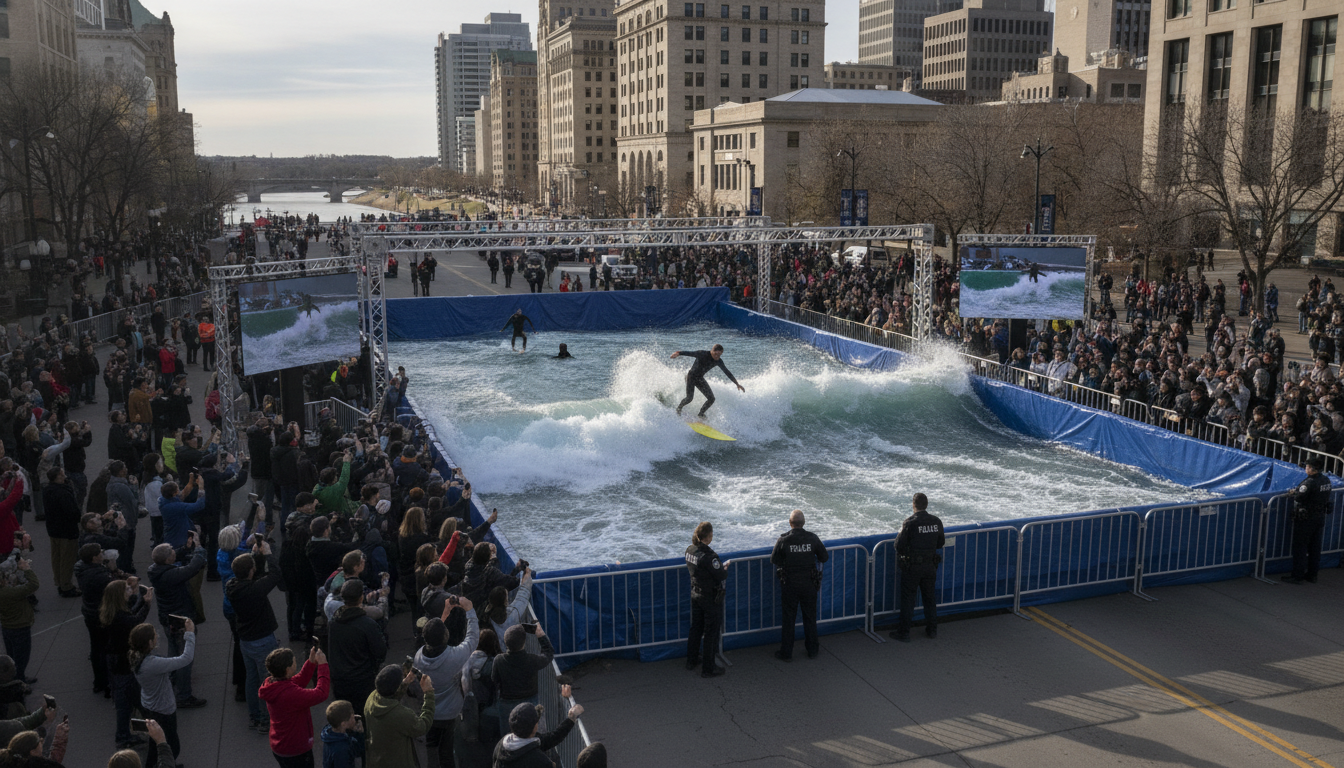
Urban surfing finds a foothold in Canada’s inland cities
Urban surfing is emerging in Canada’s interior as river waves and surf parks bring board culture to prairie skylines and mountain foothills.
Urban surfing has begun to attract attention in landlocked Canadian communities where surfers ride engineered river waves and man-made breaks close to downtown skylines. Enthusiasts say the experience of catching a wave with city towers and prairie or foothill backdrops creates a striking contrast to traditional coastal surf spots. Local operators, instructors and small businesses are responding with lessons, events and facilities aimed at newcomers and experienced riders alike.
Growth of inland wave sessions
Interest in urban surfing has increased steadily as more people seek outdoor recreation that blends sport with accessible locations. River standing waves, stationary features caused by specific riverbed shapes or engineered structures, allow surfers to practise short rides without ocean access. In addition, purpose-built surf parks and portable wave machines have lowered the barrier to entry, enabling sessions in parks, waterfront districts and recreational centres.
Organizers report that these options appeal to a wide age range and often sell out beginner clinics and evening sessions. Small surf shops and rental services are beginning to stock specialized boards and safety gear for river and artificial-wave conditions. The result is a compact but growing ecosystem that supports lessons, guided sessions and occasional competitions.
How inland waves are created and used
River waves used for urban surfing are typically stationary features formed when water flows over a submerged obstacle or through a narrowed channel. Engineers and river managers sometimes enhance these formations with rock placements or modular structures to increase consistency and safety. Man-made surf facilities use pumps and shaped pools to replicate ocean-style waves on a predictable schedule.
Riders adjust equipment and technique for these conditions; shorter boards and modified fins are common for manoeuvring on standing waves. Instructors emphasize wave-reading, quick pop-ups and recovery skills because rides are often brief but repeatable. The controlled nature of many inland surf sites also makes them well suited for progressive skill development.
Economic and tourism ripple effects
Municipalities and local businesses say urban surfing can contribute to downtown vibrancy and seasonal tourism without requiring coastal access. Surf lessons, gear rentals, cafes and event programming around waterfronts generate modest yet steady revenue, especially during summer months. Festivals and demo days that highlight urban surfing draw curious spectators who may combine sessions with other waterfront amenities.
Some communities view surf parks and enhanced riverfronts as multi-use assets that support cycling, walking and cultural programming alongside board sports. Developers and park planners often cite community activation and diversified recreation as reasons to pursue funding or private partnerships for these amenities.
Safety, regulation and environmental concerns
As urban surfing expands, safety and environmental stewardship have become priorities for operators and municipalities. River currents, underwater hazards and cold water exposure present risks distinct from open-ocean surfing. Certified instructors and mandatory safety briefings are becoming standard practice at organized sessions, and many facilities require helmets, life vests or wetsuits depending on conditions.
Environmental groups and river managers emphasize careful site design to minimize impacts on fish habitat and bank stability. Where modifications are proposed, public consultations and environmental assessments are typically part of the planning process. Advocates say responsible programming and clear signage help reduce accidental harm to local ecosystems and keep public waterways safe for all users.
Local voices and participant perspective
Participants describe a striking sense of novelty in bringing surf culture inland and juxtaposing it with urban scenery. One attendee at a recent session said the appeal lies in the contrast: catching a wave beneath downtown towers or against prairie and foothill vistas feels both unusual and exhilarating. For many, that contrast is a major draw, offering an accessible way to experience board sport culture without the long travel required for coastal breaks.
Instructors point out that urban surf sessions can serve as gateways to broader water-sport participation, helping students build confidence and fundamentals before venturing to ocean breaks. Community groups also note that inclusive programming — youth lessons, adaptive sessions and subsidized spots — helps broaden who can take part in the activity.
Urban surfing’s practical challenges include seasonal limitations, liability insurance and the need for trained staff, but proponents say these are manageable with the right partnerships. Municipal support for safe, well-regulated sessions has helped some communities turn experimental pilot projects into recurring public offerings.
Interest in inland wave riding continues to grow where conditions, funding and community support align. As operators refine safety protocols and as more residents discover the novelty of surfing with an urban backdrop, the activity could become a lasting feature of waterfront recreation in Canada’s interior.
Surfers and city planners say urban surfing offers both a new recreational option and a way to reimagine waterways as active public spaces that connect sport, environment and downtown life.
