
Venezuela earthquake doublet kills at least 235 as coastal towns lie in ruins
Venezuela earthquake: double 7.2 and 7.5 tremors on June 24, 2026 left at least 235 dead and thousands injured, with La Guaira and Catia La Mar hardest hit.
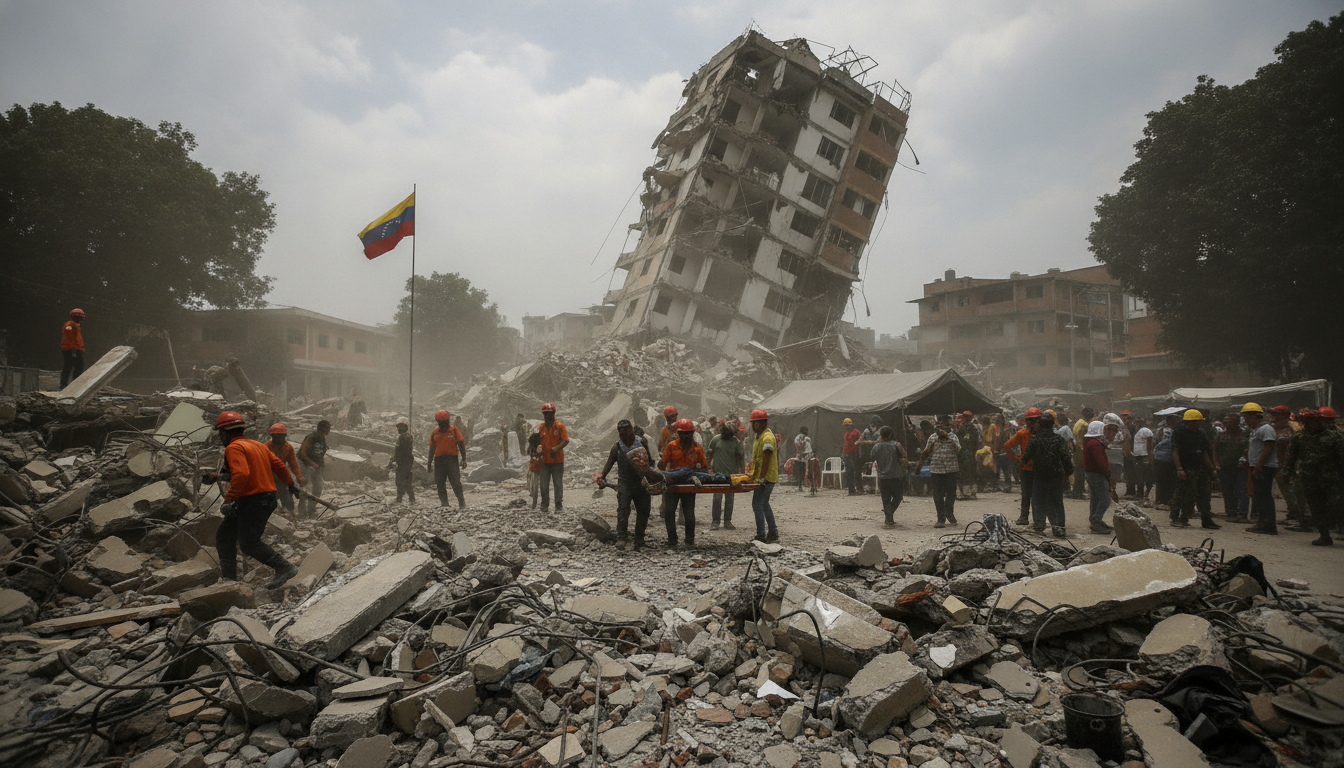
A series of powerful tremors rocked northern Venezuela on June 24, 2026, killing at least 235 people and leaving thousands injured as rescuers dug through collapsed buildings. The Venezuela earthquake — a rare doublet of magnitude 7.2 and 7.5 occurring within seconds of each other — flattened apartment blocks and choked streets with rubble. Authorities warned the toll could rise as search teams and neighbours continued frantic recovery efforts amid shortages of equipment and electricity. (apnews.com)
Death toll and casualty figures
Official health authorities reported the death toll at about 235, with several thousand people wounded and many more unaccounted for in the hardest-hit coastal areas. Health Minister Carlos Alvarado said dozens of victims arrived at hospitals without vital signs and that medical teams were overwhelmed by the influx. Local officials cautioned that figures remain provisional as rescue crews continue to recover bodies from collapsed residential blocks. (aa.com.tr)
Destruction concentrated in La Guaira and Catia La Mar
The coastal state of La Guaira, north of Caracas, emerged as the epicentre of destruction, with entire façades pancaked and dozens of buildings leveled in towns such as Catia La Mar. Journalists and officials reported scenes of families picking through rubble and relatives calling from inside damaged structures as neighbours tried improvised rescues. Simón Bolívar International Airport at Maiquetía suffered structural damage and was closed, complicating logistics for inbound relief flights. (informador.mx)
Seismic doublet and scientific assessment
Seismologists described the event as a doublet: a 7.2 tremor followed less than a minute later by a stronger 7.5 shock, both shallow and powerful enough to trigger extensive ground failure and liquefaction in coastal soils. The U.S. Geological Survey and international experts said the 7.5 shock was the strongest to hit the country in more than a century, producing dozens of strong aftershocks and making instrument readings complex. Scientists warned of a high probability of additional significant aftershocks in the coming days. (apnews.com)
Urgent needs and on-the-ground shortages
Residents described desperate scenes where neighbours were trying to pull loved ones from beneath concrete without heavy lifting gear, while calls for excavators and cutting equipment went unanswered for hours. Emergency workers said power outages, fuel shortages and blocked roads severely hampered rescue operations and the delivery of medical supplies. Local volunteers pleaded for coordinated support to reach trapped victims in buildings that had collapsed in a characteristic “pancake” pattern.
Reports of looting and public order concerns
In several damaged neighbourhoods, journalists and officials reported looting at partially burned shops and markets as residents scavenged food and water amid disrupted supply chains. Interior Ministry authorities said they had ordered gas cutoffs to reduce secondary risks and that security forces were deployed to curb theft and maintain access for humanitarian convoys. The government also declared a state of emergency in affected areas to mobilize resources and restrict movement where necessary. (apnews.com)
International aid and U.S. response
International assistance began to assemble quickly, with several countries pledging rescue teams, equipment and relief supplies for Venezuela. The United States announced the deployment of urban search-and-rescue teams, aircraft and naval assets, and said it was mobilizing some $150 million in humanitarian assistance to be channeled through aid partners and U.N. mechanisms. U.S. officials described the response as immediate and substantial, but noted that damage to Maiquetía airport constrained direct airlift options. (investing.com)
Regional offers and logistical alternatives
Brazil, China, India and a range of European and Latin American governments signaled rapid support with personnel and relief materials, while neighbouring countries coordinated port and air access for shipments. Caracas officials said La Carlota, a military airfield in the capital, would be made available to receive some international aid until Maiquetía can resume civilian operations. Humanitarian agencies emphasized the need for coordinated entry points, fuel for ground transport, and secure staging areas to speed distribution. (aa.com.tr)
Humanitarian outlook and underlying vulnerabilities
Humanitarian officials warned that even before the quake nearly eight million Venezuelans required assistance, and the disaster has sharply increased immediate needs for shelter, water and medical care. Years of underinvestment and the wide-scale deterioration of infrastructure have left many buildings vulnerable to collapse and complicated routine emergency responses. Aid coordinators said rapid assessments focused on hospitals, water systems and power grids would determine the scale of longer-term relief and reconstruction. (apnews.com)
Rescue teams and civilians worked through the night in hopes of recovering survivors, while authorities urged calm and patience as international and domestic resources were funneled to the worst-hit districts. The full extent of damage will become clearer as engineers inspect structures and emergency planners open secure corridors for relief, but officials warned that recovery could be protracted in a region already strained by years of economic and social crisis.
