
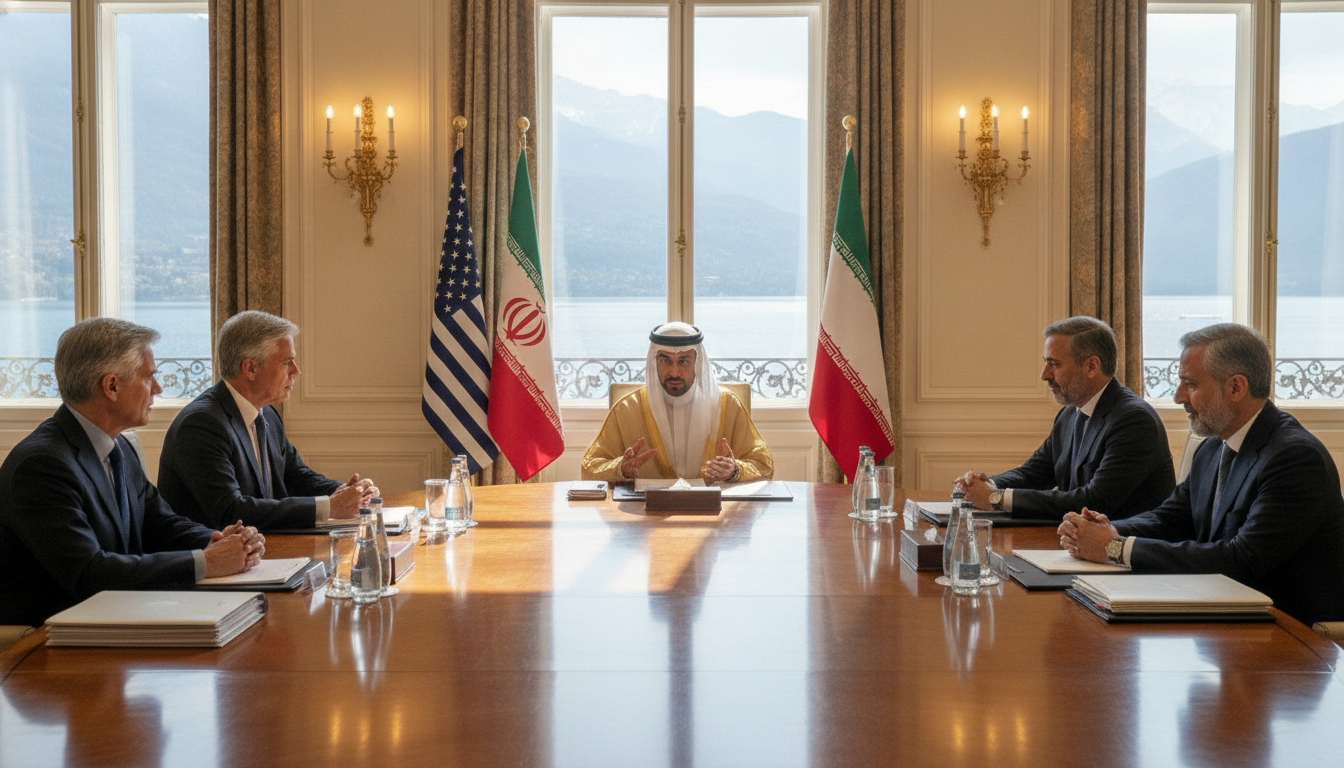
Qatar says 18-hour US-Iran talks in Switzerland laid groundwork for final deal
Qatar says 18-hour US-Iran talks in Switzerland laid groundwork for a final deal; technical teams now continue talks with Qatar and Pakistan mediators.
On June 22, 2026, Qatar’s prime minister said intensive US-Iran talks held in Switzerland have “laid the groundwork” for a possible final deal, following an 18-hour negotiating session mediated by Qatar and Pakistan. The announcement, made to Al Jazeera by Sheikh Mohammed bin Abdulrahman Al Thani, said technical teams will now take the negotiations forward. The development marks the latest diplomatic push to resolve outstanding issues between Washington and Tehran.
Qatar describes outcome of the Switzerland session
Sheikh Mohammed told Al Jazeera that the marathon talks in Switzerland were constructive and established a framework for concluding a final agreement. He characterized the session as intensive and technical, underlining that the most delicate work will now be handled by specialist teams. The prime minister’s comments were the most detailed public description of the meeting’s outcome from a mediator party.
Who attended the talks and where they took place
The discussions took place in Switzerland, the neutral venue often used for sensitive diplomacy, and involved senior US and Iranian negotiators alongside Qatari and Pakistani mediators. Officials described the contact as a concentrated effort to bridge gaps on outstanding elements of a potential deal. Participants were reported to have worked through legal, logistical and verification points aimed at converting political understanding into implementable language.
Technical teams to draft and iron out details
According to Qatar’s account, the 18-hour session produced enough agreement on key principles that technical delegations can now draft the detailed provisions required for a final accord. Those teams are expected to focus on verification mechanisms, timelines and modalities of implementation rather than high-level policy disputes. The shift to technical-level work typically signals movement from political intention to the precise wording that can be signed and verified.
Responses from Washington and Tehran remained measured
Public comments from both Washington and Tehran after the meeting were cautious and limited, reflecting the sensitivity of negotiations and domestic political pressures on both sides. US and Iranian spokespeople have so far refrained from releasing detailed statements on proprietary elements of the talks. Observers note that measured public messaging from capitals is common while technical negotiators work to avoid disrupting delicate progress.
Role of Qatar and Pakistan as mediators
Qatar and Pakistan played central facilitation roles, hosting and mediating dialogue between the two parties in Switzerland, according to the Qatari prime minister. Both countries have in recent years positioned themselves as interlocutors capable of bridging differences between Western and regional actors. Their involvement underscores a broader diplomatic trend of regional states facilitating talks to manage risks and seek stability where direct contact had previously been limited.
Outstanding obstacles and timeline for next steps
Despite the reported progress, significant obstacles remain, particularly around verification and guarantees that would satisfy both Washington and Tehran. Technical teams typically face the hardest work of translating political compromise into enforceable language, a process that can reveal new points of contention. The next phase will test whether negotiators can maintain momentum and whether capitals will accept the trade-offs required to finalize a deal.
If technical teams reach agreement on implementation details, negotiators could reconvene at senior levels to sign a political accord or finalize a comprehensive text. Any formal conclusion would likely be announced with precise dates and terms, but mediators and participants have cautioned that further effort will be required before a definitive outcome is reached.
