
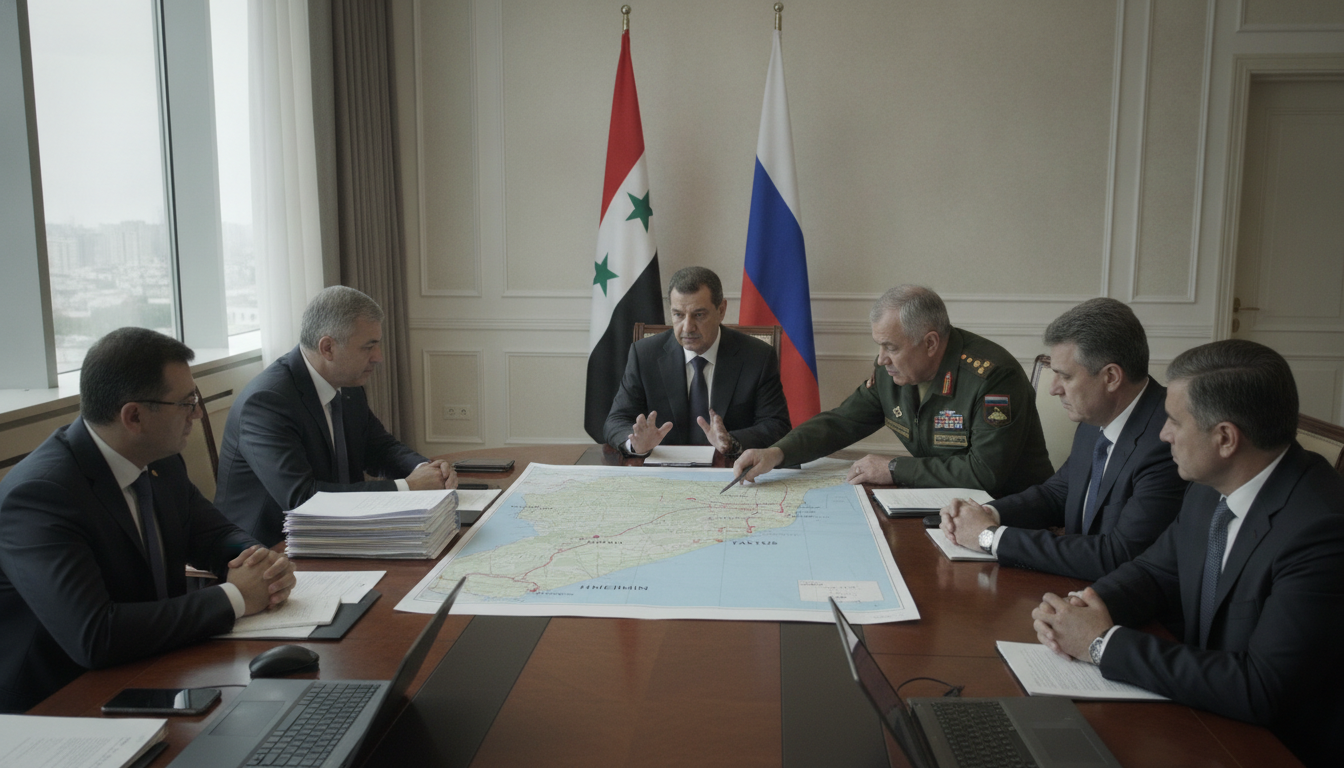
Syria and Russia Reach Deal to Reorganize Russia’s Military Presence on Syrian Coast
Syria and Russia have agreed to a memorandum reorganizing Russia’s military presence in Syria, reshaping the use of Hmeimim air base and the Tartus naval port and setting a short transition timeline.
Agreement announced by Syrian foreign ministry
The Syrian foreign ministry announced on Sunday that Damascus and Moscow have finalized an agreement to reorganize Russia’s military presence in Syria after more than 18 months of negotiation. The statement described the memorandum of understanding as the most significant development since talks began following the overthrow of Bashar al-Assad in late 2024.
The announcement framed the deal as opening a "new phase" in bilateral relations and said the arrangements are intended to safeguard the strategic interests of both countries. Syrian state media carried the ministry’s summary, which outlined a shift toward increased Syrian civilian control over facilities and a redefined role for Russian forces.
Memorandum redefines bases at Hmeimim and Tartus
According to the Syrian statement, the memorandum details a reorganization of Russian operations at the Hmeimim Air Base near Latakia and at the Tartus naval port on the Mediterranean. Civilian-run facilities will be transferred to Syrian government management and gradually integrated into Syria’s civilian administration, the ministry said.
The document reportedly calls for Russian military installations to be repurposed as joint training centers and establishes a deadline of no more than three months to complete the transition. The ministry framed the measures as a structured handover rather than an immediate withdrawal, emphasizing cooperation during the changeover period.
Historical context of Russia’s presence in Syria
Russia has maintained a military foothold in Syria since the Soviet era, using the Tartus port and Hmeimim airfield as logistics and staging facilities for operations in the eastern Mediterranean and beyond. Moscow deepened that presence during the nearly 14-year civil war, providing arms, advisers and air support to the Assad government and using the bases to project power across the region.
That strategic partnership was shaken after insurgents ousted President Bashar al-Assad in late 2024, prompting a reevaluation of Russian access and influence. The new arrangement marks a sharp alteration from previous decades in which Russia exercised direct control over key Syrian facilities.
Tartus port management and commercial concessions
The agreement follows earlier moves by Damascus to curtail Russian control over civilian port operations. Syrian authorities canceled Russia’s contract to manage the Tartus port and subsequently signed an agreement with Dubai Ports World, which committed to an $800 million investment in the facility. After the regime change, Russia’s use of Tartus was reportedly limited to a single berth and subject to Syrian permission.
Syrian officials say the memorandum will codify civilian control over commercial infrastructure while preserving specific military functions under a joint framework. The commercial transfer and the new investment illustrate Damascus’s intent to attract international partners for reconstruction and trade even as it restructures security arrangements.
President Ahmed al-Sharaa sets conditions for ties with Moscow
Since assuming the presidency, Ahmed al-Sharaa has signaled a cautious approach to Russia, saying he is not in a hurry to expel Russian forces but insisting that any renewed relationship must address harms from the conflict. Al-Sharaa has publicly demanded compensation for destruction attributed to Russian military operations during the civil war and has called for accountability measures.
The Syrian government has also reiterated a demand that Russia hand over Bashar al-Assad, who according to Syrian officials was granted asylum in Russia after fleeing Damascus when forces loyal to the opposition closed in during December 2024. Those conditions have shaped the tone of negotiations and suggest political as well as operational elements factored into the memorandum.
Outstanding issues and regional implications
Russian state media did not immediately provide a detailed account of the memorandum, and analysts caution that significant implementation questions remain. The practical transfer of civilian facilities, the legal status of joint training centers and the oversight of foreign naval access will require further talks and written protocols to translate the broad accord into operational reality.
Observers say the reorganization could alter Moscow’s logistical reach in the eastern Mediterranean and affect routes used by Russian forces traveling to and from Africa. The agreement may also signal to regional and international partners that Damascus intends to diversify its security and economic relationships while retaining a degree of cooperation with Moscow.
This restructured arrangement will be closely watched by NATO members, regional states and investors, who will assess how quickly the three-month transition can be executed and what responsibilities each side will accept. For Syrians, the outcome will influence the pace of port redevelopment, the presence of foreign troops on national soil and the balance of civilian authority in former military zones.
The memorandum marks a notable shift in Russia’s long-standing military footprint in Syria and sets an accelerated timetable for change that could reshape the eastern Mediterranean balance of power and Syria’s post-conflict recovery trajectory.
