
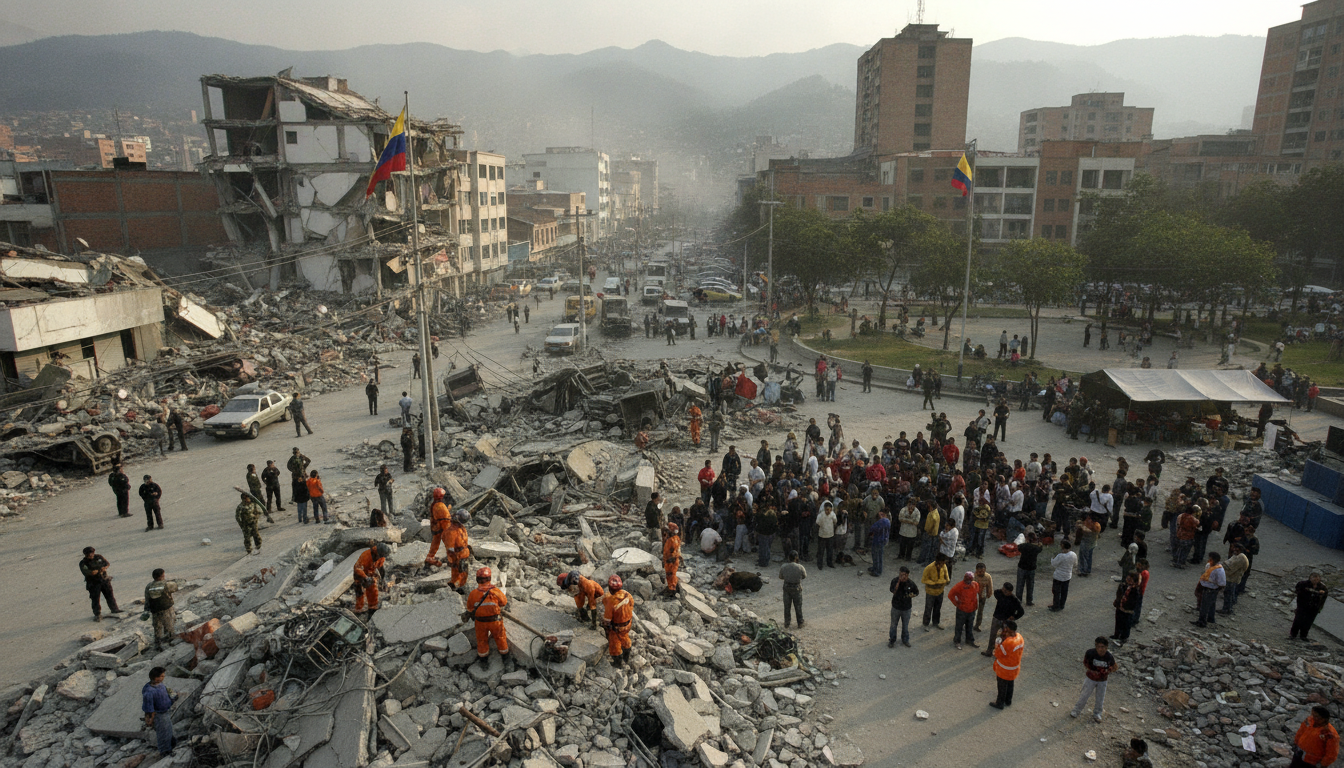
Colombia earthquake: 7.4 quake kills at least 69 in Pereira and rattles west of the country
Colombia earthquake of magnitude 7.4 kills at least 69 in Pereira; widespread damage from Chocó to the coffee region, airports halted and rescue teams mobilized.
The Colombia earthquake that struck early Monday morning left at least 69 people dead in the city of Pereira and caused widespread damage across the country’s Pacific and coffee regions. Officials reported a magnitude 7.4 tremor with an epicentre near San José del Palmar in the Chocó department and a depth of about 100 kilometres, and there was no tsunami alert issued. Local authorities described collapsed buildings, power and communications outages, and people trapped under rubble in multiple cities. Emergency teams from neighbouring departments and national rescue units have been dispatched as mayors and governors mobilize search-and-rescue and damage assessments.
Death toll and collapse of buildings in Pereira
Mayor Mauricio Salazar said Pereira recorded at least 69 fatalities in an initial tally as emergency crews worked through the rubble. Local media and municipal officials reported multiple residential buildings and homes collapsed or badly damaged in the city, complicating rescue operations. Search teams are prioritizing locations where survivors are believed to be trapped and coordinating with hospitals to receive injured patients. Authorities warned the toll could rise as access improves and aftershocks continue to be monitored.
Epicentre and seismic characteristics reported by geological services
U.S. and Colombian geological services recorded the earthquake as magnitude 7.4 with an epicentre near San José del Palmar in Chocó, off Colombia’s Pacific coast, at a depth of roughly 100 kilometres. That depth produced strong shaking across a broad area but was not followed by a tsunami alert, according to the official bulletins. The quake was felt strongly in the west of Colombia and was reported as far afield as Quito in Ecuador and Panama City. Seismologists warned that aftershocks are likely and urged residents to follow official guidance on structural safety and evacuation routes.
Cali reports collapses and people trapped under debris
Cali’s mayor, Alejandro Éder, reported at least 20 structures had collapsed in the city and that people were trapped under debris, prompting urgent requests for assistance from Bogota and Medellín. Local officials deployed drone teams and urban search-and-rescue units to survey damage and locate survivors in densely built neighbourhoods. The city’s mayor said evaluations of structural integrity were ongoing and that some districts had lost electricity and mobile connectivity, hampering coordination. Hospitals in Cali activated emergency protocols to treat injured residents and prepare for potential mass-casualty needs.
Quibdó and Chocó show severe damage and injured residents
The governor of Chocó reported injuries and serious structural damage in Quibdó, the department capital, and local footage showed an apartment block that appeared to have partially collapsed. Chocó is one of Colombia’s poorest departments and officials warned that limited infrastructure and difficult access could slow the delivery of aid and the removal of debris. Residents described violent shaking and the failure of basic services, with some communities temporarily cut off while initial assessments proceed. Regional authorities have appealed for resources and technical support to stabilize damaged buildings and reach isolated areas.
Airports suspended, communications disrupted and regional responses
Civil aviation authorities said six airports in western Colombia suspended operations pending structural inspections of runways and terminals, disrupting travel and the movement of relief supplies. Power outages and the loss of mobile service were reported across several municipalities in the coffee region, complicating requests for help and the transmission of situational reports. The newly installed national government signalled its intention to centralize emergency management, while mayors from major cities coordinated mutual aid to deploy rescue personnel and equipment. International offers of assistance arrived quickly, with governments including Israel and Mexico offering support.
Government mobilization and international aid offers
President Abelardo de la Espriella said he would travel to Bogotá to lead the national response and declared that Colombians facing the emergency were not alone, urging calm and cooperation with rescue teams. Federal emergency agencies were mobilized to direct search-and-rescue operations, coordinate hospital transfers and oversee damage inspections for public infrastructure. International partners offered logistical and technical support, and foreign offers of specialized search teams and humanitarian aid were being evaluated. Officials cautioned that restoring basic services and clearing collapsed structures would be a prolonged effort requiring sustained coordination.
The quake added to a recent pattern of powerful temblors in the region and underscored Colombia’s location along the Pacific “Ring of Fire,” where movements of tectonic plates such as the Nazca and Caribbean plates create frequent seismic risk. Emergency officials urged residents to remain alert for aftershocks, avoid damaged buildings, and to use official channels for assistance and information. Humanitarian agencies and local governments said they would provide updates as rescue operations proceed and more accurate assessments of casualties and damage become available.
