
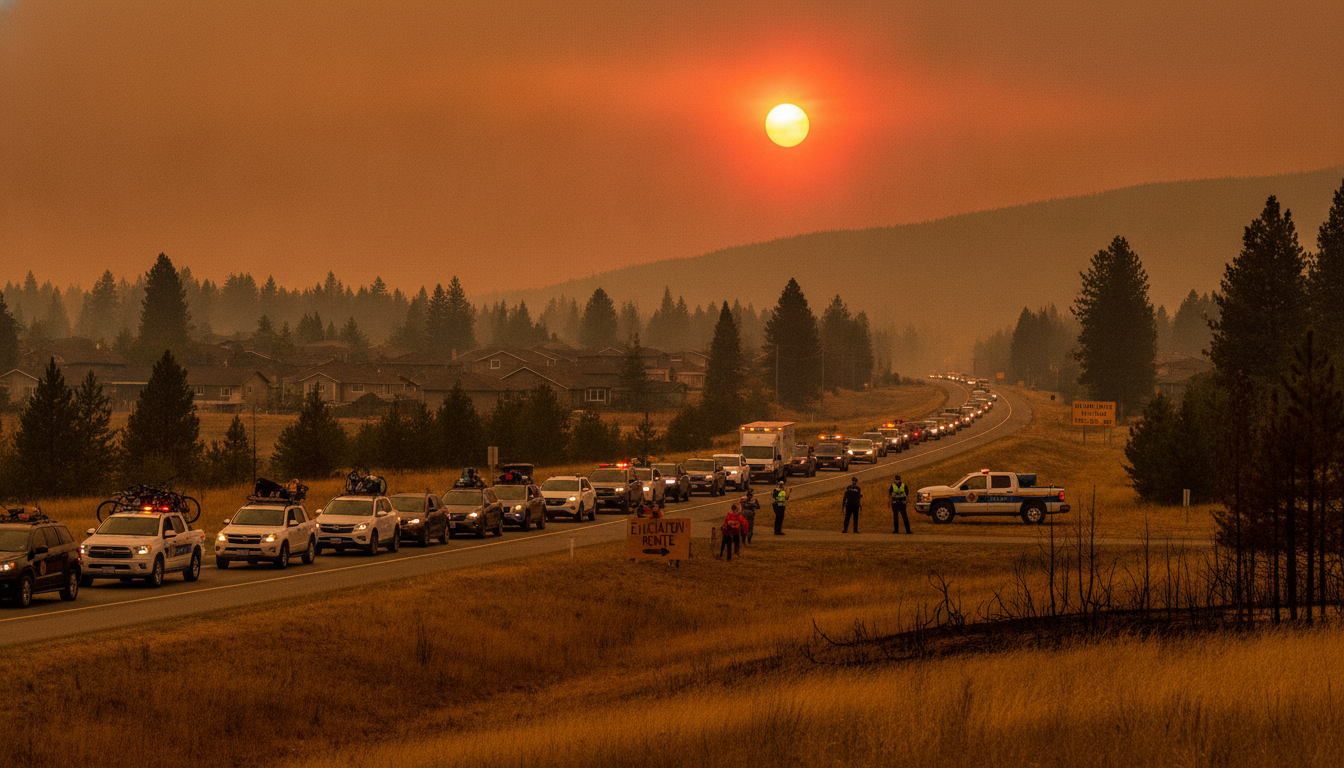
Okanagan wildfire forces more than 20,000 to evacuate Summerland and Peachland
Okanagan wildfire forces over 20,000 people to evacuate Summerland and Peachland, B.C.; officials mobilize firefighting crews, shelters and health advisories.
A fast-moving Okanagan wildfire on August 10, 2026, has prompted large-scale evacuations in British Columbia’s Okanagan region, with provincial officials saying more than 20,000 residents were ordered from their homes. The evacuation affected the Lake-country towns of Summerland and Peachland and sparked an emergency response from provincial agencies and local authorities. Emergency officials described the blaze as spreading rapidly under hot, dry conditions that have been prevalent across parts of B.C. this summer.
Evacuations ordered for Summerland and Peachland
Provincial authorities issued mandatory evacuation orders for residential neighbourhoods in Summerland and Peachland as the fire advanced toward populated areas. Officials reported that evacuation centres were established to receive thousands of displaced residents and families. Transportation routes out of the towns were prioritized for people leaving, and authorities urged evacuees to follow official instructions and registered assembly points.
Fire crews and containment efforts
Firefighters from the provincial wildfire service and local fire departments were deployed to the Okanagan region to combat the blaze and protect structures. Air support, including water-bombing aircraft and helicopters, was reported to be assisting ground crews where weather and visibility permitted. Commanders emphasized that containment efforts were complicated by shifting winds and steep terrain, and they warned that control lines would take time to establish.
Community shelters and emergency supports
Local governments and non-profit organizations moved quickly to open shelters, provide emergency housing and distribute essential supplies to evacuees. Health authorities and community volunteers coordinated to support vulnerable residents, including seniors and people with mobility challenges. Officials urged those forced from their homes to register with emergency services so authorities could account for residents and match needs with available assistance.
Impact on travel and infrastructure
The wildfire prompted road restrictions and likely closures on some arterial routes serving the two towns and surrounding communities. Authorities cautioned motorists to avoid the area to keep corridors clear for emergency vehicles and evacuations. Utilities and local services were reported to be under strain, and residents were warned that power interruptions could occur as crews work to secure infrastructure near the fire.
Air quality and public health advisories
Smoke from the Okanagan wildfire degraded air quality across the valley, triggering public health advisories for residents to limit outdoor activity and take precautions. Health officials recommended that people with respiratory conditions, young children and older adults stay indoors and use air filtration if available. Schools and workplaces in affected zones were monitoring conditions and could alter operations as smoke levels change.
Provincial response and investigation
The provincial government mobilized emergency management resources and said it would coordinate with local authorities to assess damage and provide recovery support. Ministers and emergency officials planned ongoing updates to inform residents about evacuation status, shelter locations and financial assistance. Authorities also indicated that the cause of the fire would be investigated once conditions permitted, and they urged the public to follow official channels for verified information.
Emergency lines of communication remained active as officials worked to refine evacuation boundaries and movement orders. Social services and local agencies directed displaced residents to registration points and provided information on emergency benefits available to those who have lost homes or income. The response included checks on essential infrastructure and prioritization of at-risk neighbourhoods for protection.
Local leaders described scenes of rapid mobilization as neighbours helped one another and first responders worked through difficult conditions. Residents confronted with sudden displacement were advised to bring identification, medications and emergency kits when relocating to shelters. Officials stressed that returning home would only be permitted when authorities declared areas safe and established clear re-entry procedures.
This developing Okanagan wildfire has underscored the seasonal risk the region faces during prolonged hot and dry spells, and authorities urged vigilance and readiness across the Interior of British Columbia. Emergency officials said they would provide further briefings as new information becomes available and as fire behaviour and containment assessments evolve.
