
U.S. emissaries to Pakistan begin fresh Iran talks as Lebanon ceasefire frays
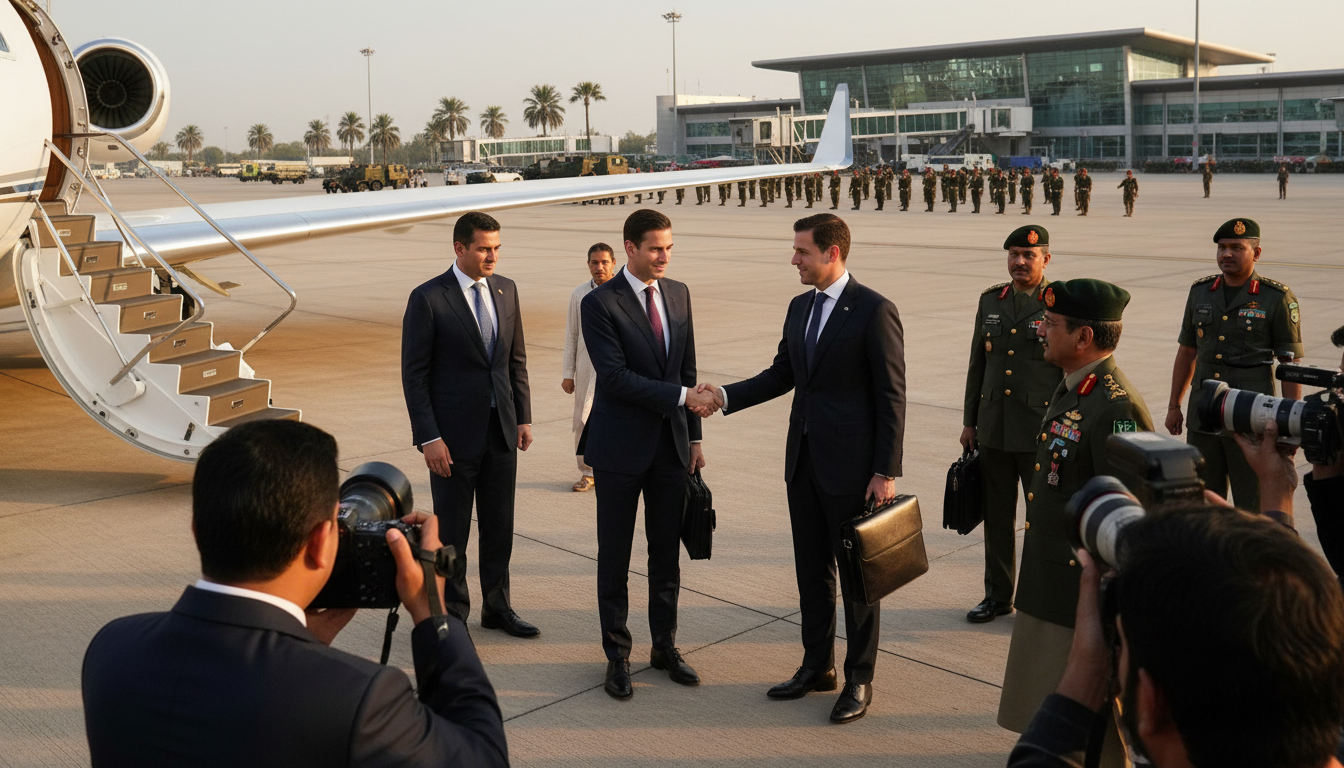
U.S. emissaries to Pakistan travel to Islamabad on April 25, 2026, for Iran talks aimed at ending the wider Middle East war, officials say.
The United States is sending emissaries Steve Witkoff and Jared Kushner to Pakistan on Saturday, April 25, 2026, to resume negotiations with Iranian representatives aimed at ending the war in the Middle East. White House spokesperson Karoline Leavitt confirmed the mission in an interview with Fox News and said she hoped the meetings would produce a “fruitful conversation.”
U.S. emissaries depart for Pakistan
The special envoy Steve Witkoff and Jared Kushner will arrive in Islamabad on April 25, 2026, for meetings with members of an Iranian delegation, the White House said.
Leavitt said Vice-President J.D. Vance is not expected to join the trip, and stressed that the U.S. delegation will press for a negotiated path toward a durable de‑escalation between Tehran and Washington.
Iranian foreign minister begins regional tour
Iran’s deputy foreign minister and chief negotiator Abbas Araghchi landed in Islamabad on the evening of April 24, 2026, ahead of bilateral talks with Pakistani officials.
State media reported Araghchi will continue to Muscat and Moscow for further consultations on regional developments, signaling Tehran’s intent to coordinate with regional partners as U.S.-led negotiations proceed.
Ceasefire extension announced after Washington talks
President Donald Trump announced a three‑week extension of a truce between Israel and Lebanon on Thursday, April 23, 2026, following discussions between Israeli and Lebanese delegations in Washington.
Israeli Prime Minister Benjamin Netanyahu accused Hezbollah of trying to sabotage the process, while U.S. officials framed the extension as a step toward a broader, negotiated de‑escalation involving Iran.
Violence persists in southern Lebanon despite truce
The ceasefire, which followed an earlier pause in hostilities introduced on April 8 and a period of relative calm from April 17, 2026, has continued to be violated, with Israeli strikes and evacuation orders reported.
Lebanese health officials said two people were killed on April 24 in a southern Lebanon strike, and state media reported attacks on villages including Deir Aames. Hizbollah said the extension “made no sense” in light of ongoing hostile acts and reserved the right to respond to further perceived aggression.
Human cost and UN reporting
The conflict has inflicted heavy civilian losses and displacement across Lebanon and Iran, with Lebanese authorities and U.N. agencies reporting more than 2,400 deaths and roughly one million people displaced in Lebanon alone.
The U.N. Interim Force in Lebanon (UNIFIL) announced on April 24 that an Indonesian peacekeeper who had been wounded on March 29 died of his injuries, underscoring the risk to international personnel on the ground.
Diplomatic pressure mounts at European summit
World leaders gathered at a European summit in Ayia Napa, Cyprus, on April 24, 2026, where Lebanese President Joseph Aoun met peers including French President Emmanuel Macron and regional counterparts.
European Council officials said the 27 EU members would step up efforts to help de‑escalate the crisis, while Macron urged a return to stability “as quickly as possible.” President Trump, by contrast, has signaled a willingness to continue protracted negotiations with Iran while maintaining military pressure in the region.
Economic fallout and shipping disruptions
Markets reacted to the diplomatic developments: oil prices eased after Iran announced Araghchi’s tour and hopes for renewed talks, but traders remain wary amid ongoing regional instability.
The closure of parts of the Strait of Hormuz has halted a corridor that previously transited about 20 percent of the world’s oil and liquefied natural gas, and European and Gulf officials warned of persistent supply disruption risks. EU and regional leaders stressed that reopening Hormuz is “vital” for the global economy, while Abu Dhabi and other Gulf capitals called for measures to rebuild trust after waves of missile and drone attacks.
As U.S. emissaries to Pakistan engage with Iranian representatives in Islamabad, the outcome of the talks will be closely watched by capitals and markets worldwide. The meetings come at a moment when ceasefire extensions remain fragile and local violence continues to claim lives, even as global leaders pursue parallel diplomatic tracks in Europe and beyond. The talks in Pakistan could either open a path to wider negotiations between Tehran and Washington or underscore the limits of shuttle diplomacy amid entrenched regional tensions.
