
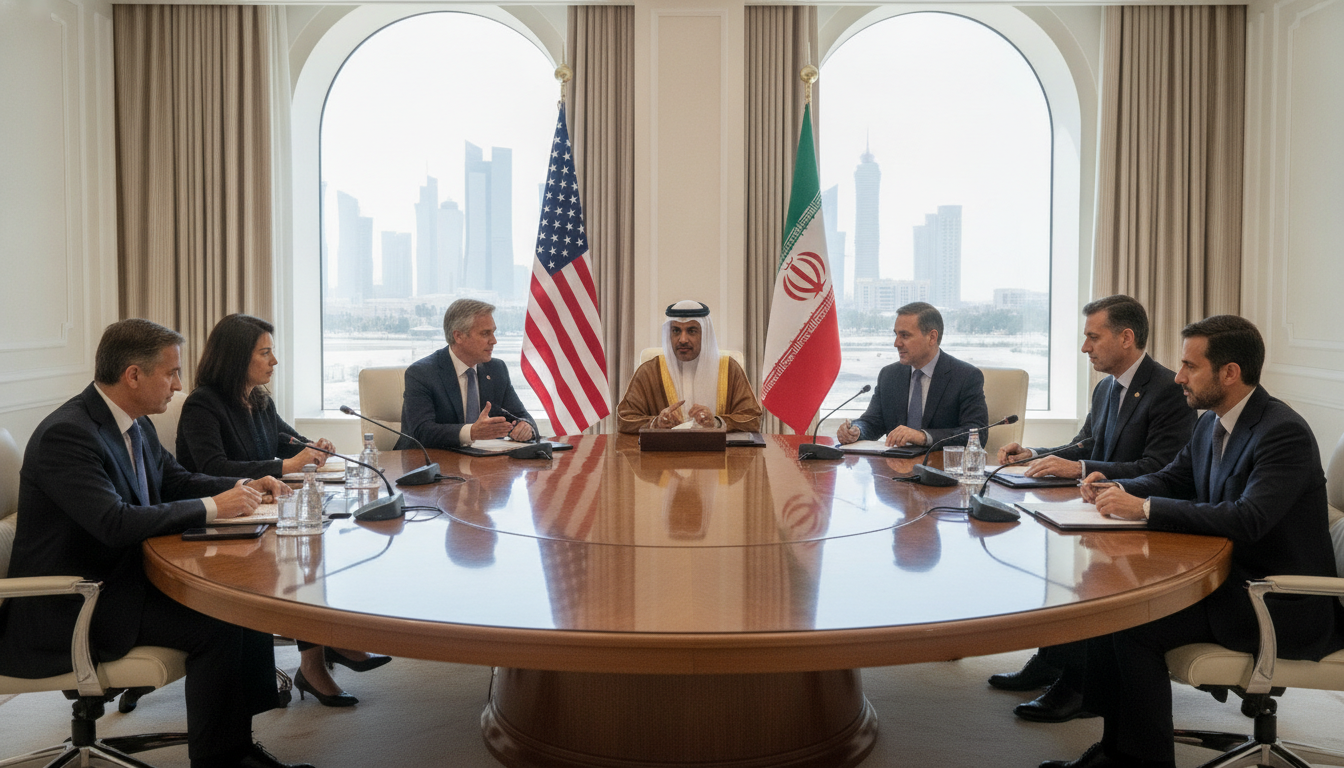
Iran-US talks in Doha set after recent strikes, but Tehran limits scope
Iran-US talks in Doha set after recent strikes; Washington calls them "high-level" while Tehran says technical visits amid Hormuz tensions and shipping slows.
The announcement of Iran-US talks in Doha follows a week of military exchanges that raised fears of a wider regional conflagration. Iran-US talks in Doha were framed differently by the two capitals, with Washington describing "high-level" meetings while Tehran said it will send technical experts only. Both sides also reported a temporary halt to direct attacks as diplomatic contact was arranged.
Doha meetings announced by Washington and Tehran
The White House and Tehran confirmed separate delegations would travel to Doha this week to address recent incidents, according to U.S. and Iranian statements. U.S. officials said emissaries including Steve Witkoff and Jared Kushner would participate in what Washington called high-level talks aimed at de‑escalation. Iran’s foreign ministry initially denied plans but later acknowledged it was dispatching a delegation of experts, stressing those would not be negotiating teams engaging directly with U.S. counterparts.
President Donald Trump posted on his social platform that Iran had requested a meeting in Doha, and White House spokespeople briefed that a delegation would attend. Iranian spokesman Esmail Baghaei insisted Iran would not hold negotiations with the U.S. “at any level” in the coming days, underscoring the divergent public narratives about the encounter’s purpose. Diplomats familiar with the arrangements told reporters that communication channels to defuse incidents were operational even as rhetoric remained guarded.
Dispute over delegation roles and scope
The two governments’ descriptions diverge sharply on who will attend and what will be discussed, creating ambiguity around the format and objectives of the Doha contacts. Washington’s characterization of “high-level” attendance contrasts with Tehran’s insistence the participants are technical experts, not political negotiators. That gap matters because it signals whether the talks could lead to substantive agreements or remain limited to incident management and confidence‑building measures.
A senior diplomat briefed on the situation said the meetings were intended to reduce the risk of miscalculation rather than broker a comprehensive settlement. The lack of a shared public agenda and differing expectations raises the prospect that the sessions will produce modest, operational outcomes rather than strategic concessions. Observers note that even limited technical coordination can be useful to prevent further escalation at sea and along contested borders.
Ceasefire claims and temporary pause in attacks
U.S. and Iranian officials said they had agreed to suspend offensive actions after a series of attacks that followed the June 17, 2026 protocol of agreement aimed at easing hostilities. Both sides described a pause in strikes in the immediate term, though independent verification of compliance remains limited. The fragile lull came after U.S. forces struck Iranian targets in response to attacks on commercial vessels and Iran retaliated by targeting Gulf neighbors, including Kuwait and Bahrain.
Analysts caution that such pauses have been fragile in past cycles, and incidents at sea or along front lines in Lebanon can rapidly unravel fragile understandings. For now, capitals and regional partners are watching whether the Doha contacts translate into durable incident‑management mechanisms or simply a brief interlude in a wider confrontation.
Strait of Hormuz: maritime traffic slowdown
The Strait of Hormuz emerged as an urgent subject of concern after two recent attacks on commercial ships dramatically slowed transit through the chokepoint. Data from maritime trackers showed a sharp decline in passages over the weekend, with dozens fewer vessels transiting than on typical days. Shipping companies and insurers have signaled heightened caution, and some operators rerouted or delayed sailings as states assessed security measures and escort options.
Tehran has asserted control over the corridor and insists passage will follow a single lane along Iranian waters, a position that contrasts with longstanding international norms guaranteeing transit through international straits. The disruption in Hormuz carries immediate economic implications because the channel remains crucial for the global energy trade and for shipments of raw materials through the Gulf.
Sovereignty claims and proposed transit fees
Iran and Oman have both asserted sovereignty claims affecting navigation, leading to public talk of transit fees and stricter controls in the waterway. Tehran has argued that its measures respond to security threats, while Oman has signalled willingness to open a temporary alternative corridor, framed as an initiative in concert with the United Nations. That competing posture complicates efforts to restore unrestricted passage under the United Nations Convention on the Law of the Sea, which guarantees freedom of navigation through international straits but has not been ratified by Iran.
France and Oman on Monday urged fully unrestricted navigation and announced plans to coordinate demining operations, drawing a stern reply from Tehran asking Paris not to “complicate” the situation. Maritime experts warn that unilateral actions to charge fees or impose single‑lane transit regimes could trigger legal disputes and practical frictions that prolong the disruption.
Spillover: Lebanon, Israel and regional security
The wider conflict dynamics were on display in Lebanon, where Israeli strikes continued despite an agreement framework signed in Washington on June 17, 2026 that aimed to pave the way for a durable ceasefire. Israeli operations in southern Lebanon persisted over the weekend and into Monday, while Beirut reported additional casualties and infrastructure damage. The framework reportedly allows Israeli forces to remain in the south until Hezbollah lays down arms, a demand that Lebanon struggles to implement under intense political pressure.
Lebanese leaders expressed determination to reassert state authority by deploying national forces to areas where Hezbollah is entrenched, but that move risks direct clashes with the Iran‑backed militia. The broader regional picture — from the Gulf to the Levant — underscores how incidents at sea, cross‑border strikes, and political demands are interlinked and capable of producing rapid escalation without careful management.
The immediate focus now turns to Doha: whether the meetings can produce practical, verifiable steps to protect shipping lanes and prevent miscalculation, or whether the differing public narratives will limit outcomes to ad hoc coordination. For many regional and international actors, the priority is stabilizing maritime traffic through the Strait of Hormuz and preventing the conflict from widening into a broader confrontation.
