
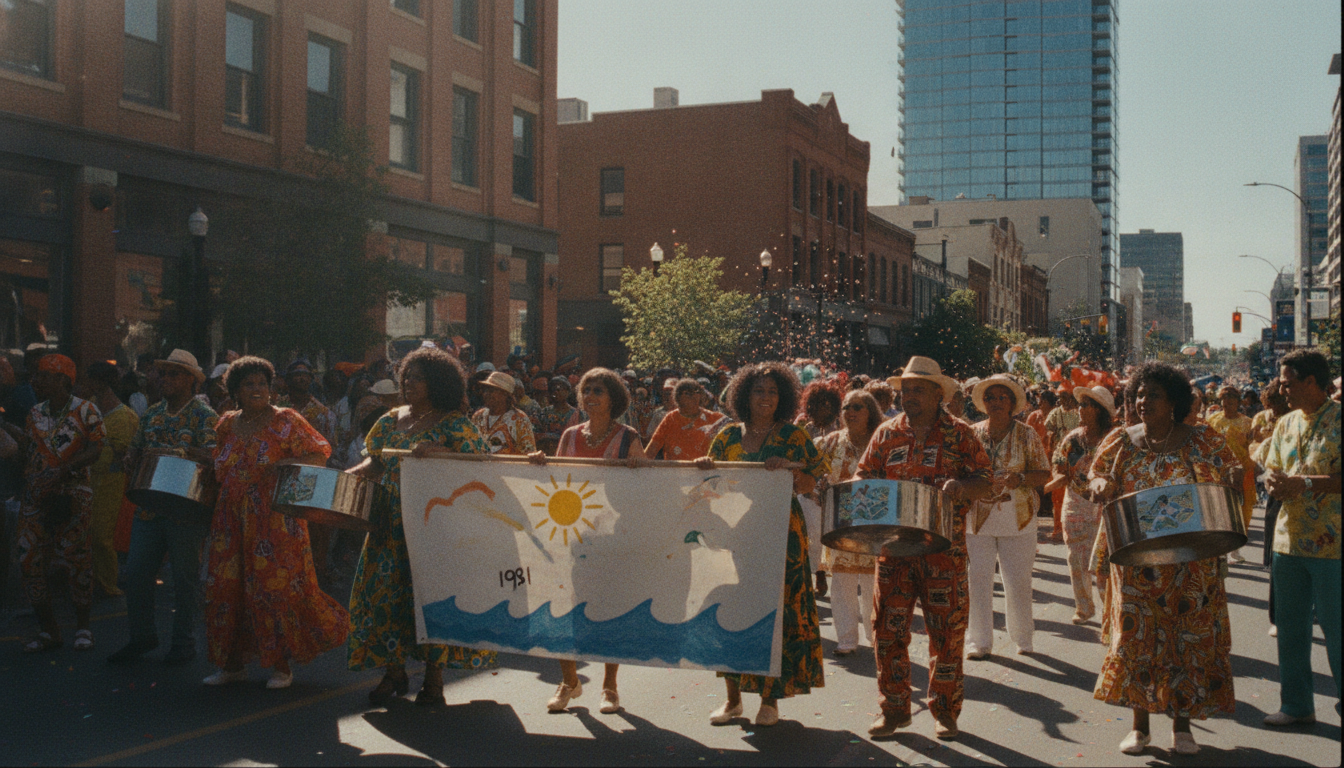
Calgary Caribbean festival traces roots to 1981 as community celebration grows
Calgary Caribbean festival began in 1981, celebrating Caribbean music, food, dance and community across Alberta with decades of cultural programming and growth.
The Calgary Caribbean festival, founded after a small 1980s committee recognised a growing Caribbean presence in the city, has evolved into an annual touchstone for multicultural life in Alberta. Organizers point to a modest start — a social "lime" in Trinidadian terms — that led to the formal registration of the Caribbean Community Council of Calgary in 1981. The festival now serves as a seasonal gathering that highlights Caribbean heritage through music, cuisine and performance.
Origins in a ‘lime’ and official registration
Nazcomanescu said a small committee in the 1980s held what they called a "lime," or community hangout, before discovering the larger Caribbean population in Calgary. That realization prompted organizers to formalize their efforts and register the Caribbean Community Council of Calgary in 1981. The registration marked the transition from informal social gatherings to an organised annual festival designed to showcase Caribbean culture.
The early organizers framed the festival as both celebration and community building. By anchoring the event in a registered council, they created a vehicle for ongoing cultural programming, outreach and coordination with civic partners. That early structure remains central to the festival’s continuity more than four decades later.
Early growth and programming
From its first iterations, the Calgary Caribbean festival expanded programming to include music, dance, food and family activities. Steelpan, soca and calypso performances became recurring elements, and local Caribbean cooks began offering traditional dishes that introduced broader Calgary audiences to island cuisine. Workshops, storytelling and educational booths were later added to broaden cultural context.
Organizers say the programming evolved in response to community needs and changing demographics, with new generations contributing contemporary musical styles and creative expressions. The blend of performance and participatory activities has helped the festival maintain relevance while preserving traditional forms of Caribbean arts.
Community and cultural impact
The festival has functioned as a focal point for Calgary’s Caribbean diaspora, offering a visible forum for identity, memory and cultural transmission. For many attendees, the event provides a rare opportunity to connect with homeland traditions, language and seasonal customs within an urban Canadian setting. Community leaders note that the festival also helps younger Caribbean-Canadian residents learn about their heritage through hands-on arts and mentorship.
Beyond the diaspora, the Calgary Caribbean festival fosters cross-cultural exchange by inviting neighbours, tourists and civic institutions to engage with Caribbean culture. Schools, libraries and local media have partnered with festival organizers to amplify educational components and to frame the event as part of Calgary’s broader multicultural calendar.
Organizers, volunteers and institutional support
A volunteer core and rotating committees have sustained the festival across decades, balancing cultural authenticity with logistical demands. Longtime volunteers work alongside newer participants to plan artist lineups, secure permits and arrange vendor sites. Nazcomanescu’s account of the festival’s grassroots founding highlights the volunteer-driven nature of the endeavour.
Institutional partners — including parks departments, local businesses and cultural organizations — have provided essential infrastructure and funding support at various points. Organizers say these partnerships have been instrumental in scaling the festival while maintaining a community-led focus.
Economic presence and city visibility
The Calgary Caribbean festival generates economic activity for small businesses, food vendors and performing artists who rely on seasonal events for exposure. Market stalls and food booths give local entrepreneurs a platform to sell regional products and to test concepts with new customer bases. Event organizers argue that cultural festivals such as this contribute to Calgary’s tourism and hospitality sectors by adding unique programming to the city’s calendar.
City recognition of the festival has also grown over time, with municipal agencies and cultural institutions increasingly acknowledging its role in promoting diversity. That visibility has helped secure event permits, attract sponsors and broaden audience reach.
Preserving legacy while adapting
Organizers emphasize the importance of preserving the festival’s founding mission while adapting to contemporary realities. As Calgary’s population changes, programming increasingly reflects a blend of traditional island culture and diasporic innovation, with younger artists introducing fusion genres and new visual arts components. Planning committees are also focusing on inclusive access, sustainability and intergenerational engagement to ensure the festival remains relevant.
Efforts to document the festival’s history, including oral histories and archival projects, are underway to capture the lived experience of founders, volunteers and participants. Those initiatives aim to safeguard institutional memory and to provide a foundation for future programming decisions.
The Calgary Caribbean festival’s journey from a small social lime to a registered community event in 1981 illustrates how grassroots cultural activity can grow into a sustained civic tradition. As organizers balance preservation with innovation, the festival continues to offer Calgary residents a chance to experience Caribbean culture through music, food and shared community life.
