
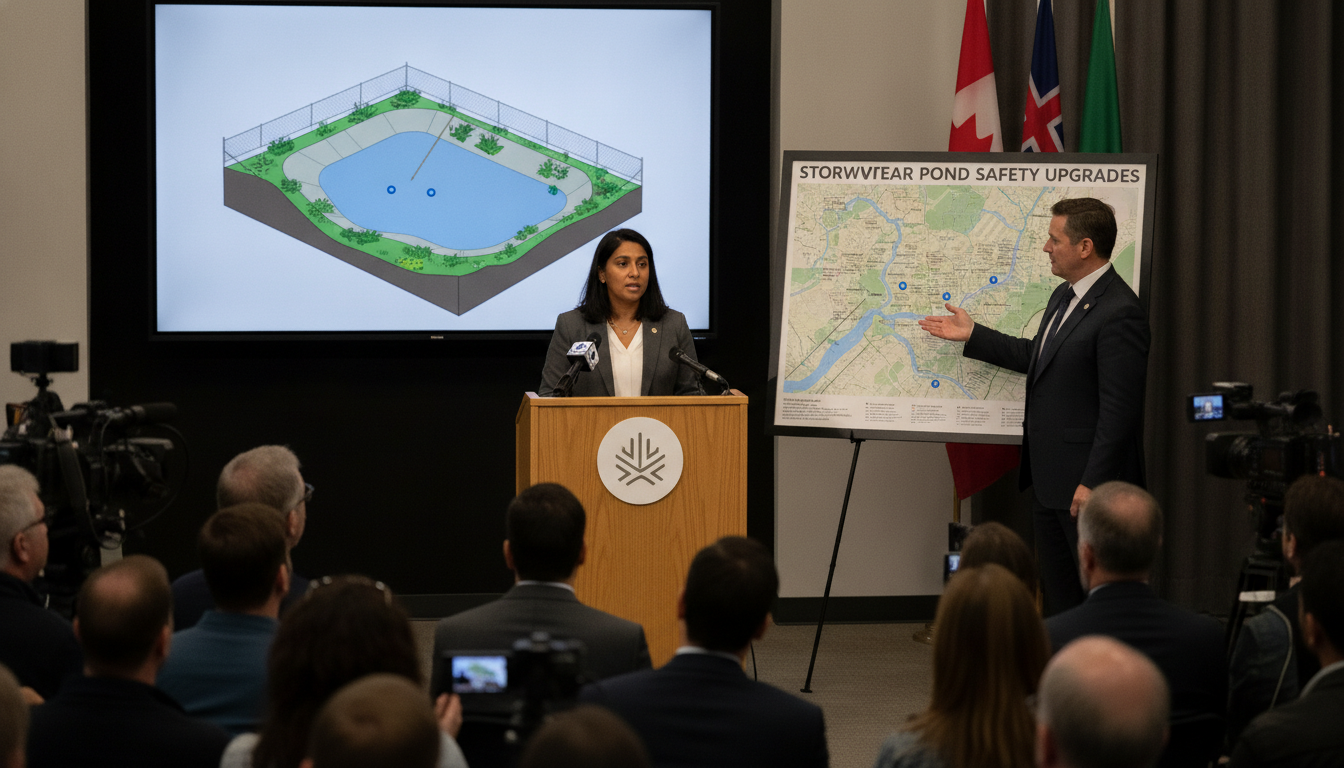
Calgary to upgrade 15 stormwater retention ponds with fencing, signage and thorny vegetation
Calgary begins safety upgrades at 15 stormwater retention ponds with new signage, fencing and thorny vegetation after recent drownings to reduce public access risks.
The City of Calgary has announced immediate safety improvements to 15 stormwater retention ponds across multiple wards, citing public access concerns and recent drownings as drivers for the work. The upgrades, which city officials say will begin in mid-August, include enhanced interpretive signage, permanent and seasonal fencing and the planting of dense, thorny vegetation to discourage approach to pond edges. City managers described the program as part of an ongoing, funded initiative to reduce preventable incidents at retention basins that are not intended for recreation.
City identifies highest-priority ponds for upgrades
The city’s stormwater operations team conducted field visits and spatial reviews to identify ponds with the highest risk profiles. Officials said proximity to residential areas, schools and playgrounds factored heavily into selecting which sites would receive immediate attention. A combination of on-the-ground observations and reports from residents guided the list of 15 priority ponds slated for work this month.
Stormwater staff emphasized that the selection process preceded recent tragic incidents but noted those events reinforced the urgency of action. Municipal managers said the improvements were included in the city’s previous budget deliberations and are now being scheduled for installation. Crews will carry out both permanent measures and seasonal treatments where appropriate to adapt to changing weather and public use patterns.
Planned physical changes: fencing, signage and vegetation
Planned infrastructure changes will include permanent partial fencing designed to limit direct access to water edges while still allowing visual access for residents. The city also plans to erect temporary seasonal fencing at sites where access spikes during warm months or school recesses. Officials described the fencing as a physical deterrent rather than a full enclosure, intended to interrupt informal paths that lead directly to pond margins.
Interpretive signage is a core component of the upgrades, with new panels to explain why stormwater retention ponds are hazardous and how water levels can change rapidly. Signs will be designed to be visible and informative to adults and children, and will supplement previous temporary signage campaigns. In addition, crews will plant dense hedges and thorny species where feasible to create natural barriers that discourage children and pets from approaching the water.
Legacy Small Pond and recent drowning increase scrutiny
One of the ponds selected for improvements is the Legacy Small Pond in southeast Calgary, the site of a recent fatal drowning that drew widespread community attention. City staff noted that while the safety plan and funding were in place before that incident, the tragedy highlighted the real-world consequences of pond access and accelerated scheduling for some works. Community members and family members of the child who drowned have expressed both grief and cautious approval of the announced upgrades.
Relatives close to the family described a month of mourning and frustration at the perceived timing of municipal interventions. Local parents and community association representatives urged the city to fast-track visible, preventive measures and increase outreach to neighbourhoods adjacent to stormwater infrastructure. City officials said they are coordinating with community groups to ensure work schedules and messaging reflect local needs.
Operational reasons why stormwater retention ponds are hazardous
Stormwater retention ponds are engineered to control runoff, capture sediment and reduce downstream flooding, not to support recreational swimming or play. City engineers stress these basins often have steep sides, soft and muddy bottoms, and can experience sudden rises in water depth during storm events. Those physical characteristics, combined with cold temperatures and submerged hazards, make ponds especially dangerous for unsupervised children and non-swimmers.
Water levels in retention ponds are intentionally varied to manage storm flows, meaning a calm-looking pond can shift quickly after rainfall. Mud and organic material at the bottom of many basins can trap legs and make self-extraction difficult. Because these ponds serve an essential public-works function, the city balances access for inspection and maintenance with public safety interventions.
Communication and outreach before and during work
City staff said past efforts included temporary signage during winter and summer seasons, direct door-to-door notifications, and targeted messaging to community associations and schools. The upcoming upgrades will be accompanied by renewed communications campaigns aimed at reminding residents that storm ponds are not designed for recreation. Officials said they will coordinate with schools and daycares in adjacent neighbourhoods to reinforce safety messages with parents and children.
Crews will also place informational materials near improved sites to explain the rationale for planting and fencing, and to provide guidance on safe viewing locations. The city signalled willingness to tailor messaging formats for different audiences, including multilingual resources where needed. Municipal spokespeople encouraged residents to report areas where informal trails or worn paths lead to water access, as that local intelligence helps prioritize further interventions.
Monitoring and the next phase of pond assessments
City operations teams will continue to assess the broader inventory of stormwater retention ponds to identify additional sites that may require similar treatments. Officials said the initial 15 ponds were chosen by risk profile but that the program is iterative and will adapt as crews survey other locations. Maintenance crews will monitor planted vegetation and fencing for effectiveness and durability, and will make adjustments based on observed behaviour around the ponds.
Budget planning and seasonal constraints will shape the pace of subsequent upgrades, municipal managers explained. The city said crews are prepared to escalate interventions at sites where repeated access incidents or high foot traffic are reported. Longer-term options, such as redesigns or relocation of informal pathways, are under consideration for some ponds depending on feasibility and funding availability.
Community reaction and calls for broader safety measures
Reactions from nearby residents and community associations were mixed, combining relief about tangible safety steps with calls for faster, broader action. Some locals praised the emphasis on interpretive signage and natural barriers as more visually appealing than full boardwalks or chain-link fencing. Others urged the city to consider additional engineering solutions, such as graded approaches, baffles or expanded patrols, to reduce the likelihood of tragedy.
Advocates for child safety recommended complementary measures like increased public education, partnerships with local schools for safety workshops, and enhanced emergency-response planning around known hazard sites. Mental health and support services have also been mobilized in communities affected by recent drownings, and civic leaders have urged coordinated support for bereaved families.
Legal, operational and financial context for the upgrades
The stormwater system is part of the city’s broader infrastructure responsibilities, and safety upgrades draw on capital and operating funds approved in prior budgets. Municipal officials said the enhancements are standard public-safety investments rather than emergency reallocations. The city must balance expenditure across many infrastructure priorities, including road repair, sewer systems and green spaces, so officials mapped upgrades to the most urgent risk hotspots.
From a liability perspective, the city continues to emphasize public education and signage as core preventative tools, while acknowledging that no single intervention will eliminate all risks. Legal advisers within municipal government have briefed council members on the scope of physical measures available and their anticipated effectiveness. Officials said they will document work and monitoring efforts to inform future policy and potential regulatory changes.
How residents can help keep ponds safer
City staff urged residents to observe several basic precautions around retention ponds: supervise children closely near water, discourage play or fishing at unapproved sites, and steer pets away from pond edges. Neighbours who notice worn paths, broken signs or damaged fencing are asked to report those conditions through municipal service channels so crews can respond. Residents were also encouraged to attend community association meetings where pond safety plans and timelines will be discussed.
Volunteers can support public education efforts by helping spread information within their local networks, while parent groups and school councils can request targeted presentations from city staff. Municipal leaders also recommended reporting dangerous behaviour or parties near pond sites to non-emergency lines so that enforcement and outreach teams can assess patterns and intervene when necessary.
Permanent and temporary treatments are planned to reduce casual access to ponds while maintaining sightlines for maintenance and enjoyment of open space. The use of thorny plantings and partial fencing aims to achieve a balance between safety and landscape aesthetics, officials said. Adaptive management and community feedback will guide ongoing adjustments.
The city emphasized that stormwater retention ponds play a critical role in flood mitigation and water management for neighbourhoods across Calgary. While the designation and function of these basins are often communicated at subdivision design stages, rapid urban growth has brought more residents into close proximity to legacy and newly constructed ponds. That demographic shift increases the need for effective, visible safety measures that match current patterns of use.
Local councillors representing wards with affected ponds are expected to receive project briefs and timelines from civic departments. Community association leaders said they would press for clear schedules and opportunities for resident input on planting species and fencing locations. Officials indicated work crews will aim to minimize disruption to nearby residents and to schedule installations outside of peak community event days where possible.
Emergency services reiterated that if an incident occurs at any stormwater pond, residents should call emergency responders immediately and not attempt risky rescues. First responders advised bystanders to provide exact location details and any information about the number of people involved to accelerate response. The city also reminded the public that many retention ponds do not have lifebuoys or rescue equipment on site due to the nature and function of the infrastructure.
The first phase of physical upgrades will begin in mid-August, according to municipal scheduling, with timelines varying by site based on access for equipment and required plantings. Some simple measures such as new signs can be installed quickly, while planting and fence work may take additional weeks to complete and establish. Municipal crews will publish progress updates as installations proceed and will notify nearby communities of temporary barriers or re-routing necessary during construction windows.
Families still mourning recent losses expressed a desire for ongoing accountability and faster implementation of safety measures. Advocates for enhanced pond safety said the city should consider an annual review of retention basins that includes community-reported data, incident histories and proximity to vulnerable populations. City officials welcomed that suggestion and indicated it could inform future budget requests and long-term planning.
Calgary’s approach combines physical deterrents, improved public information and operational monitoring to reduce preventable incidents at stormwater retention ponds. By prioritizing sites nearest to children and high-traffic neighbourhoods, staff hope the initial round of improvements will prevent repeat tragedies while longer-term assessments identify any further interventions needed.
City residents with concerns or observations about specific ponds are asked to contact municipal service channels and their local councillor’s office so that staff can log and evaluate each report. Continued public engagement and vigilance will be central to the program’s success as physical barriers are put in place and crews monitor their effectiveness over time.
